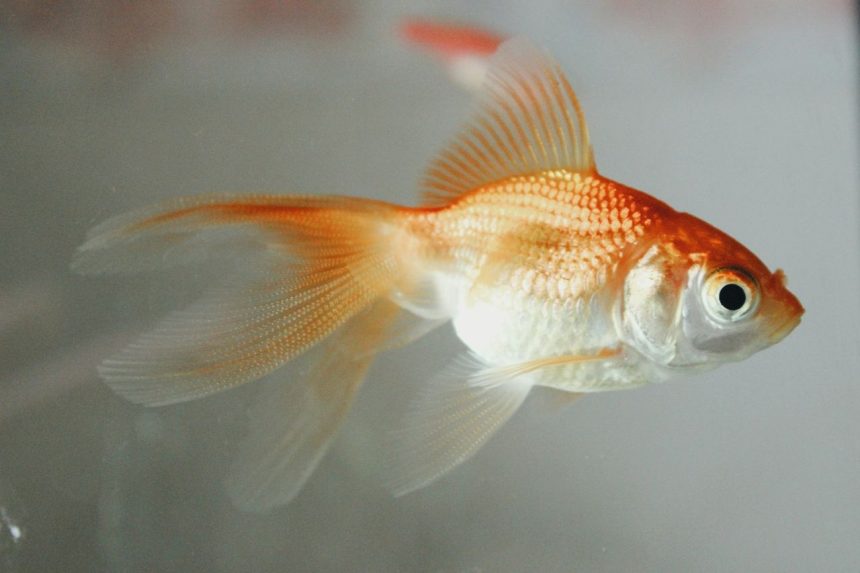
A pair of goldfish that had been living in a small tank inside a sushi restaurant has been declared “sentient beings” and subjects of rights by an Argentine court, which found the animals were suffering, and ordered they be transferred to a sanctuary, where they now live in a large aquarium.
The goldfish were removed from the restaurant, located in Buenos Aires’ upscale Recoleta neighborhood, and placed in the temporary care of the NGO Santuario Jaulas Vacías (Empty Cages Sanctuary).
The organization filed the complaint alongside the city’s Prosecution Unit Specialized in Environmental Matters, arguing that the fish were being kept in “inadequate conditions.”
A Buenos Aires City misdemeanor court ruled that the fish “are not merely inanimate material objects” and that “their rights must be recognized as part of the obligation to respect the life and dignity of sentient beings.”
In its ruling, the court declared that the goldfish “are non-human animals and subjects of rights.”
The court also granted Santuario Jaulas Vacías permanent custody of the fish. According to the organization, they went from living “in a 40-liter fish tank to a new home of more than 2,500 liters.”
The restaurant owner received an eight-month suspended sentence. During that period, he must complete a course on environmental issues and animal rights, refrain from keeping animals at the restaurant, and relinquish ownership of the goldfish.
An international precedent
Although courts have previously recognized animals as subjects of rights and as sentient beings, this is the first known ruling to do so for Carassius auratus, the scientific name for the common goldfish, setting a legal precedent both in Argentina and abroad.
According to Santuario Jaulas Vacías, the fish “lived in a space so small that they could not spread their fins without hitting the glass or grow to the size appropriate for their species.” The organization added that they were “forced to swim vertically while trying not to bump into one another.”
The NGO also said the fish had become “lethargic from constant exposure to direct sunlight, even though they are a species that naturally lives in cold waters,” and that they were losing scales “due to stress.”
Authorities raided the restaurant in late April. The ruling declaring the fish subjects of rights was issued in mid-June, but it only gained widespread attention in July after legal news outlet Diario Judicial published a report on the decision.
In Argentina
In recent years, Argentine courts have issued several rulings recognizing non-human animals as sentient beings and subjects of rights. Many of those cases involved wild animals kept as pets, such as pumas and monkeys, while others concerned zoo animals later transferred to sanctuaries.
One recent example is Toti, a chimpanzee that lived at the Bubalcó zoo in Río Negro province. In April, a family court ordered that Toti be transferred to the Monkey World Ape Rescue Centre in Dorset, England, after declaring the chimpanzee a “non-human subject of rights in a situation of vulnerability.”
The decision followed reports submitted by the Switzerland-based Fondation Franz Weber and the Argentine branch of the Jane Goodall Institute, after years of criminal complaints against the zoo.
Cover image: Hale Tat on Unsplash