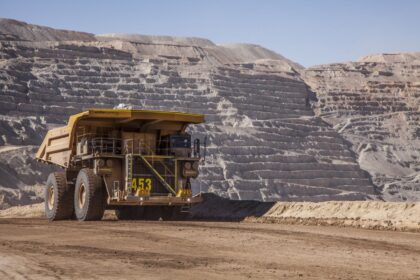
Crude oil became Argentina’s leading export during the first half of 2026, overtaking traditional agricultural products to top the country’s export rankings.
According to a report based on data from the national statistics agency INDEC, crude oil generated US$4.7 billion in export revenue between January and June.
The figure represents a 47.7% year-over-year increase from the US$3.2 billion recorded during the same period in 2025. The additional US$1.5 billion in export revenue pushed crude oil ahead of corn and soybean meal and pellets, which had topped the rankings a year earlier, in that order.
According to research center Instituto Argentina Grande (IAG), crude oil accounted for 9.5% of Argentina’s total exports in the first half of the year. An IAG report identified the United States, Chile, Thailand, Australia and Uruguay as the main destinations for Argentine crude.
The shift in Argentina’s export rankings marks a milestone for the economy. While agriculture remains central to the country’s export sector, crude oil has now become the single largest export product, reflecting the expansion of the Vaca Muerta oil and gas field in Patagonia and growing investment in infrastructure to increase shale oil exports.
Oil overtakes corn and soy
Corn (excluding seed corn) ranked second, generating just over US$4 billion in exports, up 6.7% year over year. Its main buyers were Vietnam, Algeria, Peru, Egypt and Saudi Arabia.
Soybean meal and pellets, produced during soybean oil extraction, ranked third with exports totaling US$4 billion. Sales rose just 0.7% from the first half of 2025, causing the product to move down one position despite maintaining a high export volume.
The rest of the top export products were crude soybean oil (US$3.1 billion, up 4.4%); non-monetary gold (US$2.9 billion, up 51.2%); passenger vehicles (US$2.5 billion, up 16.8%); wheat and meslin (US$2.3 billion); frozen beef (US$1.3 billion); crude sunflower oil (US$1.1 billion); and soybeans (US$1 billion).
Energy drives record export growth
Argentina exported US$49 billion worth of goods during the first half of 2026, a 24.4% increase from the same period a year earlier. The 10 leading export products accounted for 55% of total foreign sales.
Crude oil’s rise reflects the rapid expansion of unconventional energy production and the growing importance of the Vaca Muerta oil and gas field in Argentina’s export economy.
The Neuquén shale formation has become one of the country’s main sources of foreign currency.
The sector’s performance was also reflected in the energy trade balance. According to INDEC, fuels and energy posted a US$5 billion surplus in the first half of the year, up 61.7% from the US$3 billion surplus recorded during the same period in 2025.
Total energy exports reached US$6.5 billion, an increase of 42.5% year over year. Imports, meanwhile, totaled US$1.5 billion, up 1.9% from the first half of last year.
Crude accounts for more than 70% of energy exports
Crude oil dominated Argentina’s energy exports, accounting for 71.2% of the sector’s foreign sales.
It was followed by gasoline (US$346 million, up 41.5%); liquefied butane (US$231 million); and liquefied propane (US$177 million).
In June alone, energy exports totaled US$1.2 billion, a 28.5% year-over-year increase, underscoring the sector’s growing contribution to Argentina’s trade surplus despite seasonal fluctuations in energy imports.
On the import side, purchases were led by liquefied natural gas (LNG) (US$418 million), electricity (US$356 million) and natural gas in gaseous form (US$74 million).
Energy imports surged 126.5% year over year in June to US$765 million, driven by higher purchases of LNG and diesel to meet peak winter demand.
Winter demand exposes infrastructure bottlenecks
The seasonal increase in imports reflects a structural constraint in Argentina’s energy system. The country produces about 140 million cubic meters of natural gas per day, while winter demand exceeds 180 million cubic meters.
At the same time, the transportation network lacks sufficient capacity to move gas from producing basins to major consumption centers during seasonal demand spikes. As a result, imported LNG remains essential to cover temporary shortages.
Even so, the improvement in the energy balance shows that rising crude oil exports more than offset the seasonal increase in imports, leaving the sector with a surplus of more than US$5 billion during the first half of the year.
VMOS pipeline expected to drive next export boom
Forecasts for the full year point to fuel and energy exports of around US$11.3 billion, assuming an average Brent crude price of US$82 per barrel. At the time the report was published, Brent was trading at about US$85.45 a barrel.
If those projections hold, the annual energy trade surplus could exceed the record US$7.8 billion posted in 2025.
The next major boost is expected to come from the Vaca Muerta Oil Sur (VMOS) pipeline, which will connect the Neuquén Basin with the Atlantic coast in Río Negro.
The nearly 600-kilometer pipeline, linking Allen with Punta Colorada, is expected to be completed by the end of 2026. More than 75% of the project has already been finished.
It will initially add capacity to transport 190,000 barrels per day, eventually rising to as much as 550,000 barrels per day.
By mid-2027, throughput is expected to reach around 390,000 barrels per day. At that point, annual energy exports could exceed US$18.5 billion.
Originally published in Ámbito