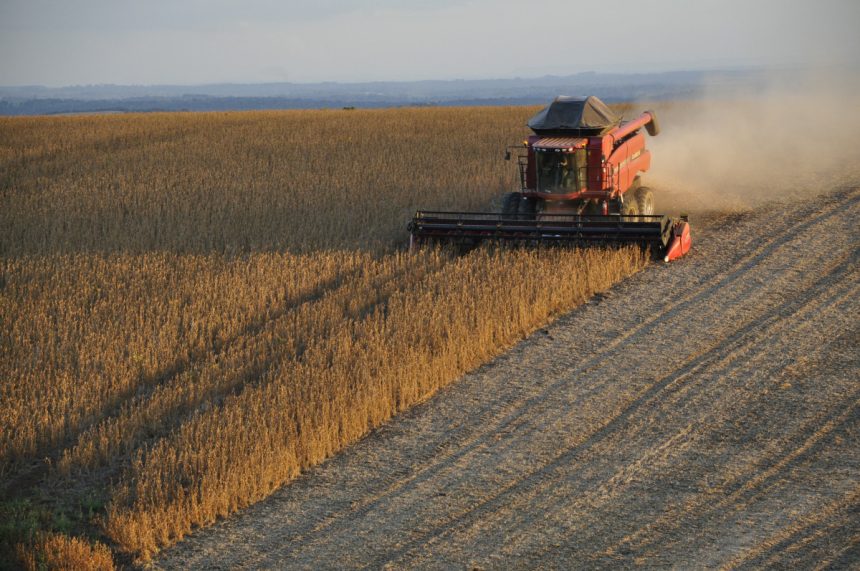
Since the beginning of the commodities boom in the early 2000s, Argentina has relied heavily on soybean exports as a source of U.S. dollars — the currency that has been in exceptionally high demand in the country’s economy for the past several decades.
As a result, successive governments have employed a wide range of strategies to encourage farmers to sell — and export — soybeans, while also seeking additional revenue from what has often been described as the country’s golden goose, primarily through export taxes.
The latest examples include the export incentive programs introduced during former President Alberto Fernández’s administration — popularly known as the soy dollar exchange-rate scheme — and the temporary export tax cuts implemented by President Javier Milei’s government last year.
However, during the first half of 2026 — the period when most of the harvest is typically marketed — soybean sales fell short of historical levels.
As of July 15, only 14.6 million metric tons had been sold at a fixed price, 27% below the median recorded between 2010 and 2025, according to estimates by the Fundación Mediterránea think tank.
Only 29% of the estimated 49.5 million-ton soybean harvest had been marketed, compared with a historical average of 41%.
“The slowdown in soybean marketing became more pronounced as the year progressed,” Fundación Mediterránea analysts wrote in their report.
At the beginning of 2026, cumulative sales were well above historical patterns: in January, they stood 81% above the historical median. By July, however, the volume sold had fallen to 27% below the long-term average.
Why did sales slow?
“I don’t think comparing this year with previous ones is valid anymore,” agricultural analyst Javier Preciado told the Herald, arguing that current sales volumes are “completely normal.”
“There’s no longer any pressure for the agricultural sector to liquidate exports because dollars are now coming in from energy and mining,” he said, referring to the strong export growth in both sectors this year.
“Without the soy dollar program and without the broader economic pressure for agriculture to be the country’s sole source of foreign currency, what we’re going to see is a market driven by producers’ own need to sell and by buyers’ purchasing demand,” he added.
Similarly, Dante Romano, head of research at Max Capital and a professor at Austral University, told the Herald that the factors driving farmers to sell this year “are the same as always.”
“For that reason, producers had no additional incentive to sell more,” unlike last year, when temporary export tax cuts during the first half of 2025 encouraged sales.
“This year, none of those incentives exist. On top of that, there’s already a schedule in place for further export tax reductions in 2027,” Romano said.
He also noted that mixed crop and livestock producers have benefited from stronger profitability in sunflower, corn, wheat, and livestock.
“That improved their cash flow and allowed them to avoid selling as much soybean production,” he explained.
The Argentine Oil Industry Chamber (CIARA) echoed that view when contacted by the Herald. The industry group emphasized that the temporary export tax cuts in the first half of 2025 “accelerated producers’ sales.”
It also pointed to weather-related factors that delayed this year’s harvest, meaning soybean marketing “started later than usual.”
More dollars expected in the second half
Potential export revenues are projected to reach between US$14.25 billion and US$18.38 billion during the second half of the year, according to Fundación Mediterránea.
“An acceleration in sales could increase agriculture’s contribution to the broader economy,” the report said.
It added that the stronger flow of export revenues “could boost transportation, grain storage, industry and services,” while also increasing liquidity across agricultural regions and improving overall economic performance compared with the second half of 2025