Peter Thiel’s doorbell doesn’t work. This isn’t a flashy way to open a story, an anti-techno-capitalist metaphor, or anything of the sort. In fact, that’s not his only problem: in the house right next door to his mansion in Buenos Aires, 10 or 15 young men are working away as if one of the most powerful men in the world weren’t sleeping right beside them. Peter Thiel’s doorbell doesn’t work. And the noise must be costing him sleep.
Let’s recap. You are Peter Thiel, with a fortune estimated at US$30 billion. You co-created PayPal with Elon Musk, the West’s first great digital wallet. You bankrolled the creation of projects such as Facebook and Próspera, a corporate city in Honduras, from the very start, and you even helped install into US politics J.D. Vance, whom you eventually slipped in as Trump’s vice-president. You are the leading political operator and thinker of a militarised Silicon Valley. Your declared enemies are figures of the stature of Pope Leo XIV. Above all, you own Palantir, the big-tech data company the United States uses to abduct presidents, bomb the Middle East and round up immigrants through brute force – software used by so many branches of that government that, were Max Weber still alive, he would have to rethink his claim that what defines a state is the monopoly on violence. You are Peter Thiel, matters of life and death are, quite literally, within reach. The whole world is at your disposal – except for one detail: you settled in Argentina, where, sometimes, the doorbell doesn’t work. Could that be why you’re already thinking of leaving?
You wouldn’t believe it
At 9.10am on Wednesday, June 3, Juan Grabois walked into Thiel’s house. Just minutes earlier, Noticias magazine had begun its first stakeout outside the mansion the German had bought in the Barrio Parque neighbourhood of Buenos Aires.
The photo of the left-wing Catholic lawyer, activist and politician at the tech magnate’s door created a stir in Argentina that has yet to die down. The visitor still hasn’t made any public statement, though in the days following the meeting, someone close to him contacted this publication to say, off the record, that Thiel had invited him specifically to debate his nemesis’s encyclical in depth.
In recent hours, a more unsettling version has emerged, suggesting Grabois still doesn’t want to discuss the matter because he came away deeply unsettled after hearing Thiel hold forth, across the table, on one of his great obsessions: his certainty that a world war will break out sooner rather than later – an apocalypse Thiel tends to blame on the “Anti-Christ,” as a group of economists summoned to the same house reportedly heard, according to The New York Times. “There’s only a 50 percent chance humanity will live to see the end of this century” is apparently one of his go-to lines.
That Wednesday, Sergio Piemonte, this publication’s photographer, had the presence of mind to have his camera ready when Grabois appeared, the skill to instantly recognise who was walking into the mansion and the luck to be in the right place at the right time. Stakeouts, generally, are the opposite: long, dull shifts in which not much tends to happen. Especially in Barrio Norte.
“I grew up in a neighbourhood that isn’t really a neighbourhood,” architect Rodolfo Livingston once said of Barrio Parque in a documentary. With the Buenos Aires winter approaching, these 10 blocks in the north of the city see little more than dog-walkers who look plucked from a catalogue, the odd delivery rider coming and going, and construction workers on various building sites. If the revolutionary architect, who spent several years living in Fidel Castro’s Cuba, were still alive, he would surely have more to say about the state of his streets today – and about Thiel and his doorbell. Almost every corner now has a private security booth, alongside Buenos Aires City police posts, to the point where the same block can have more than one.
Quiet days
Unlike that first stakeout outside Thiel’s house, nothing happens on the rest of the days. On the Monday and Tuesday after “Grabois-gate,” Dardo Rocha street is a graveyard. The drizzle even appears to have halted the building work, the dogs stay indoors, and even the delivery riders don’t risk it. The mansion the tech magnate paid US$12 million for is just as quiet. Every so often, out of habit, someone from this publication rings Thiel’s doorbell. No-one ever answers. Nothing ever happens.
That changes on Friday, June 12. At first, the routine starts the same way: heading to Dardo Rocha, finding somewhere to park and trying to keep a low profile (shortly after the photos of Grabois, several officers politely ask Piemonte to move along). But that day, there’s something different, a genuine piece of news: from the street, you can make out that behind the black gate, one of the big wooden doors is open. Is the owner of Palantir just metres away?
As a noise draws closer to the entrance, it’s hard not to dwell on how dystopian the whole situation is: one of the most powerful men on the planet moved to Buenos Aires, and that alone is strange enough – a puzzle that even people at the heart of the government admit they haven’t fully worked out – but what’s even more striking is that he didn’t settle in a gated community. Thiel lives on a street you can reach with nothing more than a Subte or the 130 bus.
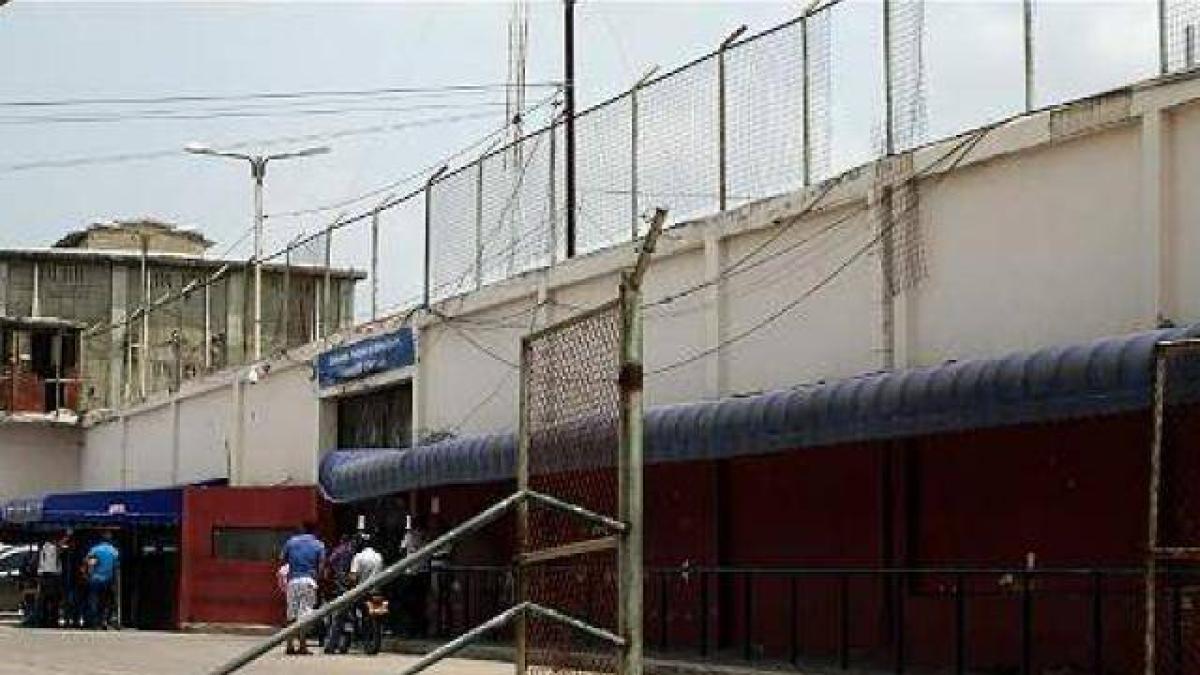
The man who opens the door, naturally, isn’t the owner. A two-metre-tall man, his bald head gleaming in the autumn sun, dark glasses, a radio earpiece, a suit straining against sheer muscle, his right hand resting lightly on a gun at his waist: that’s what you’d expect to find the moment the door opens for the man who pilots the Pentagon’s drones by joystick.
Felipe, however, is far from that stereotype. Thiel’s doorman is barely 1.6 metres tall, with brown skin and jet-black hair. Striking friendliness and a reedy voice; he’s happy to chat and offers up two key pieces of information: first, that the reason nobody answered the door on previous visits is that, against all odds, the doorbell genuinely doesn’t work, and second, the owner isn’t home. That feeds a rumour circulating strongly in Barrio Parque: that Thiel only came to the country for a few months and that time is already running out.
Little activity
Noticias’ days outside the mansion back up that theory. Not only was there no activity beyond Grabois’ visit, but the state of the house tells its own story.
From the whole block, Thiel’s is literally the only property with its entrance buried in fallen leaves. A black pick-up truck parked out front for days also had its roof covered in autumn leaves. The afternoon of the conversation with Felipe, two pest-control fumigators arrived, unaware that Thiel’s doorbell didn’t work. They had to wait a long time before anyone let them in. It’s hard to picture the workers asking the tech magnate to hold his nose for a bit while they clean the house.
If Thiel is leaving Argentina, as reports suggest, this story inevitably has to circle back to the start. What did he come here to do? Why did he move here in April with his husband and their two children? Why is he leaving? Is it all part of a plan?
In a recent edition that put the tech magnate on its cover, this publication argued that it was: that a global player of this calibre doesn’t move to the end of the world, as Pope Francis would put it, just to watch the leaves fall. Much less to a house where the doorbell doesn’t work.
Originally published by Noticias magazine. Translated by the Buenos Aires Times.