Argentina’s Penitentiary Prosecutor’s Office (PPN) has warned of chronic overcrowding, worsening prison conditions and a rollback of detainees’ rights in its latest annual report on the federal prison system.
The report, submitted to Congress’ Permanent Bicameral Ombudsman’s Committee on May 28 in accordance with Law 25,875, highlights severe overcrowding, declining transparency and policy changes affecting prisoners’ access to education and work.
The prison watchdog says the most critical situation is in Buenos Aires City Police holding cells. According to the PPN, at least 2,339 people are being held in temporary detention facilities in the capital that fail to meet minimum international standards for confinement.
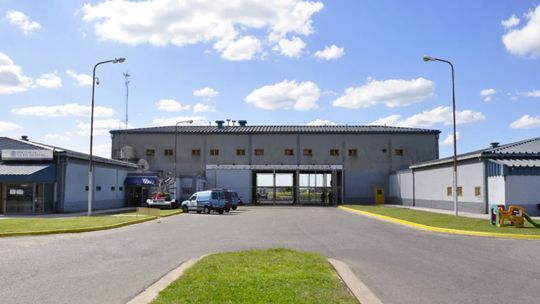
Nationwide, Argentina’s Federal Penitentiary Service (Servicio Penitenciario Federal, SPF) reported a prison population of 12,152 inmates, comprising 11,164 men (91.9 percent), 954 women (7.8 percent) and 34 trans detainees (0.3 percent). Of the total, 63 percent are serving sentences, while 37 percent are remanded in custody.
The prison population increased by 5.4 percent in 2024 and by a further 3.6 percent last year, equivalent to 516 additional inmates, said the SPF.
The PPN report also criticised the lack of updated publicly available data, noting that the SPF no longer publishes prison-by-prison statistics on its official website. The most recent detailed information available dates back to 2024.
Grievances and habeas corpus
The PPN disclosed 332 cases of mistreatment in federal prisons and other detention facilities during the reporting period. It also recorded 14 violent deaths in custody, including six by hanging, seven caused by fires and one resulting from a beating.
Last year, the prison watchdog received 19,539 complaints, most relating to healthcare, prison work, communication with defence lawyers, overcrowding and access to justice.
As in previous years, the PPN monitored complaints across federal prisons, police precincts, Centros Socioeducativos de Régimen Cerrado de la Ciudad de Buenos Aires (Buenos Aires City closed-regime juvenile detention centres) and buildings of the federal security forces.
Furthermore, the watchdog also issued six recommendations covering early expulsion procedures, health rights at police stations, access to work, the lack of health professionals, the regulation of visits between detained persons and the prevention of intrusive body searches.
There was an intervention via 45 collective habeas corpus writs to reclaim better prison conditions.
One of the most significant challenges, filed in March, impugned Resolution 372/2025, restricting access to higher education for persons detained in federal prisons by prohibiting student centres to function and limiting access to study areas outside hours.
Impact of Labour Reform
The end of the report warns of a significant deterioration in prisoners’ access to work, following the implementation of various ministerial resolutions and the reduction of the working hours of the detained.
According to the PPN, the situation worsened after the government’s Labour Reform package, approved in late February under Law 27,802, which advanced the limitations on the working rights of this category by excluding them from the régime stipulated in the Law for Labour Contracts.
In response, the watchdog presented constitutional objections to the repeal of key articles of the Law of Penal Implementation.
The report concludes in its summary that Argentina’s federal prison system continues to suffer from persistent structural deficiencies, opaque information, reduced transparency and regressive policy changes that weakened detainees’ rights.
– TIMES/NA