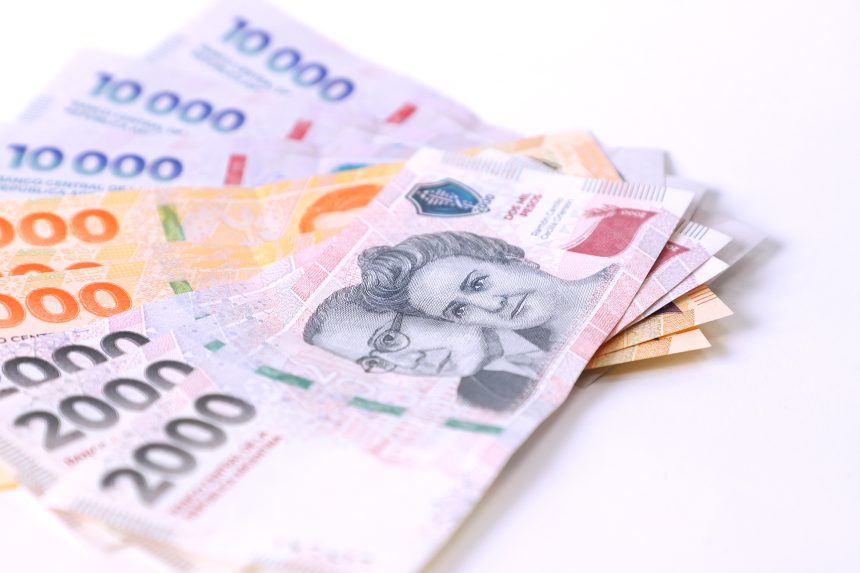
Most incomes in Argentina’s formal economy have yet to recover to the levels seen before President Javier Milei took office, helping explain the continued stagnation in consumer spending, one of the pillars of the country’s economy.
In its latest report, Nadín Argañaraz, director of the Argentine Institute for Fiscal Analysis (in Spanish, IARAF), tracked the six main sources of income in the formal economy.
These include private-sector employees, national public sector employees, provincial public sector employees, beneficiaries of the AUH social welfare program (universal child allowance), minimum pensions — which receive a supplementary bonus — and pensions above the minimum level.
“It is interesting to compare current figures with November 2023, the month before the new national government took office, given the economic changes that began [the following month],” Argañaraz wrote in his report.
A detailed list
The steepest decline was recorded among national public-sector workers, whose purchasing power fell by 36.5%, followed by provincial government employees, whose incomes declined by 9.8%.
Just behind them were minimum pensions, which fell by 9.7%. Private-sector wages posted the smallest decline, slipping to 3.6%.
Meanwhile, pensions above the minimum increased by 9.1%, while AUH beneficiaries saw their payments surge by 100.5% since the change in government.
AUH benefits, however, remain well below the minimum wage — even after the minimum wage itself has lost roughly 40% of its purchasing power since Milei took office.
At the time of writing, Argentina’s monthly minimum wage stands at 372,400 pesos (US$246.60 at the official exchange rate). By comparison, the AUH benefit amounts to just 150,861 pesos (US$100) per child.
This has been compounded by steep increases in utility costs, with tariff hikes far outpacing inflation and eroding the disposable income of lower-income households.
Increases in utility costs
The Interdisciplinary Institute of Political Economy (IIEP) estimated that between December 2023 — the month Milei took office — and July 2026, water rates rose by 525%, electricity by 568%, public transport by 1,408%, and natural gas by 2,185% in the Buenos Aires Metropolitan Area (AMBA).
By comparison, the Consumer Price Index (CPI) rose 241% over the same period.
This has had a direct impact on consumer spending, which continues to show little sign of recovery.
For example, market research firm Scentia found in its latest report that mass-market consumption in June had fallen 2.7% year-over-year. Compared to May, the drop was 0.9%, while the accumulated figure for 2026 was 2.9%.