Milei equates socialism with fascism at Madrid’s Ibero-American Summit
 Agustin MangoUpdated 5 minutes Ago2 Mins read
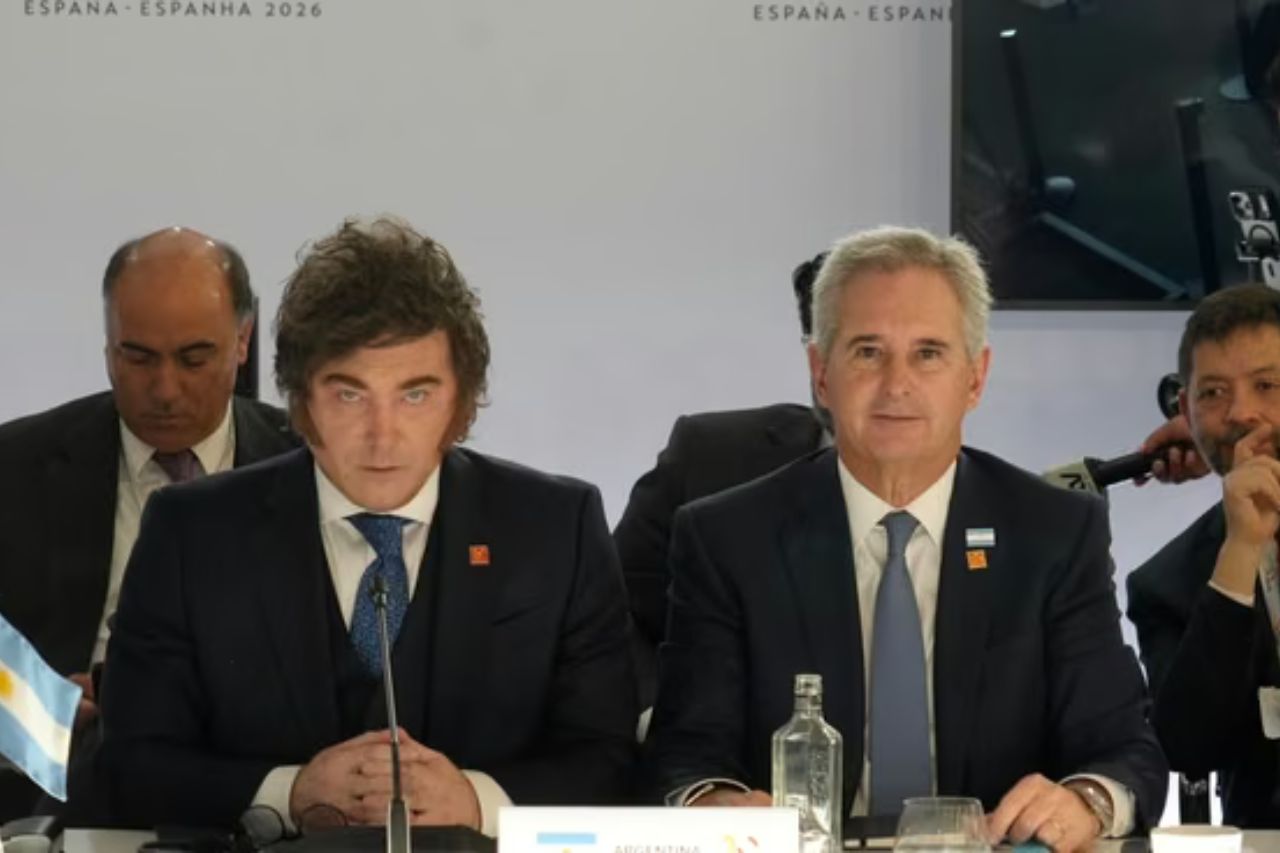

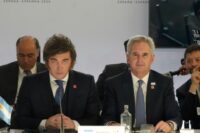
President Javier Milei once again used an international stage to highlight his ideological differences with the left and European social democracy. Speaking at the 30th Ibero-American Summit in Madrid, he equated socialism with fascism and criticized progressive agendas that, he claimed, are gaining ground in Europe.
Although he avoided directly mentioning Spanish Prime Minister Pedro Sánchez, his remarks made clear that tensions with the host country’s government remain unresolved.
Minutes before his speech, Milei and Sánchez had exchanged a brief, frosty greeting at the summit, their first face-to-face meeting. It took place amid prolonged political and diplomatic tensions following repeated criticism and insults directed by the Argentine president at the Spanish Socialist leader.
“Socialism is fascist in politics and fascism is socialist in economics,” Milei told the heads of state and representatives in attendance. He went on to elaborate: “This equivalence between socialism and fascism is no coincidence; they share a hatred of the free market.”
The Argentine president also challenged the ideological classification of fascism, arguing that “the fact that fascist movements are to the right of the far left does not make them any less socialist.”
With this argument, he sought to reinforce his longstanding criticism of state intervention in the economy and of political movements he associates with socialism.
Without naming Sánchez, Milei targeted political movements advocating greater state involvement. Such statist ambitions, he warned, “remain alive in those agendas that call themselves progressive and are gaining ground in Europe.”
His remarks contrasted with an earlier appeal by Spanish King Felipe VI, who had urged the leaders to “stick to the score” so that the summit’s music would sound “harmonious,” despite the diversity of instruments.
Milei, who read his speech on this occasion rather than relying on his usual improvisations, nevertheless maintained a confrontational tone, although his focus remained ideological.
Milei’s support of the right The Argentine president arrived in Spain on Wednesday but did not attend the summit’s opening ceremony at the Royal Theatre or the gala dinner hosted by the king and queen at the Royal Palace.
Instead, he held a meeting with Santiago Abascal, leader of the far-right Vox party and one of his main political allies in Europe.
Two weeks ago, Milei traveled to Spain to support far-right candidates ahead of snap elections called by Sánchez for November 29.
During his visit, the Argentine president called Sánchez an “unpresentable dictator” while attending a meeting with business leaders. The attacks added to a series of confrontations that began in 2024 and have damaged bilateral relations.
The dispute reached one of its most critical points in May of that year, when Milei attended an event organized by Vox in Madrid and made serious accusations against Begoña Gómez, Sánchez’s wife, whom he called “corrupt.”
The Spanish government demanded a public retraction, recalled its ambassador to Buenos Aires for consultations, and subsequently decided to withdraw her.
Since then, the exchanges have continued, with statements from both sides. Sánchez responded that Milei had failed to rise to the occasion and defended his government’s reaction, while the Argentine president maintained his criticism and ruled out apologizing.
Ahead of this latest visit, the Spanish prime minister had also taken to social media with the slogan “I’m a leftist and proud of it,” a direct reference to the derogatory language Milei often uses against the left.
He also posted an image of himself listening to “Fanático,” (fan) a song by Lali Espósito widely interpreted as a response to the Argentine president’s criticism.
Originally published in Ámbito