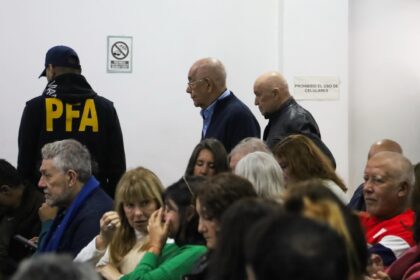
Six former military and armed forces members, most of whom were part of intelligence branches, were convicted this week of crimes against humanity committed during Argentina’s 1976-1983 dictatorship.
Two of them were handed life sentences for crimes committed in the provinces of Río Negro and Neuquén in the Patagonia region.
A third will serve 16 years in prison for taking part in 178 kidnappings at the deadly Navy School of Mechanics torture center (ESMA, in Spanish) in Buenos Aires, after spending more than a decade on the run in Brazil.
ESMA kidnapper
Former Prefecture intelligence officer Gonzalo “Chispa” Sánchez was handed 16 years and 18 months on Wednesday for being a co-author of 178 kidnappings as part of the systematic repression plan carried out from and at the ESMA in the late 1970s.
He will remain at the prison unit inside the Campo de Mayo military compound, where he is currently under pretrial detention, and where several dictatorship criminals are detained.
Sánchez was a member of the 3.3.2 Task Force, the feared unit that ran the kidnapping, torture, and murder operations at the ESMA.
The building, located in northern Buenos Aires City, was the largest clandestine detention center in the country, with 5,000 victims having been illegally detained, tortured, or murdered there.
It is also estimated that dozens of babies were born there, many of them taken from their illegally detained mothers and raised under false identities.
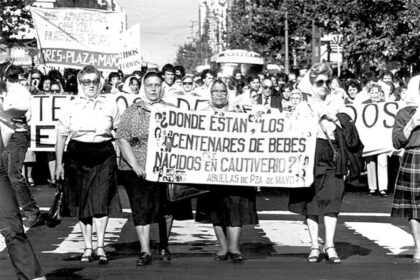
Grandmothers of Plaza de Mayo — the NGO created to search for those stolen grandchildren — celebrated the conviction, adding in a statement that 19 of the kidnappings are linked to child appropriation cases registered by the organization.
Since the plaintiffs had originally requested a 25-year sentence, Grandmothers of Plaza de Mayo said: “The sentence leaves a bittersweet aftertaste, even more so because he had a very clear role as a repressor at the ESMA and because he fled justice twice.”
Sánchez went on the run in 2005 after being accused of the kidnappings. In 2011, the Brazilian branch of Interpol reported that they had detected him in that country. He was arrested in Rio de Janeiro in 2013.
In 2017, the Brazilian Supreme Court authorized Sánchez’s extradition, but he fled from house arrest. In 2020, he turned himself in and was taken back to Buenos Aires.
The Brazilian judiciary authorized his extradition on the condition that he be tried only for the kidnappings and illegal detention of people who remain disappeared and not for torture and torture followed by death, as Argentina had requested. Brazil considers the latter crimes exceeded the statute of limitations.
Sánchez reached the trial stage accused of 193 kidnappings but was finally convicted of 178. Among his victims was renowned journalist and author Rodolfo Walsh, who was kidnapped on March 24, 1977, by the ESMA 3.3.2 task force and presumably murdered.
Patagonia convictions
On Tuesday, the Neuquén judiciary convicted five former military and military police members of crimes committed against 17 victims in that province, as well as in Río Negro, during the dictatorship.
Former Army intelligence members Sergio San Martín and Jorge Di Pasquale were sentenced to life imprisonment, while former military police officer Emilio Sacchitella was handed five years, and former military officers Hugo Renes and Carlos Carreto will have to serve four years. All of them will remain under house arrest.
The five men were convicted in a trial over crimes committed as part of the systematic repression circuit headquartered at the clandestine detention center known as La Escuelita in Neuquén.
San Martín and Di Pasquale were convicted as necessary participants in crimes including murder, illegal imprisonment, and torture against politically persecuted people. Their convictions were unified with previous sentences for similar crimes.
Sacchitella, Renes, and Carreto were convicted of illegal imprisonment. Sacchitella was also convicted of torture.
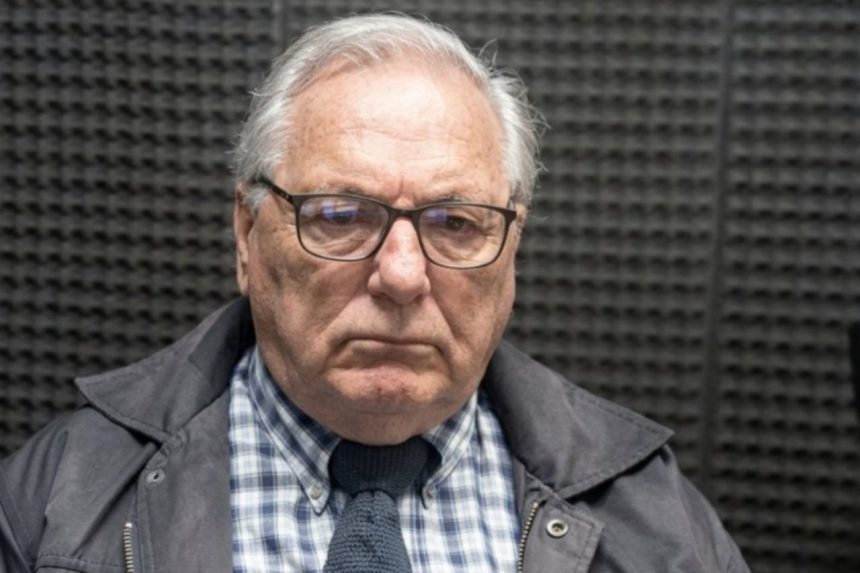
Cover image features Gonzalo Sánchez