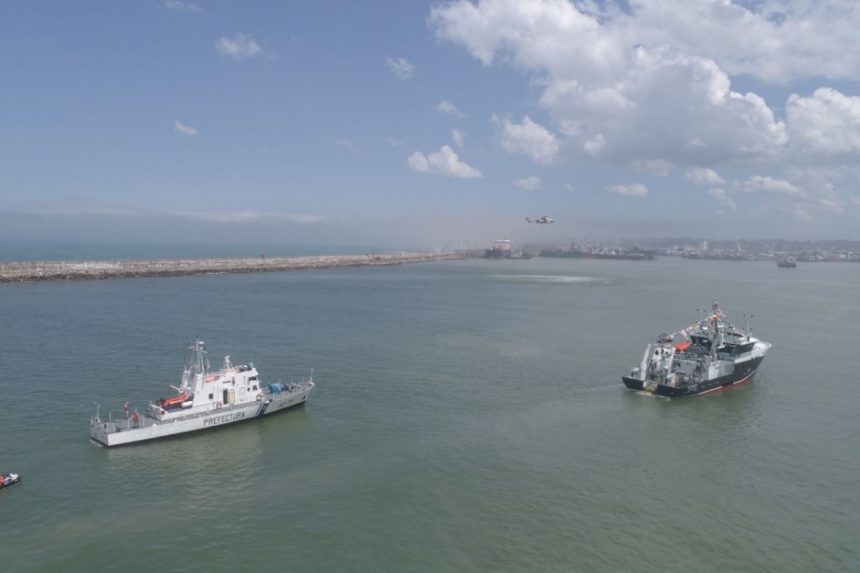
Harbor, river and sea pilots across Argentina have launched an open-ended strike in protest against a presidential decree that deregulates the sector and allows some vessels to operate without their services.
The walkout could disrupt the arrival and departure of ships, affecting foreign trade. Maritime and river pilots — professionals with expert knowledge of local waterways — are responsible for guiding ship captains safely in and out of ports and along local rivers.
Their presence is mandatory on much of Argentina’s commercial waterway network, meaning trade could be partially disrupted if the strike continues.
Over the weekend, harbor and maritime pilots received notifications from the Argentine Naval Prefecture ordering them to report for duty to provide “mandatory service” after the strike was announced on Saturday.
The notice said authorities were aware that companies providing pilotage services were “currently unable to provide assistance due to the lack of available harbor pilots.”
It added that pilotage is “a regulated public service” overseen by the Naval Prefecture and warned that failure to comply with the order could result in criminal complaints carrying prison sentences of between two and eight years, as well as administrative sanctions.
The decree
Drafted by Deregulation Minister Federico Sturzenegger and signed by President Javier Milei, the decree that the maritime pilots are protesting against overhauls the regulatory framework governing maritime pilotage with the stated aim of lowering logistics costs and “improving the competitiveness of foreign trade,” which the government says has been constrained by rules set in place since 1991.
Issued last week, the decree substantially deregulates the sector. While both Argentine and foreign captains must still have access to navigational and maneuvering advisory services, they will be allowed to operate without harbor or maritime pilots if they can demonstrate sufficient familiarity with the waterways where they are sailing.
In a statement released Friday, the government said the reform “eliminates regulatory barriers, promotes greater competition among service providers and updates rules that had remained unchanged for more than three decades.”
According to the government, the new framework removes “obsolete” requirements, encourages new entrants into the pilotage market and allows users to “freely hire” pilots.
The decree also eliminates the cap on the number of certified pilots, which the government says will increase the supply of qualified professionals.
“The system had created barriers to entry for service providers, reducing competition and driving up prices,” Sturzenegger said in the statement.
“With the new framework, we are eliminating those restrictions to foster greater competition and reduce costs that affect Argentina’s foreign trade.”
How it could affect trade
The measure has further strained relations between the government and the maritime sector, which had already opposed previous deregulation initiatives affecting shipping.
According to specialized outlet El Semanario del Comercio Exterior (The Foreign Trade Weekly), one of the decree’s most controversial provisions allows both Argentine and foreign captains to obtain certification demonstrating sufficient knowledge of specific waterways, enabling them to navigate without the assistance of local maritime pilots.
The publication warned that the strike could significantly affect traffic along the Paraná-Paraguay Waterway and at the ports of Greater Rosario, through which much of Argentina’s grain and agricultural byproduct exports pass, leading to delays in vessel arrivals and departures.
Teachers also strike
Teachers from several unions are also taking industrial action on Monday, the first day of classes after the winter recess in Buenos Aires City and three provinces.
The unions are demanding that the government reopen wage negotiations, noting that the national minimum teacher salary has remained at AR$500,000 (about US$330) for a year despite annual inflation of 33% between June 2025 and June 2026.
The Human Capital Ministry, in charge of the education secretariat, warned that education is classified as an essential service, meaning at least 75% of teachers must continue to work during strike action.
It also said authorities would monitor participation and impose sanctions where appropriate.