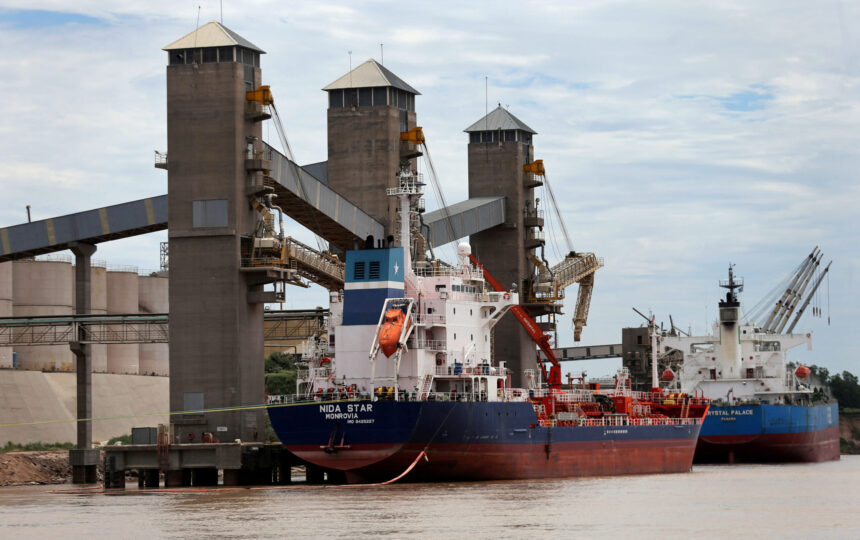
Argentina posted a record trade surplus of US$2.7 bn in April. Exports also hit a new all-time high of US$8.9 bn, driven by a sharp surge in energy and industrial goods shipments.
President Javier Milei and Economy Minister Luis Caputo both celebrated the news. “RECORD EXPORTS TMAP. MAGA. VLLC!” Milei posted on X.
The economy minister noted that the fuel and energy category also set a new record, with exports worth US$1.5 bn — an 85.9% jump from a year earlier.
Caputo also said industrial manufactures hit their highest value since November 2012, reaching US$2.5 bn, a 43.3% year-on-year increase.
Manufactures of agricultural origin remained the largest category in Argentina’s export basket — 30.3% of the total — with a positive balance of US$2.7 bn.
Through April, exports totaled US$30.8 bn, running 21.5% ahead of the same period last year.
The trade balance has racked up a US$8.28 bn surplus in the first four months of 2026.
April’s result extends the steady improvement in the trade balance since President Javier Milei took office, as well as the energy sector’s growing contribution to Argentina’s external accounts —at a moment when the government is trying to keep building up reserves and hold the dollar steady.
A two-speed economy
Julián Neufeld, an economist at Fundación Libertad y Progreso, said Argentina’s economy is running “at two speeds.”
“The external front is flying, powered by the extractive sectors —oil and mining— and this month the auto sector also chipped in,” he said.
On the other hand, “the stagnation in industrial activity is showing up in lower demand for imported inputs and capital goods.”
Imports came in at US$6.2 bn, down 4% from a year earlier.
Intermediate goods led the way, at US$2.248 bn, though up just 4.1%. Capital goods imports were down 5.9%, while parts and accessories for capital goods plunged 17.4%.
Fuel and lubricant imports plunged 45.4% from a year earlier.
The latest private-sector data suggests industry hasn’t quite found its footing. According to FIEL’s Industrial Production Index, activity rose 0.8% year-on-year in April, though it was down 0.3% in the first quarter of 2026 compared with a year earlier.