Argentina’s exports are set to reach a new record of US$ 94.4 billion in 2026, allowing the country to close the year with a US$ 16 billion trade surplus, according to private consultancy ABECEB.
That would mean an 8.4% year-on-year growth and would top the previous all-time high of US$ 88.4 billion set in 2022.
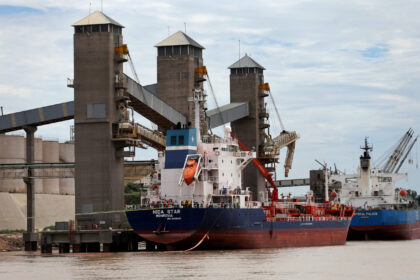
The country’s top “export engine” is still farming, with estimated growth of 6.9%, thanks to a record harvest, the return to normal export sales after the unification of the exchange rate, and stronger international demand, especially from China and Southeast Asia.
This export growth reflects a reshaping of Argentina’s export base, which is becoming less dependent on the agribusiness complex.
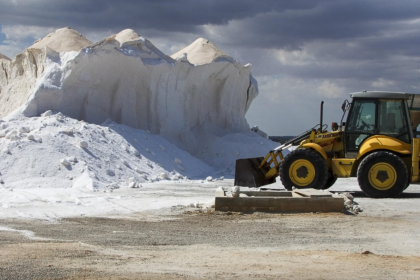
“2026 wouldn’t just be a nominal record. It would lock in a qualitative shift in the makeup of Argentina’s exports: alongside agriculture’s traditional strength, Vaca Muerta, metals mining, and lithium are taking up more and more space,” said Natacha Izquierdo, ABECEB’s chief operating officer.
Izquierdo also said that this more diverse export base “reduces the long-standing vulnerability of Argentina’s trade balance to weather cycles and swings in agricultural prices, and paves the way for structurally stronger export growth.”
She added, however, that this scenario could only take hold “as long as the macro holds steady and the committed investments actually materialize.”
Beyond commodities
ABECEB also flagged a “non-traditional” component among the country’s leading exporters: the knowledge economy. With foreign sales of more than US$ 10 billion a year, it ranks among the country’s top five export complexes.
“What matters isn’t just the dollar figure, but its ability to generate hard currency with light logistics, heavy reliance on talent, and broad spillovers across the rest of the economy,” ABECEB said.
The experts added that knowledge-economy exports “bring scale, relative stability, and room to grow without requiring large physical volumes of production.”
A more “federal” export map
Provinces tied to big oil and mining investments are emerging as the biggest winners in terms of export share, the report said.
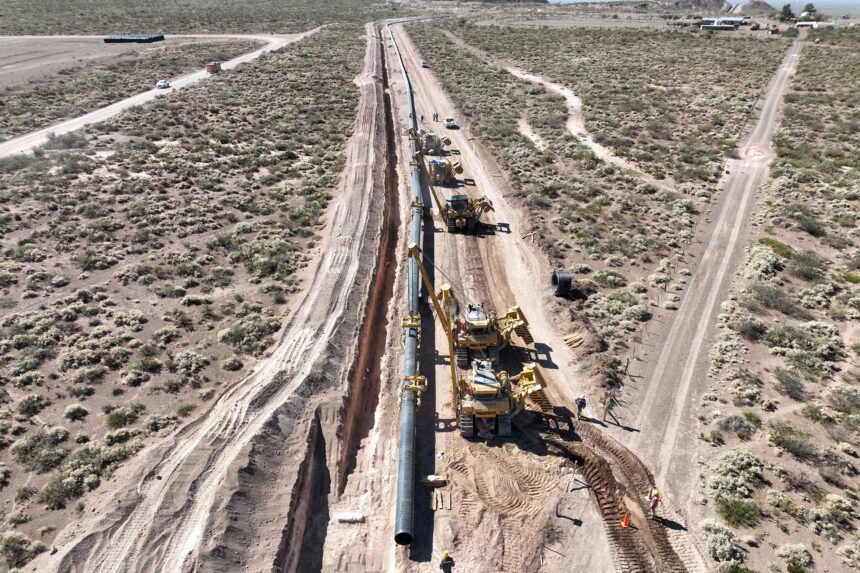
Neuquén stands out, thanks to Vaca Muerta projects coming of age and the steady expansion of shale oil and gas output.
“The province no longer just supplies only the domestic market —it’s positioning itself as a net exporter of hydrocarbons, with room to scale up as takeaway infrastructure projects move forward, such as pipelines and LNG facilities,” ABECEB said.
The other big winner is Chubut, which, in addition to benefiting from conventional oil and gas exports, saw its fishing sector improve thanks to larger catches and higher international prices.
Even so, there’s still a long way to go before those Patagonian provinces can rival the export share of the country’s central provinces.
A study by Universidad Austral, based on INDEC data, found that five provinces accounted for 77.2% of export growth in 2025.
The top three were Buenos Aires (36.3%), Santa Fe (18.6%), and Córdoba (12.5%) —all historically agribusiness powerhouses. The other two were Neuquén and Chubut, with 5.2% and 4.6%, respectively.