Winemaker Marcelo Pelleriti aims to make Uco Valley a new Grand Cru
 Marcelo Fernandez BitarUpdated 53 minutes Ago3 Mins read
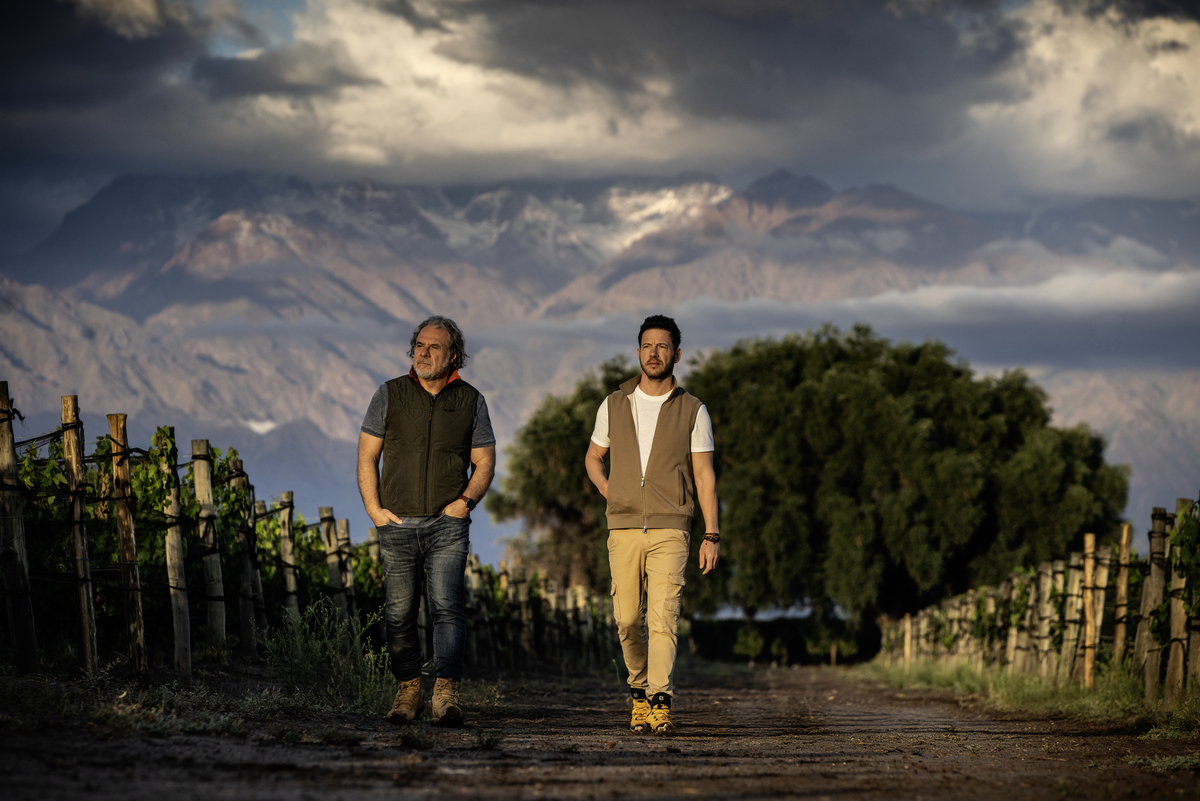

Back in 2009, winemaker Marcelo Pelleriti set up a small-scale, artisanal venture in the Uco Valle in Mendoza focused on selected vineyard plots.
Today, he is aiming big.
After more than a decade of soil study and minimal intervention, he has once again partnered with vintner Miguel Priore to create Pelleriti-Priore. The brand now exports 40,000 cases worldwide and has earned international ratings of up to 97 points from critic James Suckling.
Lying along the Tunuyán River, Valle de Uco is a prominent wine-growing region south of Mendoza city in western Argentina. The combination of high elevation, alluvial soils, irrigation sourced from the Andes Mountains, a long growing season with over 250 sunny days a year, little rain and vast temperature differences between day and night provides ideal conditions for growing wine grapes.
Uco is known for its Malbec red wines. Traditionally, the varieties grown in this area have included Semillón and Malbec, along with smaller amounts of Bonarda and Barbera. In recently planted vineyards, vine growers have preferred mid-ripening varieties, such as Merlot and Pinot Noir, since they reach optimum ripeness in this area.
Cabernet Sauvignon and Chardonnay are grown in the lower areas of the region, and regional Syrah is highly regarded.
A rock star Marcelo Pelleriti grew up making wines with his grandfather and made his own first batch in a friend’s estate in 1994. He worked for 22 years in the Pomerol region, on Bordeaux’s Right Bank, and was mentored by French Bordeaux-based oenologist Michel Rolland. They both played a critical role in elevating Argentine Malbec to prominence.
During his tenure at Bodega Monteviejo in the 2010s, Pelleriti began celebrating each year’s harvest with a grand asado and rock concerts. A guitar player himself, he made friends with many Argentine rock musicians who later partnered with him for wine labels, and the idea evolved into a massive Wine Rock festival attended by 3,000 people.
In those days, Pelleriti made the headlines thanks to notable artists with their own wines, such as Juanchi Baleirón, Pedro Aznar, Fernando Ruiz Díaz and Coti Sorokin.
“It was a very beautiful stage of my life, but now I’m completely focused on this project. Rock is important for me, and I still play, but I learned to separate my professional and business life from my musical passion, rather than mixing the two. Business is business. Passion is passion,” Pelleriti told the Herald.
From Uco Valley to the world His goal? To reach international recognition and help make Valle de Uco the Grand Cru of the New World.
“Today, Valle de Uco has a similar reputation to areas like Napa Valley or Burgundy. Having Valle de Uco on the label is a major selling point,” said Pelleriti.
Although he used to have 150 labels, he now makes only seven: a flagship line called MP Signature (Malbec and Cabernet Franc); cult labels including 1853 Old Vine Estate Selected Parcel (Malbec), Terroir Expressions Hostage Altamira Single Vineyard (Malbec), 1853 Old Vine Estate Grand Reserve Heritage (Malbec), and Pelleriti Blend of Terroir; and his top-of-the-line Supremo Malbec.
Supremo is the culmination of all his many years of experience, with the aim of positioning Argentina as a great New World terroir. Three vintages are blended into it, along with a specific selection from different micro-parcels and, in turn, a selection of specific micro-vinifications.
“All in pursuit of excellence,” says Pelleriti.
Since launching Pelleriti-Priore in 2023, he has sold exclusively to retailers, wineries and restaurants, with 80% of the production going to the U.S. The remaining production is available in the UK, Brazil, Denmark, and some countries in Asia and Latin America.
Until now, these wines have had little presence on supermarket shelves in Argentina, except for its Signature label, because all the other bottles were exclusively sold abroad The venture had made a very clear distinction between their export portfolio and what was available locally.
“Now we’re in major stores and venues where people can actually find the brand,” says Pelleriti.
Pelleriti hesitates when asked if he would define this stage as a launch, a relaunch, or a comeback.
“A little bit of all three,” he concludes.
“But I would like to call it a new beginning.”