Argentina’s politicians are right to bring forward the battle to decide who will be the nation’s next president. The next term is sure to have basic guarantees of financial and currency stability like perhaps no president before in history has enjoyed. It’s all about dollars – they will be arriving in quantities not seen in the last 100 years. What is known is that having dollars guarantees not suffering runs on the currency and subsequent inflationary or hyperinflationary outbursts. Just that is enough to guarantee even emotional stability. Then it will obviously depend on what is always a complex factor in this country: whether the political class takes advantage of the opportunity, instead of squandering it.
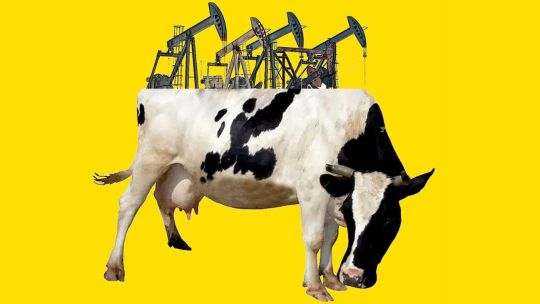
The dollars will be arriving in Argentina’s next presidential term from two concrete sources: Farming, from which much is always asked, will commence a process of sustained exports of US$30 billion to US$35 billion; and Vaca Muerta, the great hope of Argentine politicians for guaranteeing financial and macroeconomic stability. In concrete terms, the Neuquén deposits (spilling over into Mendoza) are on the way to becoming Argentina’s main currency earner at some point between 2027 and 2031 with annual energy exports, according to different industrial scenarios, projected to also reach between US$30 billion and US$50 billion by the end of the decade.
The expected surge is sustained by four pillars: the expansion of oil production, massive LNG (liquefied natural gas) exports, new oil pipelines and a scheme of extraordinary investments driven by the RIGI (Régimen de Incentivo para Grandes Inversiones) incentive régime for major investments and regulatory changes in the energy sector.
Earlier this month, on May 15, two new proposals were announced. YPF is putting some US$25 billion into accelerating the production and export of oil and into its “LLL Oil” project, which provides for constant development during 15 years drilling 1,152 wells with a daily production target of 240,000 barrels by 2032. This is the biggest project ever presented under RIGI and would be the biggest oil export programme in Argentine history with annual earnings estimated at US$6 billion once the maximum levels of productivity are achieved. This programme, according to estimates, could generate an accumulated US$100 billion at least during the full useful life of the development. To place this number in perspective, that would be more than enough to pay Argentina’s debt of US$75 billion owed to voluntary private bondholders on international markets.
The same day as the YPF announcement, oil company GeoPark in partnership with Neuquén’s GyP (Gas y Petróleo), made a humbler presentation to request entry into RIGI with an investment project topping US$1 billion to develop an unconventional oil hub at Vaca Muerta, covering the blocks of Loma Jarillosa Este and Puesto Silva Oeste.
In the same week Vista Energy informed that the oil company had reached a daily production level of over 160,000 barrels, consolidating its status as the country’s main independent producer. This comes after the incorporation of Equinor’s share of Bandurria Sur and Bajo del Toro. Vista, created by former YPF CEO Miguel Galuccio, has confirmed that it will invest some US$5.6 billion in Vaca Muerta between this year and 2028, remaining its main independent oil exporter.
Early this month Pampa Energía also announced a major expansion of its Vaca Muerta investments with projects which could top US$4.5 billion under the RIGI régime, including Rincón de Aranda as its main initiative.
Late last month, the big news had been the group formed by Italy’s Sicim and local firm Víctor Contreras being awarded the tender for the construction of Argentina’s first pipeline to export LNG. In parallel, the company Oilfield Production Services (OPS) was selected to construct the compressor plant linked to this system.
The award of the gas pipeline represents a key step for developing the exports of Southern Energy, which provides for the installation of two floating liquefaction units in San Matías Gulf. The total investment in this project will be some US$1.3 billion, financed by the partners behind Southern Energy: Pan American Energy (PAE) of the Bulgheroni family (30 percent); YPF (25 percent); Pampa Energía (20 percent); Harbour Energy (15 percent) and Golar LNG (10 percent). The tentative sum for all these announced projects tops US$30 billion. According to the specialists, this is not just marketing – they are real, feasible and concrete investments.
It may be said that never was such a concentration of dollars pledged to a single sector of the Argentine economy.
Just a few years ago Argentina was importing energy in winter ,while suffering a lack of dollars to supply itself with diesel and natural gas. The eruption of Vaca Muerta shale has completely modified that scenario. In concrete terms, the country will save some US$5 billion annually in gas imports.
The Neuquén formation contains resources estimated at 308 trillion cubic feet of gas and 16.2 billion barrels of oil which can be technically recovered with unconventional production already dominating Argentina’s fossil fuel matrix. Over 60 percent of Argentina’s oil and over half the gas used in this country comes from Vaca Muerta.
Most of the infrastructural projects now in the process of being constructed or financed will come on stream between this year and 2028. That is why the real export surge will arrive from late 2027 onwards, especially on the basis of the LNG export boom via floating liquefaction boats installed in front of Río Negro Province with the first shipment from the Hilli Episeyo vessel pledged to the Southern Energy project.
Perhaps destiny has willed that this boat, which will launch a new and historic stage of exports in this country, coincides with the moment when the Argentines are electing Javier Milei’s successor. Whether the current President or some alternative, the winner will be able to count on the following export scheme: 2027 – US$15 billion to US$20 billion; 2028 – US$20 billion to US$28 billion; 2029 – US$25 billion to US$35 billion; 2030 – US$30 billion to US$50 billion; 2031 – US$ 30 billion to US$50 billion.
These differences between the dollars entering will depend fundamentally on the international price of oil, the speed of LNG development and the completion of transportation works. If the projections work out, Vaca Muerta would replace farming as the main source of dollars in just a few years’ time, sustain a trade surplus for more than two decades, boost Central Bank reserves and change Argentina’s export structure forever, fundamentally guaranteeing that the next president will not have to face runs on the currency. No small potatoes, but neither does this guarantee development. For that is needed an economic plan that creates more winners than losers.