US midterms are on Tuesday. The result might affect Milei
 Juan Marcos PollioUpdated 53 minutes Ago4 Mins read
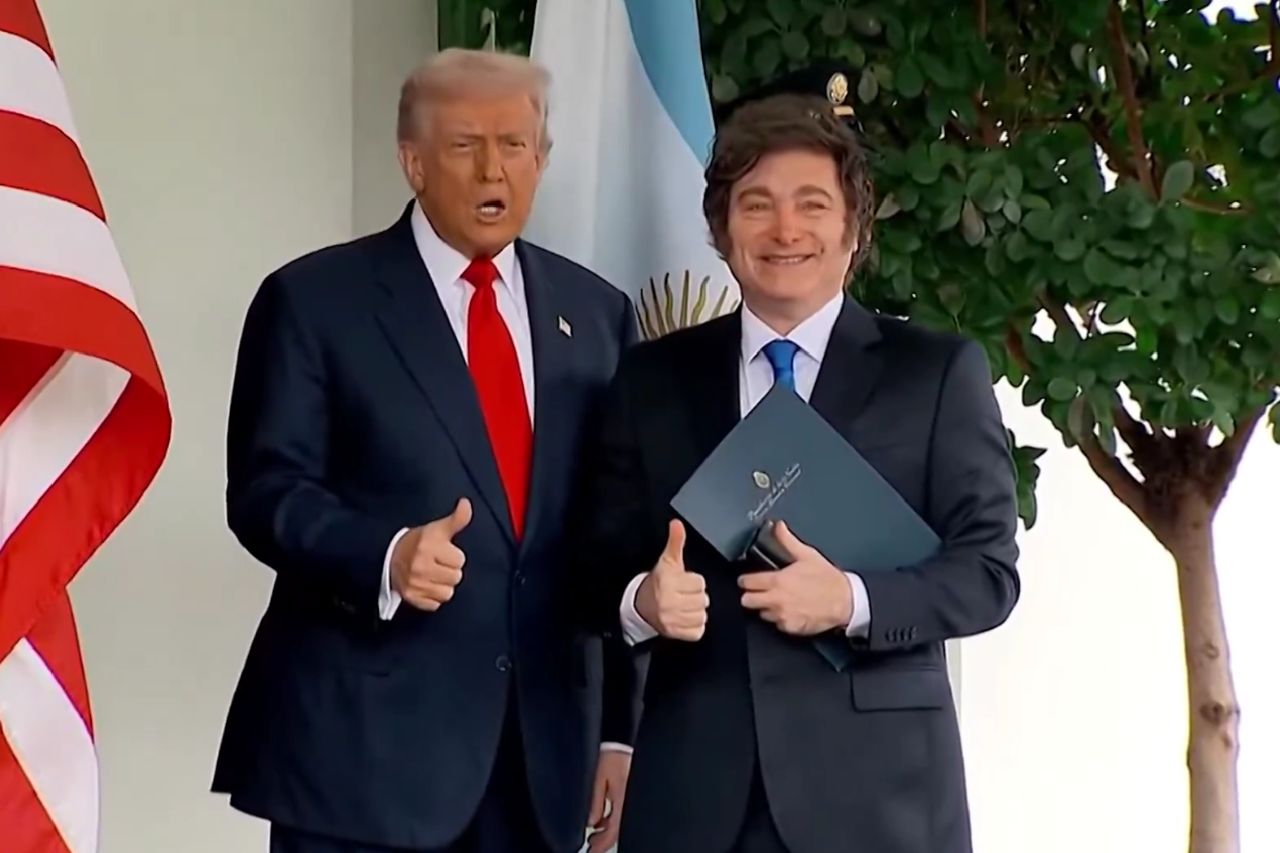

Following the presidential elections in Brazil and Israel, Javier Milei’s government is now turning its attention to the US midterm elections on November 3, a key political test for Argentina’s main ally.
The elections are a key test for the US administration, as they will be the first midterm contests since Trump returned to the White House in 2025.
Voters will decide the composition of the US House of Representatives and Senate, while gubernatorial elections will also take place in 36 states.
The midterms will serve as a kind of referendum on the MAGA administration, which has been significantly weakened by its tariff war, which has driven up living costs for American citizens, particularly since the outbreak of the war in the Middle East.
In Argentina, the elections are being closely watched because of Milei’s administration’s unwavering geopolitical alignment with Washington’s foreign policy agenda.
That alignment helped Milei secure financial support through the currency swap arranged by the US Treasury, led by Scott Bessent, as well as the announcement of $7 billion in investment under the joint initiative known as the Andes-Atlantic Corridor.
Although analysts consulted by the Herald expect an electoral setback for Trump, who could lose his majority in the House of Representatives, they said the financial and foreign-exchange impact on Argentina would be limited, unlike the repercussions of Luiz Inácio Lula da Silva’s surprise electoral victory in Brazil.
Markets expect a Trump defeat “Historically, incumbent parties tend to lose ground in midterm elections,” Eric Ritondale, chief economist at brokerage firm Puente, told the Herald.
He said markets are already pricing in a Republican loss of control of the House of Representatives.
For that reason, analysts and experts are focusing their attention on the US Senate, “where the consensus view is that Republicans will retain control.”
However, he noted that polls in key states show a close race, leaving “a real possibility that Democrats could also win a majority there.”
A report by consulting firm Prisma puts the odds of Democrats taking control of the Senate at 60.7%, with a median projection of 52 seats. “The Senate currently stands at 53-47 in favor of Republicans: Democrats need to win four seats,” the report said.
Along the same lines, financial markets economist Gustavo Ber told the Herald that he expects Democrats to win the House and possibly the Senate as well, “although the latter race would be much closer.”
Meanwhile, Sergio González, head of asset management at brokerage Cohen Aliados Financieros, told the Herald that “both chambers will probably end up in Democratic hands,” meaning the outcome “will be seen above all as a defeat for Trump.”
He noted that a potential Democratic victory in both chambers would give the opposition greater influence over key issues on the US political agenda.
For instance, he said, a House of Representatives controlled by the opposition could take a much tougher stance on spending by the Trump administration, while the Senate would have “much greater influence over the US Supreme Court and its composition.”
The impact of a Trump defeat on Argentina’s financial markets According to Ritondale, no “significant direct impact” is expected on Argentine financial assets in the event of a Trump defeat, “unlike the somewhat more visible effect of Brazil’s election.”
He explained that the impact would be “marginal and indirect,” potentially stemming from changes in yields on US Treasury bonds. US government bonds are considered the world’s safest asset and serve as a benchmark in international debt markets.
When the price of US Treasury bonds falls, their yields rise. This, in turn, can put upward pressure on yields for other countries’ sovereign debt yields to increase as well, raising their borrowing costs.
Nevertheless, Ritondale stressed that the prospect of a divided Congress “has already been priced in” by Argentine financial markets, “limiting any significant reaction in the yield curve of Argentina’s sovereign debt,” since investors have already positioned themselves against such a potential outcome.
For his part, Gustavo Ber said a Trump electoral defeat could prolong the “weakness” currently seen in financial assets.
These include Argentine bonds traded on Wall Street and the American Depositary Receipts (ADRs) of banks operating in Argentina.
González added that Argentina’s stock market “is currently moving much more in line with regional trends,” particularly those in Brazil, as well as domestic developments, since investors “are waiting for greater clarity on what next year’s electoral process will look like.”
Uncertainty in the foreign-exchange market Ritondale said that, in his view, “no pressure on the official exchange rate is anticipated either,” since an adverse result for Republicans in the US House of Representatives has already been priced in.
Ber argued that, in the foreign exchangemarket, Argentina could enter a period of “slower purchases” of dollars by the Central Bank, driven by stronger private-sector demand, as has been happening in recent trading sessions following Lula’s victory.
Ritondale noted that the US Treasury’s “potential discretionary authority” to provide financial assistance to Argentina — as it did in 2025 — is an executive branch prerogative that “is not affected by the composition of Congress.”
Therefore, “a hypothetical political reassessment is not currently a factor that would alter exchange-rate dynamics.”
Ber agreed with the assessment that US Treasury financial support for Argentina “is already priced in,” partly because Milei has emerged as “the region’s main geopolitical ally following Flávio Bolsonaro’s defeat.”
Finally, González said that, for Trump, intervening in Argentina’s foreign-exchange market next year “could become somewhat more limited, or carry a much higher political cost, with a more Democratic Congress.”
He stressed that financial assistance to Argentina “would face much greater scrutiny from Congress.” However, he added: “That doesn’t mean it would be ruled out, but it would carry greater weight in public opinion.”