UBA takes classes to Plaza de Mayo to demand Milei comply with funding law
 Buenos Aires HeraldUpdated 1 hour Ago2 Mins read
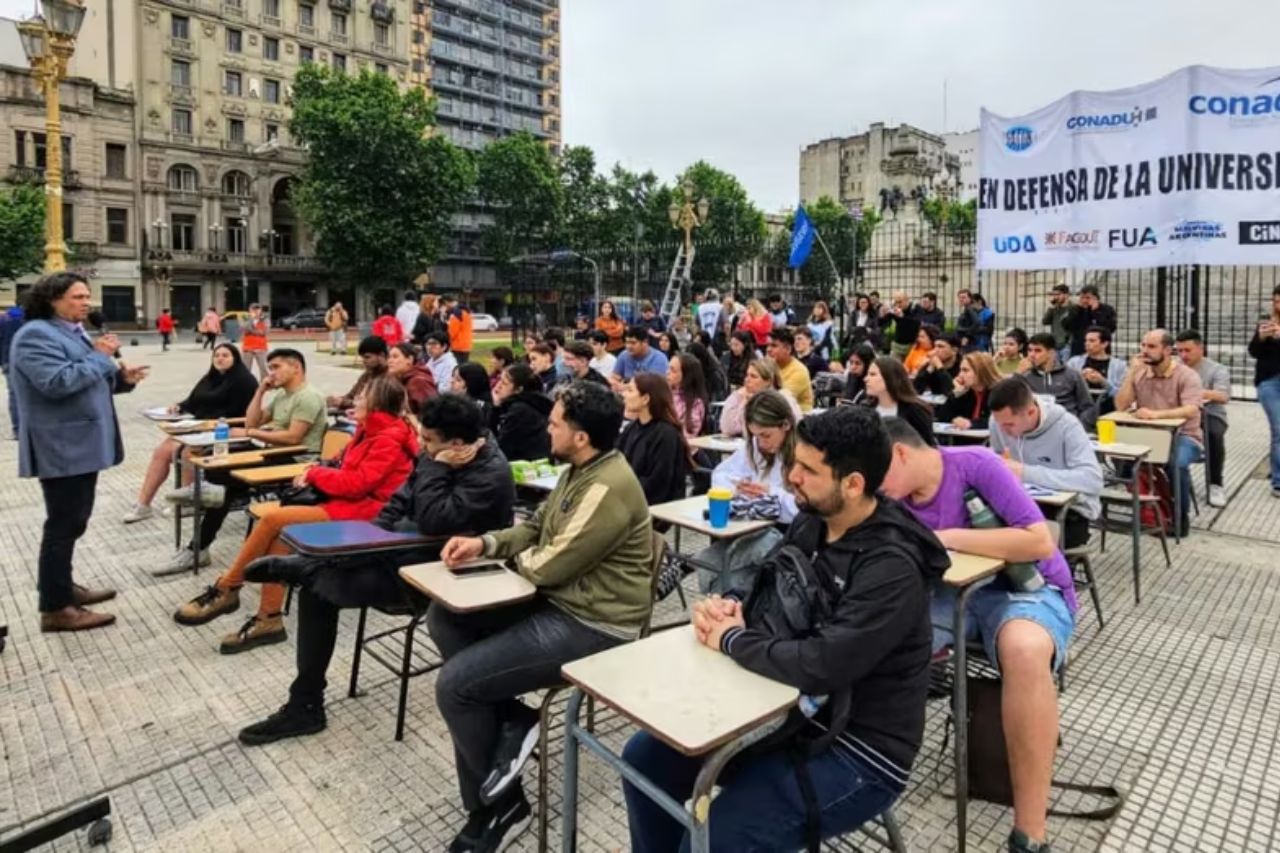

The University of Buenos Aires (UBA) will hold outdoor classes and provide free healthcare services on Tuesday to demand that President Javier Milei transfer the resources mandated by a 2025 funding law for public universities, which the government has refused to comply with.
From 8 a.m. until midnight, the university will provide free medical, dental, optical, veterinary and psychological services at UBA’s faculties, as well as legal and accounting advice.
At 1 p.m., the deans of the university’s 13 faculties will also offer master classes at Plaza de Mayo, located across from the presidential palace, Casa Rosada, and the Economy Ministry.
Dozens of people went to have their blood pressure checked and undergo electrocardiograms, among other services, at Plaza de Mayo. Several of them told the Herald’s sister broadcaster C5N that they took the opportunity because they do not have medical insurance.
The measures are the UBA’s latest attempt to pressure the judiciary into ordering the government to comply with the Public University Funding Law, which provides for higher university payroll funding, inflation-adjusted budgets, and increased funding for scholarships, infrastructure and university hospitals.
“In a democracy, the judiciary must enforce the law. Without funds and without decent salaries, a university is impossible!” UBA workers’ union APUBA said in a statement.
You may also be interested in: Why the suspension of the university funding law is ‘technically dictatorial’
The law the government ignores The public university funding law was initially approved by Congress in August 2025. President Milei, however, vetoed it days later on the grounds that it went against his zero-deficit goals.
The following month, both chambers of Congress rejected the veto, meaning the bill became law.
The executive branch had no option but to enact the law, but it did so without allocating budgetary resources for its implementation.
Later, it suspended the law’s implementation through a new decree, stating that it could not take effect until the source of funding had been established — even though that information is already specified in the law.
In response, the National Inter-University Council and several public universities filed a writ of protection following the 2025 veto. They asked the judiciary to declare Milei’s refusal to implement the enacted law unconstitutional.
In December, a judge ordered the government to execute the law. After the libertarian administration’s appeal was rejected, the case reached the Supreme Court, which dismissed the government’s appeal in June and mandated compliance with the main points of the law.
While the Human Capital Ministry and universities agreed to a partial funding increase that month, and a September court order directed specific funds to the UBA, universities continue to demand full compliance with the broader legislative mandate.