The tragic history of the prison Pope Leo will visit
 Buenos Aires HeraldUpdated 18 hours Ago3 Mins read

Pope Leo XIV’s itinerary in Argentina includes many of the same events that he has carried out in other places around the world.
The pontiff’s busy four-day stay in the country includes meetings with political authorities and youth organizations, visits to institutions in charge of pastoral work, and public masses in major cities.
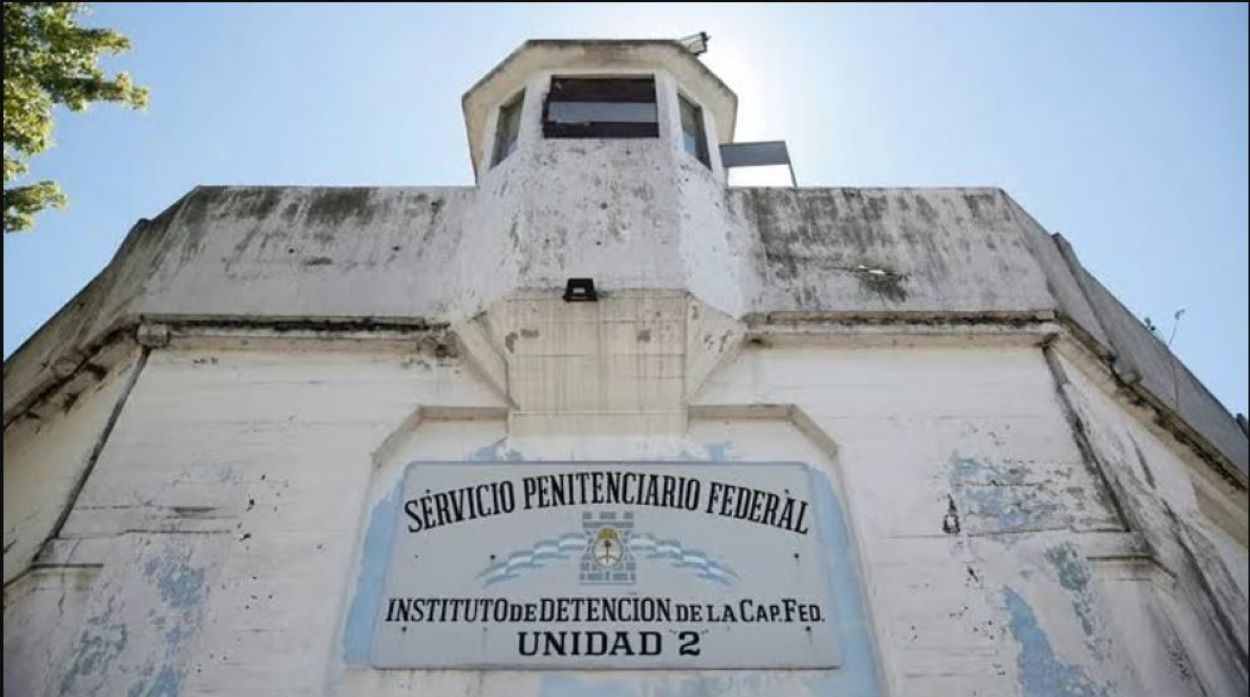
The pope’s traditional meeting with inmates is also on the schedule, and the chosen place is the last remaining prison in Buenos Aires City: the Cárcel de Devoto (Devoto Prison), located in the Villa Devoto neighborhood.
Visiting prisons to meet with those incarcerated is part of a papal tradition since Pope John XXIII became the first pontiff to do it in 1958. And while many popes followed this tradition, it became a central hallmark of Pope Francis’ tenure.
The Argentine-born pontiff, named Jorge Mario Bergoglio, made it a point of visiting prisons whenever he could. His visits made global headlines, most notably when he chose to wash the feet of the inmates, a decision based on the passage of the Gospel where Jesus did the same for his apostles.
In the little over a year since his selection, Pope Leo has continued the practice.
Devoto, officially named Unidad Penal N.º 2, is currently in the process of shutting down after functioning for almost 100 years (it first opened in 1927), the result of a decades-long request made by neighborhood residents. Inmates started being transported to a prison in Marcos Paz, Buenos Aires Province, in early October.
The encounter between Pope Leo and a selected group of 74 remaining inmates on November 10 will be the closing act for the prison. The facility will be shut down permanently the following day, ending a dark history that includes its use of the facility as a clandestine detention center during the last dictatorship (1976-1983) and the site of the worst massacre in Argentine prison history.
Exterior of Cárcel de Devoto. Credit: Google Maps A tragic history Pressed by a growing population in the early 20th century that inevitably brought on more crime, Argentine authorities were looking where to build a new prison.
After failed attempts in Parque Patricios and Recoleta, they decided to build it in Villa Devoto, a neighborhood in southwest Buenos Aires City that at the time was almost rural, populated by farms and far away from the city’s population.
Cárcel de Devoto, which opened on May 2, 1927, was initially meant to only house people charged with minor offenses or contraventions. But its purpose changed after the first few decades, triggered mainly by President Perón’s ousting by a military coup in 1955.
As political persecution against Peronists grew, Devoto changed its main function in 1957 and began housing inmates who had been convicted of much more serious crimes.
In addition to the higher risk and danger this ensued for the neighborhood, it also opened the door to the prison’s overpopulation, a problem that would only continue to worsen.
The prison was the stage for one salient episode of the country’s violent political climate of the 1970s. Fresh off a presidential win in 1973, Héctor Cámpora promised that all political prisoners would be freed but gave no date for their release.
Unhappy with the uncertainty, Peronist activists marched on the prison on May 25 and forced it open. Known as the “Devotazo,” the action led to the freeing of political prisoners and common criminals.
During the 1976-1983 dictatorship, Devoto was used as a clandestine detention center. According to the human rights group Comisión Nacional de la Memoria, it is estimated that around 1,200 political prisoners were imprisoned and tortured there, with women being the majority. Survivor testimony has stated that they were kept in a specific pavilion that had all the windows sealed.
In October 2012, the prison was formally registered as a memory site.
The worst massacre in Argentine prison history also took place in Devoto on March 14, 1978. Known as the “Masacre en el Pabellón Séptimo” (Massacre in the Seventh Pavilion), 65 prisoners were killed after an argument between a guard and an inmate led to a fierce crackdown.
In addition to those who died as a result of the violent repression, the incident led to a fire that killed many more inmates, as prison authorities turned off the water supply and refused to let the firemen in.
In 2025, two prison guards received 25-year prison sentences for their roles in the massacre.
Tower on Cárcel de Devoto. Credit: C5N







Meros, salmones y besugos: buenas señales para la pesca embarcada en Claromecó
Cuando hablamos de pesca embarcada en el partido de Tres Arroyos, y...
 Herakles032 Mins read

Brasil: a Curitiba la Navidad llega en noviembre
Curitiba, la capital del estado brasileño de Paraná, prepara la décima edición...
Herakles032 Mins read