The Herald at 150: A British voice witnessing Argentine history
 John HunterUpdated 53 minutes Ago2 Mins read

The Buenos Aires Heralds 150th anniversary is an opportunity to reflect on its unique legacy.
For starters, it was a newspaper of many firsts. The first in Argentina to establish a European cable service, operate a trans-Andean telegraphic service, and abandon the traditional folio format in favor of an eight-page edition. It was also among the first to modernize its printing methods.
Yet these achievements alone do not explain its enduring place in Argentine history.
What truly distinguished the Herald was its ability to become far more than a source of news. Over the decades, it evolved into the living heart of the British community in Argentina.
The newspaper served as a bridge between two worlds, connecting expatriates and their descendants with developments in Britain while keeping them informed about events in their adopted homeland.
Through its news reports, notices, and advertisements, readers followed shipping arrivals, business ventures, sporting fixtures, church activities, school achievements, and the countless social events that gave shape to community life.
A look back at 150 years of history Among its most treasured features was the famous Day by Day column. More than a social diary, it became a daily chronicle of Anglo-Argentine society. Its pages recorded births, engagements, marriages, anniversaries, academic successes, charitable endeavors, club activities, and personal milestones from across the country.
In an era long before social media and instant communications, the column functioned as the community’s notice board, conversation piece, and collective memory. To appear in it was, in a sense, to become part of the shared story of the British presence in Argentina.
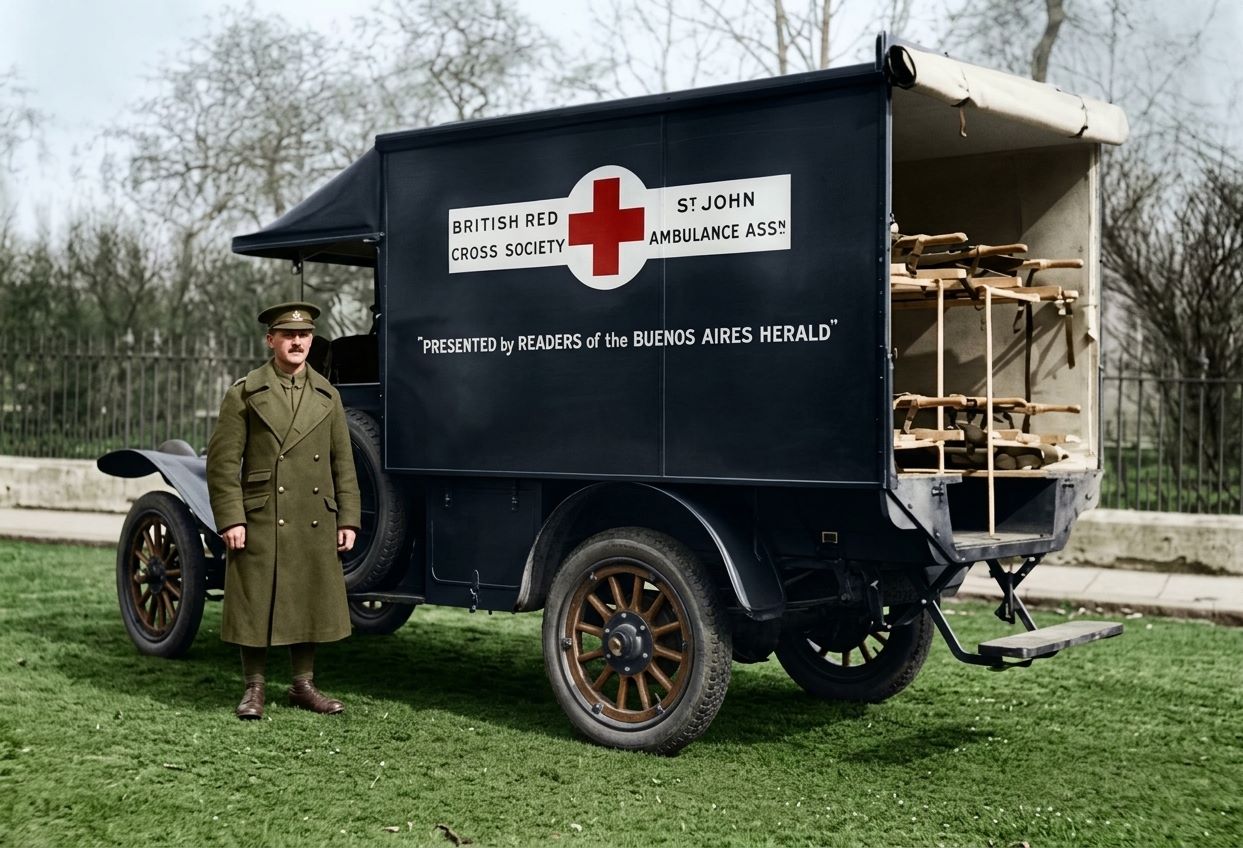
The Herald also played an important role during the two World Wars. During World War I, it organized fundraising campaigns in support of the Allied cause, including the Yerba Mate Fund and a drive to finance a motor ambulance for the British Red Cross Society.
Such initiatives reflected the strong ties that united the British community in Argentina with events unfolding across the Atlantic.
During World War II, the paper again became a focal point of community engagement. Its Victory Edition remains a powerful testament to the support offered by hundreds of members of the British and Anglo-Argentine community to the cause of freedom and democracy.
Their contribution forms an important chapter in the shared history of Britain and Argentina and deserves continued remembrance.
Equally emblematic was the Christmas Kiddies Fund. Year after year, readers, businesses, and community organizations contributed generously to the appeal, enabling disadvantaged children to enjoy Christmas celebrations that might otherwise have been beyond their reach.
The campaign embodied values long associated with the British community in Argentina: generosity, civic responsibility, and concern for those less fortunate. It demonstrated that the Herald was not simply reporting on community life but actively helping to shape it.
The newspaper nurtured generations of journalists whose influence extended far beyond the English-speaking community. From the 1970s onwards, figures such as Andrew Graham-Yooll, Robert Cox, and James Neilson helped shape the Herald‘s reputation for independent and principled journalism.
During periods of political violence, instability, and dictatorship, they upheld the newspaper’s commitment to truthful reporting, professional integrity, and freedom of expression, often at considerable personal risk.
Their work ensured that the Herald became not only a trusted source of information but also an indispensable witness to one of the most difficult chapters in Argentina’s history.
Looking back over 150 years, it becomes clear that the true legacy of the Buenos Aires Herald lies not only in the headlines it published but also in the community it helped build and sustain.
That the newspaper continues to exist today, albeit in digital form, is itself a cause for celebration. As the Herald marks this remarkable anniversary, one can only hope that it will continue informing, connecting, and bearing witness for many years to come.
Cover image: Motor ambulance for the British Red Cross Society donated by readers of the Herald during World War I (Courtesy John Hunter)