The Argentine Senate is debating a controversial private property rights reform bill on Thursday afternoon, as protesters gather outside Congress amid a heavy security operation.
The bill proposes changes to existing legislation that would expand the rights and powers of owners of property and land.
The bill’s most controversial provision, which would have lifted restrictions on foreign ownership of rural land, was removed after the ruling party, La Libertad Avanza (LLA), failed to secure enough support amid widespread backlash.
However, senators will still debate changes affecting protections of native forests and land burned in wildfires, as well as measures to speed up tenant evictions and further restrict state expropriations.
LLA had already postponed a debate on the bill in June and July because it lacked the votes needed for passage, a problem that appears to persist ahead of Thursday’s session.
Rural land purchases
The original bill sought to eliminate all restrictions on the purchase of rural land in Argentina by foreign nationals. Current legislation, known as the “Land Law,” limits foreign ownership to 15% of rural land at the national, provincial, and municipal levels.
After several allied blocs opposed the measure, LLA amended the proposal to raise the cap to 25% instead of eliminating it altogether. Even so, the change failed to secure enough support.
Public opposition to the proposal also remained strong. Musicians Emilia Mernes, Tini Stoessel, Lali Espósito, Dillom, and L-Gante, along with Argentina men’s national team defender Lisandro Martínez, publicly expressed their opposition.
Several governors with influence over undecided senators also announced their opposition this week, further weakening the government’s chances of advancing the bill.
President Javier Milei had already attempted to eliminate restrictions on foreign ownership of Argentine rural land by decree shortly after taking office in late 2023. A federal judge later struck down the measure, ruling that it “endangered Argentina’s sovereignty.”
What the bill proposes now
The remainder of the proposal, dubbed the “Private Property Inviolability Law,” will be debated on Thursday.
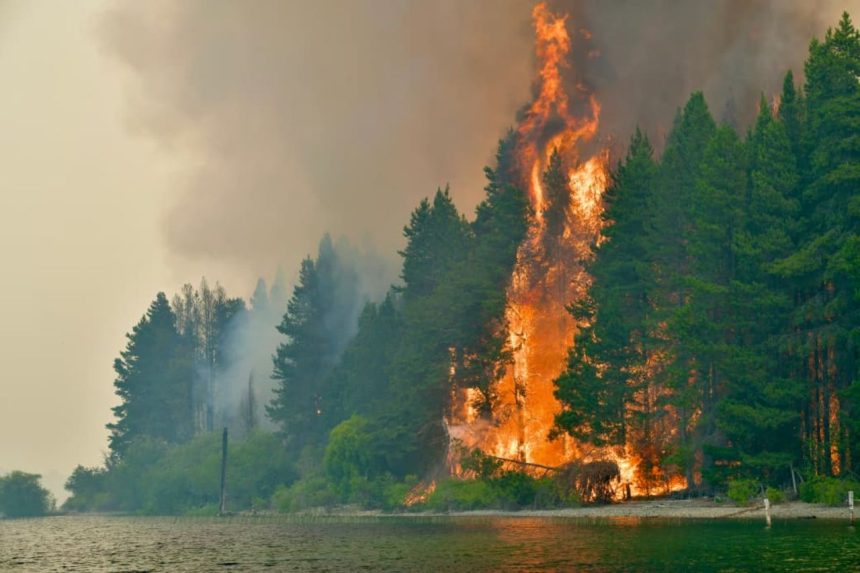
One of its most contentious provisions would amend wildfire management rules to allow changes in land use in areas affected by fires.
The bill would eliminate current protections that prohibit changes in land use, subdivision, or the sale of burned native and planted forests, protected areas, and wetlands for 60 years. It would also repeal the 30-year restriction on changing the use of burned agricultural land.
Congress enacted these protections in 2020 to curb a practice that had become widespread: deliberately setting fire to forests and wetlands to clear land for agriculture, livestock farming, or real estate development.
While the reform preserves protections for native forests, it does not specify how long those safeguards would remain in effect.
The bill also introduces “express evictions” for tenants who fail to pay rent. Under the current system, court-ordered evictions can take months or even years. Under the proposal, tenants would have 10 days to settle overdue rent after missing a payment, after which landlords could seek their eviction through an expedited judicial process.
The proposal would also further restrict the state’s power to expropriate private property. National, provincial, and municipal governments would have to meet stricter legal standards to demonstrate that an expropriation serves the public interest, including satisfying tests of suitability, necessity, and proportionality.
In addition, the bill would increase the compensation the state must pay property owners and prevent authorities from taking possession of expropriated property until compensation, including payment for lost profits, has been made in full.