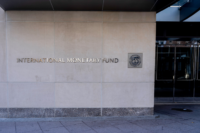
IMF praises Argentina’s ‘progress’ but says growth should be better ‘distributed’
 Juan Marcos PollioUpdated 1 hour Ago2 Mins read


Fresh off the heels of a new technical mission in Argentina, the International Monetary Fund (IMF) once again backed President Javier Milei’s economic plan while also acknowledging the need for economic growth to expand beyond agriculture, mining, and energy.
Argentina has made “significant progress in restoring macroeconomic stability in a very challenging environment of what had been high debt and also what had been very high inflation,” IMF spokesperson Julie Kozack said Thursday at her weekly press conference.
Kozack highlighted the slowdown in inflation since the libertarian government took office, as well as the fiscal surplus and the increase in foreign reserve purchases by the Central Bank so far in 2026.
“Stabilization is a key foundation for sustainable growth in Argentina,” the spokesperson added.
Kozak said that the IMF and the Argentine authorities agree on two things regarding the “growth front,” with the first being the need to continue strengthening Argentina’s “resilience.”
The second point was the acknowledgement that it’s “important to ensure that growth, which so far has been very much in the energy, mining, and agricultural sectors, broadens and becomes more evenly distributed across sectors in the economy, but also across workers.”
Raw material exports are experiencing an unprecedented boom during 2026, making this the best year for terms of trade in Argentina’s recent history. The trade surplus between January and August hit a record US$18 billion.
Most sectors of the rest of the economy, however, are worsening. The industrial sector is 9% below November 2023 levels, the month before Milei took office. Construction is down 24%.
The labor market has also been affected. In real terms, registered wages are 3.4% below pre-Milei levels, while the unemployment rate rose from 6.2% in the second quarter of 2023 to 7.9% in the same period of 2026.
Compounding this outlook was data showing that economic activity in July saw its worst drop since the pandemic, which left the economy on the brink of a technical recession.
The IMF mission in Buenos Aires Kozack also spoke about the recently concluded technical mission led by Joyce Wong, the new lead for the agreement between the IMF and Argentina, who visited Buenos Aires between September 21 and 29.
“Discussions are continuing, and they will continue in the coming weeks. And those discussions are aimed at reaching a staff-level agreement for the third review,” Kozack said.
She added that the meetings between delegations focused on “how Argentina can consolidate the gains from the stabilization it has achieved and broaden those gains across the economy.”
“And this is going to be essential to support, obviously, stronger investment. It’s going to be important to support durable economic growth [and] job creation,” Kozack said.
The mission was part of the discussions for the third review conducted under the renegotiation carried out by the Milei administration regarding the US$45 billion loan originally requested in 2018, during the presidency of Mauricio Macri.
The IMF has made several disbursements to President Javier Milei since he took office in December 2023. Some are part of the 2018 agreement, while others belong to the program renegotiated in 2025, which included an additional US$20 billion in funding.
In total, the current administration received just under US$18 billion. A new disbursement of around US$900 million is expected if the third review currently underway is approved.