Government files criminal complaint against university march protesters
 Martina JaureguyUpdated 1 hour Ago3 Mins read
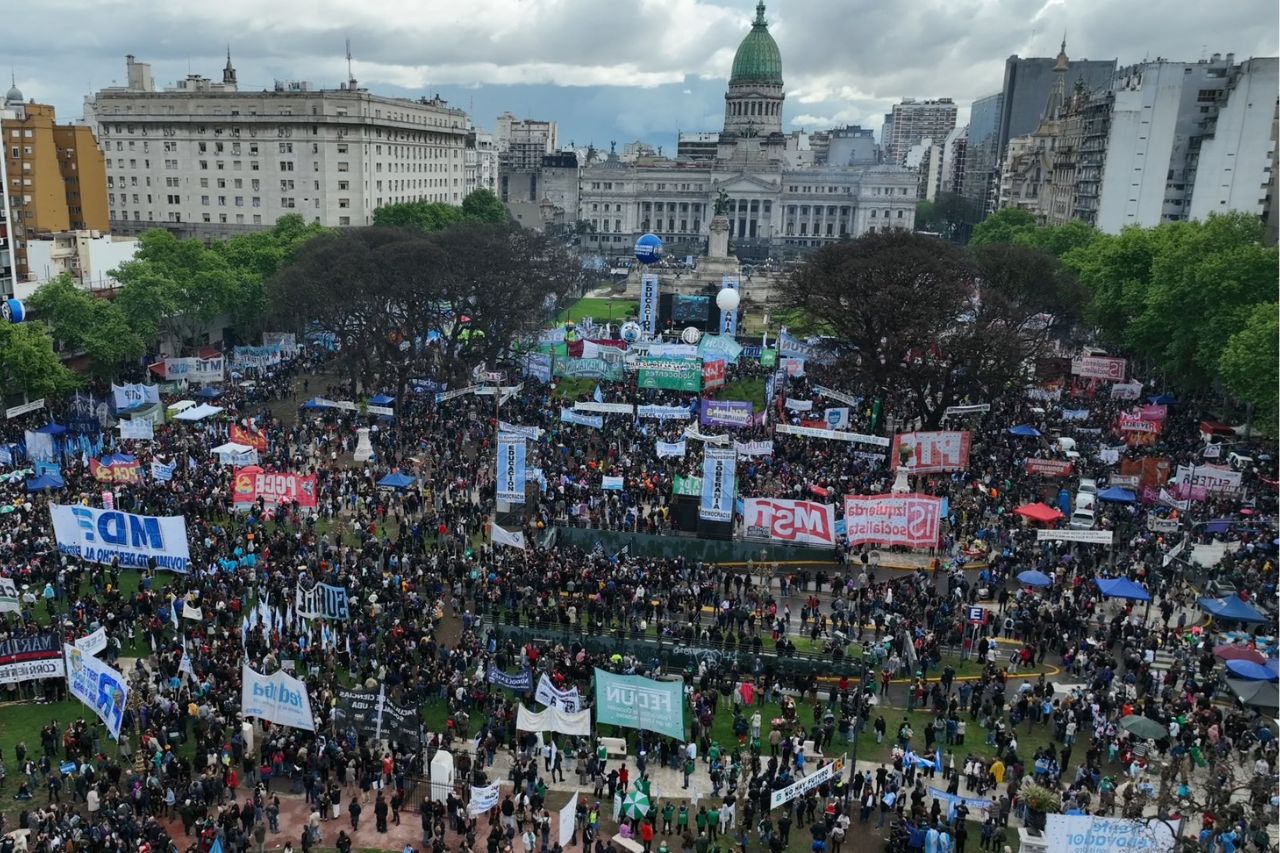

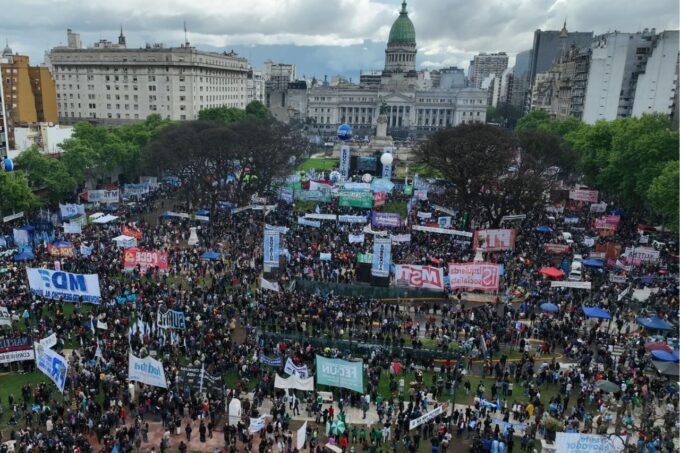
The Argentine government filed a criminal complaint on Friday against protesters who took part in Thursday’s march in support of public universities, alleging property damage and assault on public officials.
The complaint targets demonstrators who allegedly threw broken pieces of sidewalk and other objects at police.
The complaint was filed Friday morning by the Security Ministry’s legal team. The charges include resisting and assaulting a public official, violating the constitutional order, and aggravated property damage.
Los mismos violentos de siempre. Quieren imponer el caos, desafiar a las Fuerzas de Seguridad y convertir las calles en una zona liberada.
El derecho a manifestarse no es un permiso para ejercer la violencia. Quienes agredan a nuestros efectivos, destruyan bienes públicos o… pic.twitter.com/qRJcbdcIrh
— Alejandra Monteoliva (@AleMonteoliva) October 15, 2026 “The right to protest does not grant permission to commit acts of violence,” Security Minister Alejandra Monteoliva said in an X post during the march. “Those who attack our officers, destroy public property, or commit crimes will be held accountable by the courts.”
According to the filing, the targeted protesters deliberately covered their faces to avoid identification and first damaged public property to obtain heavy objects to throw at police.
The protest was the fifth march in defense of public universities since President Javier Milei took office. Participants again called on the government to comply with a 2025 law guaranteeing funding for public universities, which are facing a critical period marked by salary and resource shortages.
Protest ends in violence The march ended abruptly on Thursday evening amid heavy rain and a widespread police crackdown.
Officers from several forces used tear gas, rubber bullets and water cannon trucks to disperse demonstrators, affecting far more people than the few who were involved in clashes.
University rectors, deans, students and employees gathered on a stage set up in front of the Congress building to read a document outlining their demands.
University of Buenos Aires Vice President Emiliano Yacobitti said in an interview with news channel TN that they had to leave because of the tear gas thrown by the police.
Yacobitti said the actions of a few violent individuals could not tarnish the peaceful nature of what he described as a “massive” march in Buenos Aires and other parts of the country.
“The crackdown that took place was completely excessive,” he added.
At least 30 people were arrested on Thursday, including two minors, ages 14 and 17, who were later released.
Más de 550 personas afectadas por los gases, postas de goma y agua presión durante la represión a la marcha federal universitaria
Frente a un Congreso completamente vallado, y que no sesionó por falta de quórum, las fuerzas de seguridad federales reprimieron de manera desmedida… pic.twitter.com/3UHp3x6IpB
— Comisión Provincial por la Memoria (@CPMemoria) October 15, 2026 Injuries caused by the crackdown According to the public human rights organization Provincial Commission for Memory, more than 550 people were affected by tear gas, rubber bullets and pressurized water during the march.
The organization described the crackdown as “excessive and brutal.”
Police fired “more than 120 tear gas grenades, hundreds of rubber bullets and Byrna chemical pellets, pepper spray, and pressurized water sprayed from two water cannon trucks that refilled at least three tanks,” the organization said.
It added that six arrests carried out by the Buenos Aires City Police, including those of the two minors, were “arbitrary.”
Photoreporter Guido Piotrkowski, who works for newspaper Página/12 and was covering the march, photographed a Federal Police officer shooting rubber bullets directly at him. He said he was hit twice. “They hit my chest, but they could have hit me higher up.”
Piotrkowski added in an Instagram post that another colleague standing next to him was also shot in the legs.
Reporter Lula González also reported being grazed by a rubber bullet.
While reporters and photographers covering demonstrations in Argentina typically wear press vests and often use gas masks, they have begun taking additional precautions, including wearing helmets, following the serious injuries sustained by photojournalist Pablo Grillo.
In March 2025, Grillo was struck by a tear gas canister while covering a march in support of pensioners. A military police officer fired the canister directly at his head, causing severe skull fractures and brain damage.
Grillo spent a year undergoing rehabilitation at a specialized public hospital, as his mobility and speech were affected.
Grillo returned home in April, where he continues to receive care. The military police officer was charged with causing serious injuries and will stand trial.