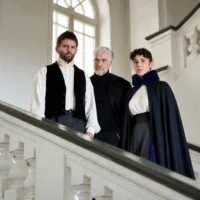
Ghost town: Mariana Enriquez’s stories come alive on Netflix
 Buenos Aires HeraldUpdated 1 hour Ago3 Mins read
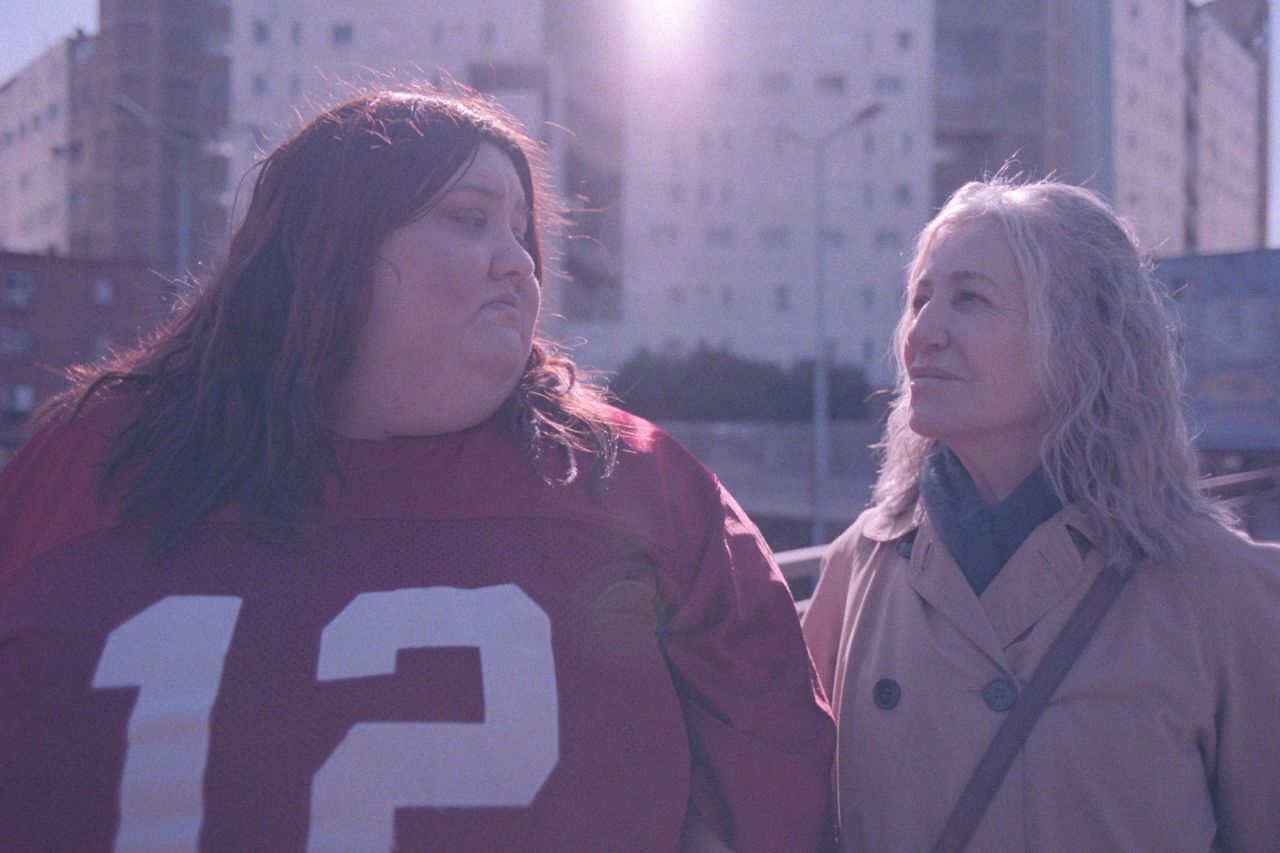

What if someone who could hear and see the dead fell into a city’s water supply and decomposed? Would that ability spread around town?
What the master of sci-fi horror Stephen King described as a “cool idea” on an X post is the premise of My Sad Dead, Netflix’s new miniseries based on short stories by Argentine journalist and writer Mariana Enriquez, one of the leading figures in today’s horror literature.
Directed by Pablo Larraín and starring Mercedes Morán, Dolores Fonzi (Blondi), Alejandra Flechner (Argentina, 1985) and Carolina Alvarez, My Sad Dead premiered at the San Sebastian Film Festival last week before landing on Netflix on September 24.
The story features Ema, a recently retired doctor (played by Morán) who can see the dead and tries to process her mother’s death and her own unresolved matters. The arrival of her niece Julie (Alvarez) and the murder of three teenagers in Piedrabuena, a working-class neighborhood marked by violence on the edge of Buenos Aires City, trigger a strange phenomenon that breaks the fragile balance between the living and the dead.
What had been Ema’s burden until then begins to spread throughout the neighborhood: the dead start to make themselves present, and no one will be able to escape the sound of their own ghosts.
Adapted to the screen by Larraín, Guillermo Calderón, Anastasia Ayazi and Enriquez herself, My Sad Dead takes the short story of the same title as its central story — the one featuring Ema — while integrating stories from other sources.
“It’s a very non-canonical adaptation; it’s not that each short story corresponds to a separate chapter, but rather that they’re all interwoven. In a way, as Mariana rightly says, it’s a reinterpretation,” Larraín wrote in his director’s notes.
Enriquez’s work has proven a rich seedbed for audiovisual adaptations. Last year, Argentine filmmaker Laura Casabé adapted her work into the film “The Virgen of the Quarry.” A coming-of-age horror tale based on two short stories from Enriquez’s “The Dangers of Smoking in Bed” (“Our Lady of the Quarry Lake” and “The Cart”) made it to the short list of the Argentine Film Academy in the run to become the country’s Oscar bid this year.
From Chile to Hollywood Larraín, who broke out from Chile in the early 2000s with his second film, “Tony Manero”, made the jump to Hollywood after getting nominated for an Oscar with “No,” his film about Chile’s 1988 referendum to end General Augusto Pinochet’s rule and call for free elections.
Following his 2015 “The Club”, winner of the Silver Bear at Berlinale), he tackled very personal biopics of real characters, including “Jackie” in 2016 about John F. Kennedy’s widow, “Spencer” (with Kristen Stewart playing Lady Di), and “Maria,” about singer Maria Callas starring Angelina Jolie. His 2023 Oscar nominee “The Count˝ reimagined Augusto Pinochet as a real vampire.
“When you work with a writer who has such a complex, sophisticated, and well-constructed universe, you have to immerse yourself in it and do everything possible to preserve it throughout the process and ensure it doesn’t stray from that world,” the director stated.
“That’s also the hardest part. There are certain things she explains or describes through literature — more abstract concepts, sensations, and emotions — that need to be translated into another language, ” he added.
In Enriquez’s literature, the most terrifying things are not usually the supernatural elements that inhabit it, but rather the dimensions and conflicts of contemporary human and social nature that lie behind them.
In a country — and a region — where remembering the people whose deaths were rooted in injustice has such a cultural and political weight. Social violence, Larraín explains in his director’s notes, plays a very important role in the series, as does the failure of institutions and how Latin American society has gradually abandoned certain social classes, leaving them to fend for themselves. The horror, hence, emerges from the oppressive atmosphere of being in a place where life begins to lose its value.
“It’s a horror that builds gradually — at times painful, at others sad — and it has humor; it’s a bit satirical, farcical, and ironic.”