Behind China’s economic might lies a culture rooted in family
 Maria Clara MartorelloUpdated 11 hours Ago2 Mins read

This piece is part of the Argentine-Chinese Chamber of Commerce’s monthly column in the Buenos Aires Herald.
The Mid-Autumn Festival, also known as the Moon Festival, is one of China’s most important traditional celebrations, second only to the New Year.
Each year, on the 15th day of the eighth month of the lunar calendar, families and friends gather to gaze at the full moon, share a meal, and celebrate the bonds that unite them. In 2026, the holiday will take place on Friday, September 25.
Given that we often think of China based on its economic development, its technological innovation, or its geopolitical weight, this celebration allows us to discover another face that often remains in the background: family, food, and gathering.
Elements that, beyond cultural differences, also occupy an important place in Argentine society.
The festival on the inside The best-known legend of this celebration is the story of Houyi (后羿) and Chang’e (嫦娥). According to the traditional tale, Houyi was an archer who managed to save the Earth from the nine suns that surrounded it.
As a reward, he received an elixir that would allow him to achieve immortality.
However, his beloved Chang’e decided to drink it to prevent it from falling into the wrong hands and, after doing so, ascended to the Moon. Since then, her figure has been linked to this holiday, in which gazing at the moon also represents remembering loved ones who are far away.
There are different versions of this ancient legend, but all agree on linking Chang’e (嫦娥) to the moon and to the symbolic origin of this holiday.
The full moon occupies a central place in this celebration. Its round shape symbolizes fullness, harmony, and family reunion. For this reason, the Mid-Autumn Festival is traditionally an occasion to return home, reunite with loved ones, and share a moment of unity.
This family dimension is interesting when we think about China from Argentina. Beyond cultural differences, the importance of gathering, sharing a meal, and being close to loved ones is something that feels much closer to our own customs.
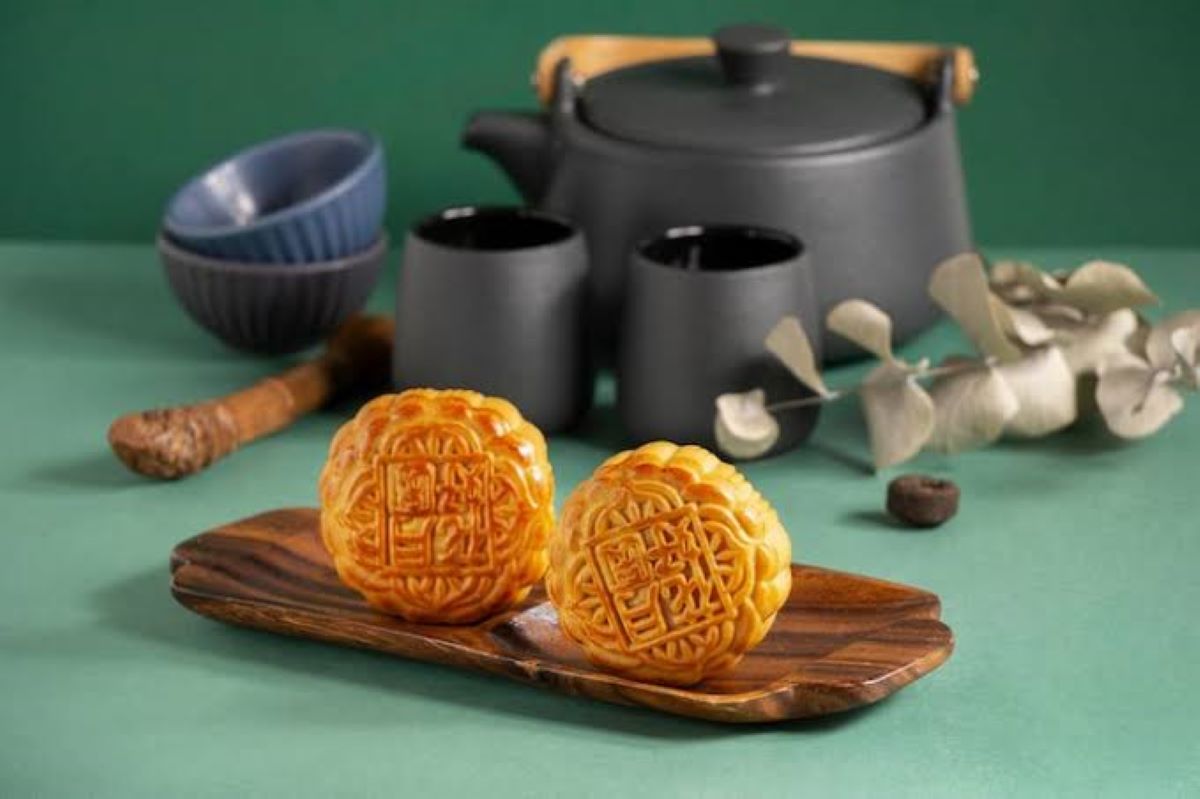
Gastronomy is a great protagonist of this day, especially through the traditional mooncakes, known in Chinese as yuèbǐng (月饼). Round in shape, in allusion to the full moon, these small cakes can be prepared with a wide variety of fillings, both sweet and savory.
Among the most traditional are those made with lotus seed or bean paste, while some varieties incorporate an egg yolk in their center.
The mooncakes are also usually recognized by the drawings and reliefs that decorate their surface, which can include Chinese characters, floral motifs, or symbols of prosperity and good wishes.
In addition to being enjoyed during family gatherings, mooncakes are part of a deep-rooted tradition of gift-giving. It is customary to give boxes of these cakes to family and friends, but also to employees and colleagues, as an expression of good wishes and recognition.
In Argentina, people like Karina Gao contribute to bringing Chinese culture closer through cooking. She moved to our country with her parents when she was very young, and over the years, she turned gastronomy and her social media into a way of sharing aspects of Chinese culture with the Argentine public.
A few years ago, Kari shared her own mooncake recipe with a version adapted to ingredients that are easy to find in Argentina. Check it out and enjoy!












Tras el fiasco del Doroteo Guamuch, selección de futbol de Guatemala jugará otro torneo oficial en cancha prestada
 Sergio Morales1 Mins read