Argentina’s Central Bank (BCRA) confirmed on Monday that it paid US$17.7 million in interest after activating its swap line with the United States in the lead-up to the legislative elections in October 2025.
Officials also said they want to extend the swap line with China, while ruling out any near-term easing of currency controls for companies.
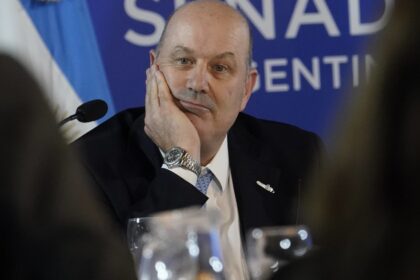
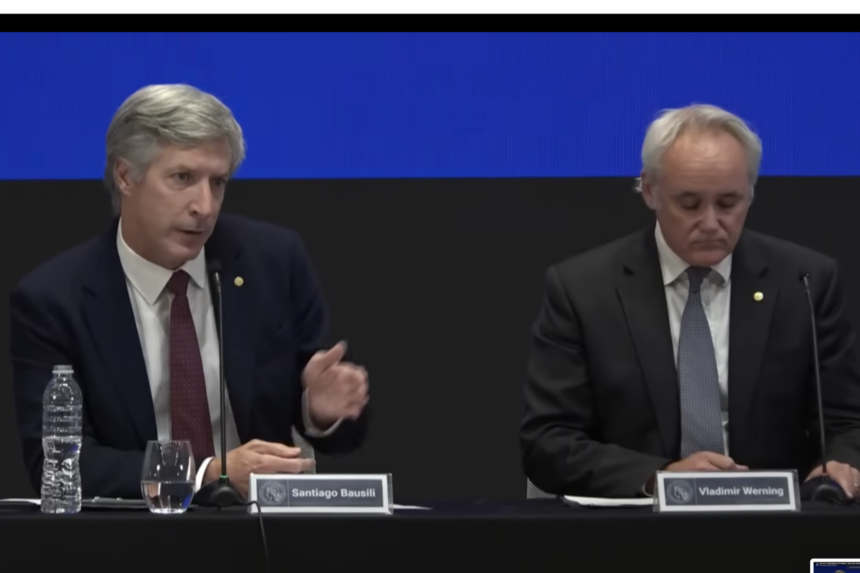
The announcements came at a press conference held by BCRA President Santiago Bausili and Vice President Vladimir Werning at the bank’s headquarters, where they presented the First-Quarter 2025 Monetary Policy Report (IPOM, in Spanish).
The swap with the United States
The BCRA’s 2025 financial statements, published last week, showed that the bank had paid US$17.7 million to the U.S. Treasury Department in interest on the bailout. What the filings didn’t say was whether that figure represented the full cost of the operation.
Argentine markets had been expecting the interest on the portion of the swap that was tapped to be higher.
Milei’s government announced on January 9 that Argentina had repaid the swap — for a total of US$2.5 billion. U.S. Treasury Secretary Scott Bessent said at the time that the operation had let Washington “generate tens of millions of dollars in profits for the American people.”
Asked by the Buenos Aires Herald, Bausili confirmed that the US$17.7 million was indeed the full cost of the operation.
The swap with China
Bausili told reporters that the BCRA is looking to extend its swap line with China for another three years. “We’re in talks with them — the People’s Bank of China — to keep it in place,” he said.
According to the BCRA’s 2025 financial statements, the amount tapped from the swap fell from 21 billion yuan at the end of 2024 — equivalent to roughly US$3 billion — to 7 billion yuan at the close of 2025, or about US$1.032 billion.
On the currency front, Bausili ruled out any immediate loosening of the existing restrictions — known as the cepo — for companies. The current setup, he argued, “doesn’t appear to be holding back exports.”
“For now it’s not a priority. The priority is making sure the economy works,” he added.
Carry trade, high default rates and BCRA independence
Asked about a possible unwinding of dollar positions and foreign capital flight, Bausili said: “Our measure of holdings by non-resident foreign investors in the local capital market is very marginal. The last figure I saw must be between US$2 billion and US$2.5 billion, for a capital market that must be around US$60 billion. We don’t see it as a concern.”
On whether the BCRA’s monetary policy could become more independent from Javier Milei’s government, Bausili pushed back. “Today the BCRA isn’t independent when it comes to coordinating the economic program; it’s fully aligned with the Economy Ministry. That’s much more important than trying to create a situation where someone resists financing the Treasury through money printing.”
Bausili also said the high delinquency rate in consumer credit has started to come down.
“The impact of delinquency on banks’ results is becoming more and more marginal,” he assured, ruling out any kind of bailout for borrowers in default.
“We’re not going to make decisions with other people’s money, and I trust the banks to resolve the situation without our financial help. They’ll be much more creative figuring out what to do with their own money.”
A shift in official communication
The press conference marked a break from the Central Bank’s usually guarded approach to the media. Bausili and Werning said they plan to hold the briefings every quarter alongside the release of the IPOM.
Asked by a reporter whether the change had been requested by the International Monetary Fund (IMF) as part of a push for greater transparency, the officials said it was their own initiative, though they acknowledged that the IMF is “happy” with the move.