Argentina charges Iran’s Revolutionary Guard chief and others over AMIA bombing
 Buenos Aires HeraldUpdated 11 hours Ago3 Mins read
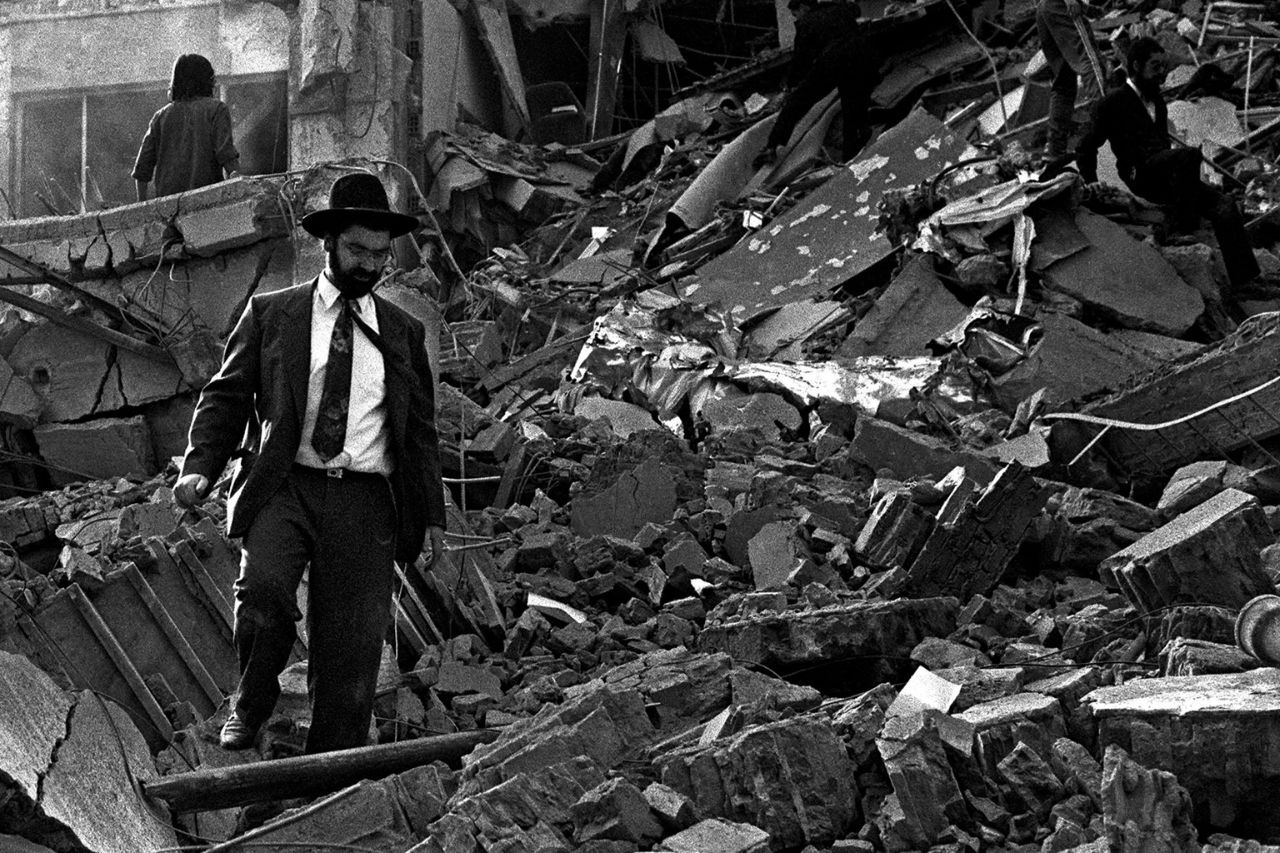

Federal Judge Daniel Rafecas on Monday charged eight Iranian and Lebanese nationals over the 1994 bombing of the Argentine Israelite Mutual Association (AMIA by its Spanish initials), a Jewish community center in Buenos Aires, that killed 85 people.
He also ordered US$500 million in assets seized from each of them. The decision is part of a trial in absentia that began in June 2025.
Chief among the defendants is Ahmad Vahidi, the current commander-in-chief of the Islamic Revolutionary Guard Corps (IRGC), who was commander of the Quds Force at the time.
The former commander of the Revolutionary Guard, Mohsen Reza; Ali Fallahijan, who was intelligence minister; and Ali Akbar Velayati, then foreign minister, have also been charged.
The defendants are men who remain fugitives abroad and who, according to Argentine judicial authorities, were notified of the charges against them and the extradition requests but failed to appear before Argentine courts.
Law 27,784, which allows trials in absentia for certain crimes, including genocide, crimes against humanity and terrorism, was approved by the Argentine Congress in February 2025.
In his ruling, Rafecas established that the decision to carry out the attack was made in August 1993 by the highest authorities of the Iranian regime and that its execution was entrusted to Hezbollah.
According to the judicial reconstruction, the organization had a regional and local support network, with one of its operational hubs in the Triple Frontier, comprising Ciudad del Este (Paraguay), Foz de Iguaz (Brazil) and Puerto Iguaz (Argentina).
The judge also reconstructed the preparations for the attack and said those responsible acquired a Renault Trafic van on Sunday, July 10, 1994. The vehicle was allegedly loaded with about 300 kilograms of explosives before being parked a few blocks from the AMIA building on Friday, July 15.
According to the reconstruction included in the ruling, the van remained there until the morning of Monday, July 18, when it was moved to carry out the attack at a time when the building on Pasteur street was more crowded.
The defendants Judge Rafecas accused Iranian officials Ahmad Vahidi, Ali Fallahijan, Ali Akbar Velayati and Mohsen Rezai of being indirect perpetrators of the attack.
His ruling states that the four took part, from their respective positions within Iran’s state structures, in the decision-making and organization of the attack and enabled those who carried it out on the ground to execute it.
As necessary accomplices, Rafecas indicted Hadi Soleimanpour, who served as Iran’s ambassador to Argentina; Mohsen Rabbani, then cultural adviser at the Iranian Embassy and a religious figure based in Buenos Aires; and Ahmad Asghari, identified as an intelligence agent for the Revolutionary Guard.
According to Rafecas, the three made essential contributions to the criminal plan through diplomatic channels and the local structure linked to Iran.
The eighth defendant is Salman Raouf Salman, also known as Samuel El Reda, whom the ruling identifies as having coordinated the final stage of the attack on behalf of Hezbollah.
The court, however, found that there was insufficient evidence to proceed against Abdallah Salman and Hussein Mouzannar. It also did not examine the legal status of former Iranian Supreme Leader Ali Khamenei or Hezbollah leader Imad Mughniyeh, as both had died, in 2026 and 2008 respectively. Ali Hussein Abdallah, who died in 2020, was also excluded from the analysis.
Crime against humanity One of the central points of the ruling is the legal classification adopted by Rafecas. The judge found that the attack constituted a crime against humanity and also classified the events as genocide under international law.
The charges include repeated counts of homicide and bodily harm, aggravated by racial or religious hatred, and by the use of a means capable of creating a common danger.
The ruling draws on the investigation conducted over many years by the UFI AMIA, headed by prosecutor Sebastin Basso. The Prosecutor’s Office had already requested the indictment of the defendants and the use of trials in absentia for the fugitives.
Another element incorporated into the judicial analysis is the hypothesis that the AMIA attack was coordinated with another attack against the Jewish community that took place the following day in Panama.
According to the ruling, on July 19, 1994, a suicide passenger detonated a commercial airliner in that country, killing its three crew members and 17 passengers. Twelve of the victims belonged to Panama’s Jewish community.
The investigation maintains that both attacks were jointly claimed four days later by Hezbollah from Lebanon, using the cover name “Ansar Allah.”
The case concerning the attack in Panama remains open in that country and, according to the ruling, information is being exchanged with the Argentine investigation.
With information from mbito