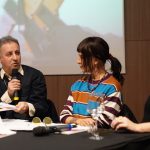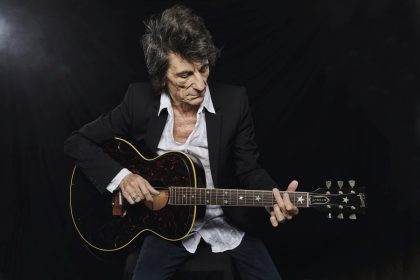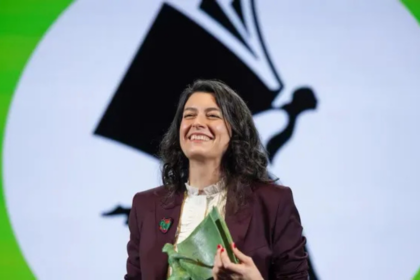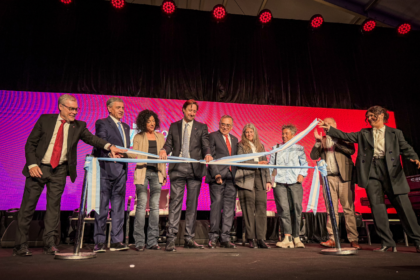
Buenos Aires’ rich cultural scene extends beyond its major theaters, venues, and traditional downtown circuits. In recent years, neighborhood cultural centers have expanded their presence and offerings: live music, theater, workshops, exhibitions, films, dance, and community activities now coexist in intimate venues. For many artists, they are now the best way to reach audiences.
The phenomenon sprouted across Buenos Aires and includes Cultural Morán in Agronomía, Cuerda Mecánica and Domus Artis in Villa Urquiza, Casa del Arbol and Nueva Uriarte in Palermo, Páramo in Boedo, and La Minga in Parque Chacabuco.
The trend takes on particular significance amid the difficulties facing the cultural sector and the government holding back its support to the arts. Small venues thus offer an alternative for projects that lack the resources or audience needed to access larger stages.
In this context, the growth of neighborhood cultural centers is more than an expansion of entertainment options. It is also a response from the cultural community itself to the difficulties of gaining access to traditional circuits.
For a band looking for its first gigs, a theater company preparing to premiere a production, or a group of artists trying to build an audience, a cultural center can play a decisive role. It is not simply a matter of securing a performance date. These spaces allow artists to gauge their relationship with audiences, experiment with different formats, establish contacts, and begin building a career.
From the suburbs to Japan
Florencia Ruiz is a singer-songwriter with an impressive career that began in 2000. Her albums found an unexpected following in Japanese record stores and clubs, allowing her to tour over there almost every year since 2008. In Buenos Aires, she performs in cultural centers in the city and its suburbs.
She says it’s “vital” that these places exist and that they should have support at every level, from the national, city or provincial governments, “wherever they happen to be.”
“I have the impression that many cultural centers are the aspirations of a group of young people who want to change the reality of their neighborhood. I lived in Boedo for many years, and my son took part in many art-related activities at La Minga. It helped to connect with our neighbors at a time where you barely even know the people next door or in your own building,” she says.
“These are the places that offer musicians the best terms. They don’t have a purely commercial attitude, though of course they have to survive and have to generate money. But I see them as a kind of refuge that needs to be protected.”

A new space in Villa Urquiza
Cuerda Mecánica opened in 2019, near the border between Villa Urquiza and Belgrano R. It was warmly received by the neighborhood and even managed to stage an open-air music festival on the street featuring established artists like Litto Nebbia, but soon had to close for several months during the COVID-19 lockdown.
Housed in a Bauhaus-inspired building designed by celebrated architect Rodolfo Livingston, the place is run by directors Olenka Tylka and Santiago Bajder, both drawn to the arts and inspired by similar venues they saw during their travels in Europe. It is their first experience running a cultural center, and although they even scouted for a space in La Boca, they decided to “decentralize” and establish the center in a neighborhood setting.
Cuerda Mecánica has an exquisite auditorium with a piano and ideal acoustics, where Fernando Cabrera, Martín Buscaglia, María Creuza, and El Tata Cedrón performed recently.
“We are very selective about the acts we program here, because we have to like them and feel interested in their music,” Tylka says. “We want to offer quality shows at an affordable price and close to home for our neighbors.”
They also organize a book club, offer free activities on Sundays, and continue making an open-air music festival that last year included pop singer Hilda Lizarazu and pianist Lito Vitale. This year’s festival will take place on September 15.
Other activities include a film club and theater programming, as well as a rooftop restaurant called El Jardín Oculto.

A local network
Buenos Aires has a long tradition of independent artistic production. What is changing is that an increasing share of this activity is taking place in small, local venues, rather than exclusively through the traditional “off-Corrientes” circuit
A venue located away from traditional cultural corridors can become a meeting point for residents and artists, building a stable program around which a community can develop.
Neighborhood cultural centers do not replace public policy, nor can they solve the cultural sector’s structural problems. But at a time of growing financial constraints, they function as a local network that preserves an essential opportunity for culture: giving those just starting out a place to begin.
Lucio Mantel released his first album in 2008 and spearheaded a new generation of singer-songwriters based on Argentine rock, folk, Tropicalism, pop, and classical music. He tours regularly throughout Europe, but admits that playing the neighborhood circuit in Buenos Aires “is a fantasy I’ve had ever since reading about Carlos Gardel’s tours through Flores, Villa Urquiza, Almagro and Boedo in his biographies.”
He calls cultural centers “a countercultural gesture” and sees them as a return to a custom his parents told him about: going out to the neighborhood club rather than the city center, viewing Buenos Aires as a collection of neighborhoods, each with its own distinct culture.
Mantel welcomes that culture is moving closer to where people actually live, adding that it’s not happening only in the city of Buenos Aires, but in the suburbs as well, “because there are plenty of really interesting venues in places like Villa Ballester, Vicente López, Avellaneda, Quilmes, and Lanús.”

But the growth of these spaces also raises a difficult question: how long can this network survive without greater public support? As artists and audiences increasingly rely on neighborhood cultural centers, their future may depend on whether they can continue balancing accessibility, community, and artistic freedom with rising costs and limited resources.
For now, they are filling a gap left by the traditional cultural circuit and by the state. The question is whether that will be enough to keep Buenos Aires’ neighborhood culture alive in the years ahead.