Inside the residence Pope Leo will sleep in every night in Argentina
 Buenos Aires HeraldUpdated 2 hours Ago2 Mins read
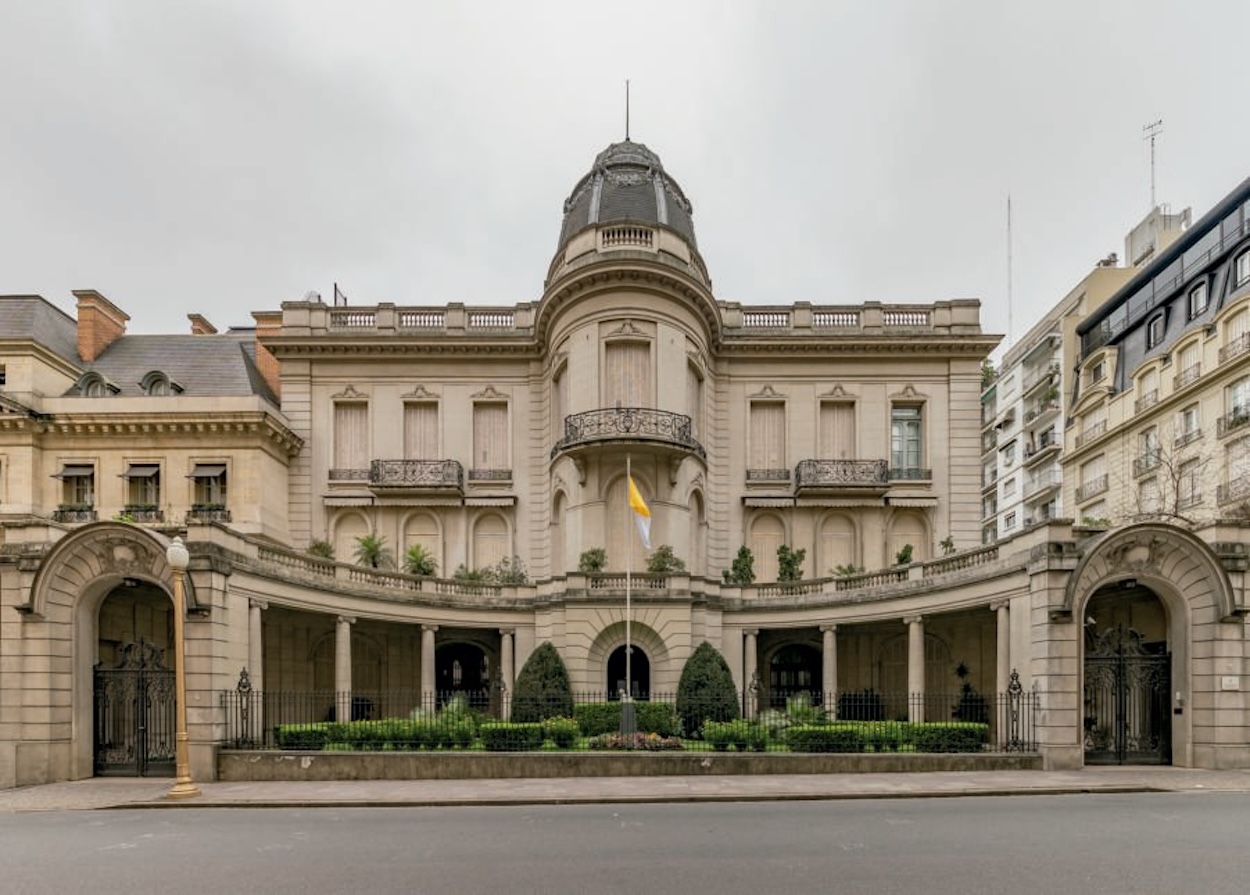

Despite his busy schedule across different cities in Argentina, Pope Leo XIV will spend all four nights in the same place. The building is an early 20th-century palazzo in Buenos Aires City that houses the Apostolic Nunciature, the diplomatic mission of the Holy See in Argentina.
The building, a small palace known as the Fernndez Anchorena Palace, is located on Avenida Alvear 1637, in Recoleta. In addition to being the place where the pope will sleep, the nunciature is where the pontiff will carry out meetings not included in the official agenda during his four-day visit to Argentina.
You may also be interested in: The Pope takes over Buenos Aires: All you need to know
The building of the Fernndez Anchorena Palace was commissioned by Juan Antonio Fernndez and his wife, Rosa de Anchorena, to French-Argentine architect douard Le Monnier in 1907.
The small palace was completed in 1909 following the tenets of what was known as Second Empire Style, an eclectic architectural style favored by high society in Argentina at the time. It has a ground floor and two stories, coupled with a grand central vestibule, a number of grand saloons, a main dining room, a dancing hall, a winter garden, and a chapel.
Entrance to the Apostolic Nunciature. Credit: Wikimedia
The Fernndez-Anchoneras, however, lived in Paris and never moved in or lived there. They managed the building, leasing it to public and private actors. At one point, it was the official residence of President Marcelo Torcuato de Alvear (1922-1928) and his wife, famed opera singer Regina Pacini de Alvear.
The couple eventually sold the property in the 1940s to Adelia Mara Harilaos de Olmos, a philanthropist and devout Catholic who had been renting the building and living there for a number of years. She passed away in 1949 and, in her will, donated the property to the Catholic Church on one condition: that it be used to house the Apostolic Nunciature in Argentina.
In 1952, the mansion officially became the official headquarters of the Vatican’s diplomatic mission in the country.
The residence has already been used previously by a pope. John Paull II, the only pontiff to visit Argentina until now, stayed there during his two visits to Argentina, in 1982 and 1987.
A place for meetings off the official agenda While cameras are set to follow Pope Leo XIV all over the city, the nunciature will serve as a private home and command center during his four days in the country.
The public schedule for the trip includes meetings with national officials and President Javier Milei, as well as ceremonies and activities with representatives of civil society. At the small palace, however, more private conversations may take place.
The use of nunciatures for this type of meeting is something that Pope Leo XIV has already done on other trips. As a diplomatic mission, the Nunciature enjoys the protections provided by the Vienna Convention on Diplomatic Relations.
This means that Argentine authorities cannot enter without consent. It also allows for conversations to take place outside the ceremonial framework established by the host country.
During his trip to Spain in June, for example, at the Spanish Nunciature, the Pope met with figures included in the official program, as well as others who were not on the public agenda.
Among the latter was the president of the Community of Madrid, Isabel Ayuso, who held a meeting under the utmost discretion previously requested by the Vatican.
In Buenos Aires, these meetings will be organized by Apostolic Nuncio Michael Wallace Banach, appointed by Leo XIV on May 14. He will be one of those responsible for managing requests for audiences, although the final decision will rest with the pontiff and his inner circle.
With information from mbito
Cover photo: Apostolic Nunciature in Buenos Aires (Credit. Argentina.gov).