The story behind the ‘little house’ for the disabled Pope Leo will visit in Argentina
 Martina JaureguyUpdated 2 hours Ago4 Mins read
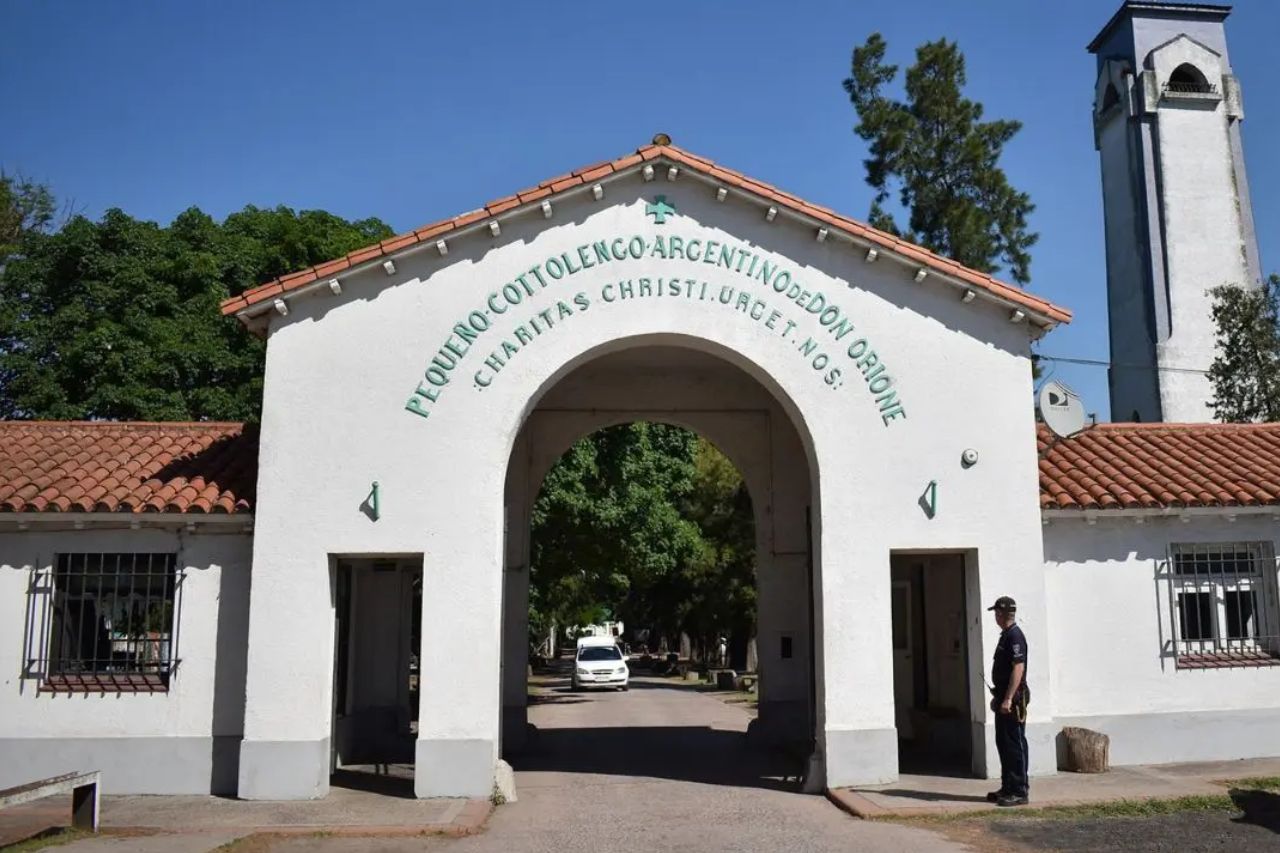

Pope Leo XIV’s visit to Argentina will take him to some of the country’s best-known religious landmarks, including the Luján Basilica and the Buenos Aires Cathedral. But one lesser-known destination on his itinerary stands out: the Pequeño Cottolengo Argentino Don Orione.
The “little” Cottolengo is a residential home for people with disabilities, particularly intellectual disabilities. Located in the city of Claypole, in Buenos Aires province, it lies 26 kilometers south of Buenos Aires City, the country’s capital.
The Argentine Catholic Church included the institution on its list of suggested destinations for Leo’s visit to Argentina, which the Vatican approved. The pontiff will visit on Monday November 9, his second day in the country, before celebrating Mass in Palermo, Buenos Aires City.
The institution is run by the Little Work of Divine Providence, a Catholic organization with a worldwide presence, founded by Saint Luigi Orione in Italy in 1899. In Argentina, he is known as Luis Orione, or simply Don Orione — a name that has been used for decades to refer to his work and even to the neighborhood where the Cottolengo is located.
But what exactly is a Cottolengo, and why is Pope Leo visiting this one in Claypole?
Don Orione and the Cottolengos The word “Cottolengo” actually derives from a name: Giuseppe Benedetto Cottolengo, an Italian priest who devoted his life to charitable work during the first half of the 19th century and was canonized in 1934.
He is best known for founding the Piccola Casa della Divina Provvidenza (Little House of Divine Providence), a home for children without families, the sick and society’s most vulnerable.
Don Orione was inspired and deeply moved by Cottolengo’s work. Born on June 23, 1872, in Pontecurone, Italy, he grew up in extreme poverty. From the earliest years of his priesthood, he knew he wanted to devote his life to the poor and vulnerable.
In 1915, he opened a group of Little Cottolengos in Italy. The adjective “little” reflected his belief that his institutions could never measure up to the work of Giuseppe Cottolengo.
Saint Luigi Orione, or Don Orione in Argentina More homes and schools for vulnerable people opened in the following years, and his mission gradually expanded to other countries. He also founded one religious congregation for priests and another for nuns.
Don Orione traveled throughout South America in the 1920s and 1930s, spending time in Argentina, Chile, Brazil and Uruguay.
Don Orione in Argentina The first Pequeño Cottolengo Don Orione in Argentina opened in Avellaneda, a working-class city bordering Buenos Aires City, in July 1935, after a women’s charity donated a property. Unlike the institution today, it initially focused primarily on caring for injured and sick people.
Don Orione with children at the Little Cottolengo in Avellaneda However, the first Cottolengo to be built from scratch in Argentina was the one in Claypole. Don Orione blessed the cornerstone of what would become the building on April 28, 1935. It opened its doors on May 21, 1936.
At the time, Claypole was a rural area, connected to the city only by railway.
“At first glance, this initiative seemed utterly crazy. A charity home in the middle of the countryside, near a remote train station, where only a few families lived, where ‘civilization ended,’” Father Facundo Mela wrote in an article published on the Cottolengo’s website to mark its 90th anniversary.
“While many saw nothing there,” Father Mela said, Don Orione “saw the birth of a city of charity, a home for those in need.”
The institution was intended to house people with disabilities, “who at that time were completely marginalized, hidden away, abandoned, and forgotten.”
The Pequeño Cottolengo Don Orione in Claypole would go on to become the largest and best-known of 16 Cottolengos and homes for people with disabilities established across Argentina. In total, they house 1,500 people.
The Little Work of Divine Providence also runs schools and community centers. All are part of a network of institutions that also operate in Uruguay and Paraguay.
Don Orione with his hands in prayer during the blessing of the cornerstone of the Claypole Cottolengo. Photo: Pequeño Cottolengo Argentino Don Orione The Cottolengo today The Cottolengo continues to operate on the same grounds where it was established in the 1930s, now surrounded by the city of Claypole. It is run by members of the Catholic Church and laypeople belonging to the groups and congregations founded by Don Orione.
Today, 415 people with disabilities live at the institution full-time. The Cottolengo provides comprehensive care, with professionals from various disciplines working on site, as well as extensive green spaces where residents can walk and take part in activities.
It is neither a hospice nor a medical facility but rather a home where residents — people who require full-time care and would be unable to live independently — stay for life. Many have no family or other place to call home outside the institution.
Living at the Cottolengo is entirely free for residents and their families. Its operating costs are covered through donations, subsidies and payments from health insurance companies.
Photo: Pequeño Cottolengo Argentino Don Orione – Claypole In addition, around 100 people visit the facilities every day to take part in rehabilitation and activities including music, art, dance, drama, crafts, gardening and cooking workshops, as well as adapted sports, literacy and job training programs, and social activities.
“In Argentina, I have found my second home forever, and God willing, I will return, whether alive or dead, for I want my ashes to rest at the Pequeño Cottolengo Argentino in Claypole,” Don Orione said before leaving the country in 1937.
“I leave my heart in Argentina, where I hope to return soon,” he added.
Don Orione died in Italy in 1940 and was canonized in 2004. While his body remains in his home country, his heart — still intact, something the Catholic Church generally attributes to a miracle or divine intervention — arrived in Argentina in 2000 and has since been kept in a reliquary at the Don Orione Sanctuary, located within the Claypole Cottolengo grounds.


Comisión de Finanzas iniciará el análisis del dictamen para el presupuesto 2027
 Danny de Leon1 Mins read