Argentina’s mining sector is booming. There’s room to grow
 Juan Fermin SalvatierraUpdated 3 hours Ago2 Mins read

This piece is part of the Argentine-Chinese Chamber of Commerces monthly column in theBuenos Aires Herald.
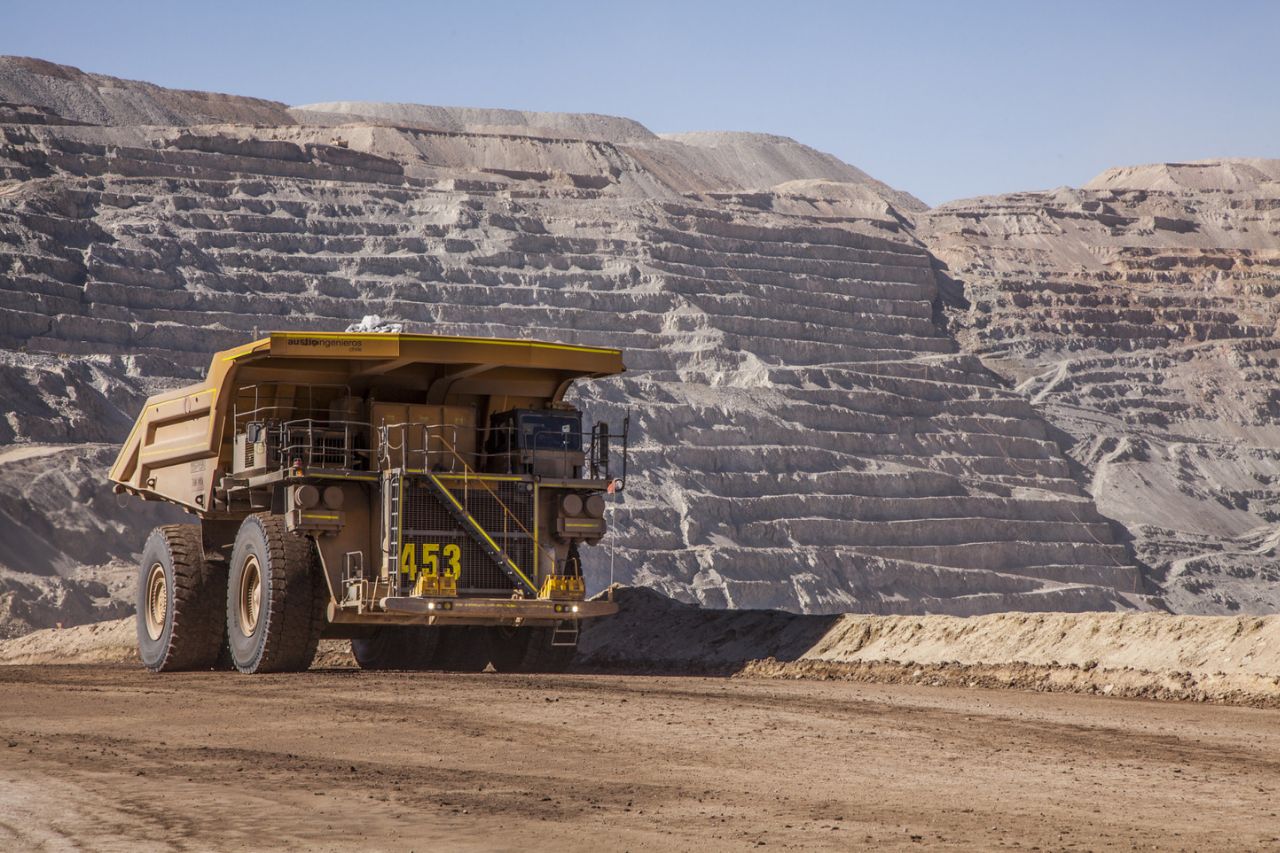
According to data from Argentina’s National Mining Secretariat, sector exports reached US$6 billion between January and August 2026. This is the highest value in history for the first eight months of a year and practically the same amount as in all of 2025.
Mining already accounts for 9.2% of the countrys total exports. Alongside energy, it is one of the new drivers of the Argentine export basket.
China was the market that grew the most, purchasing Argentine minerals for US$1.5 billion, 180% more than in the same period of 2025. The amount represents 26% of the total, behind Switzerland, the main destination for gold.
This growth is no coincidence.
Data from the International Energy Agency (IEA) published in its Global Critical Minerals Outlook 2025 report position China as the main refiner in 19 of the 20 strategic minerals under analysis. The average participation is close to 70%.
A recent panel at the China Day Salta, an event that the Argentine-Chinese Chamber organized with the goal of bringing together the Salta productive ecosystem around the opportunities that China opens up, focused on a key issue: how to integrate local suppliers into the mining value chain.
A matter of prices rather than production Data from the mining secretariat show that gold accounts for 60% of mining exports. Its value grew 42.8% so far this year, while export volumes fell nearly 25%.
Lithium, on the other hand, follows a different trajectory. Exports grew 56.8%, and its share in the mining basket went from 14% to 24% in one year. It is the main structural change behind the record.
Growth in the future will apparently not be linear. Projections from the Argentine Chamber of Mining Companies industry group (CAEM, by its Spanish acronym) state that total mining exports would grow 52% in 2026, but barely 3% in 2027.
While gold would remain stable, silver would decline, and only lithium would continue to grow. Copper, the sectors great promise, does not appear in those projections for either of the two years.
In this scenario, the Large Investment Incentive Regime (RIGI, by its Spanish acronym) functions as a major bet. This scenario, however, brings up the issue of added value.
According to a publication by the think tank Fundar released in September 2026, Argentina is among the countries that dispense almost entirely with coercive instruments, prioritizing the attraction of foreign investment.
This approach favors the arrival of capital, but it does not by itself guarantee the development of suppliers, technology, or skilled employment.
The case of Australia For decades, Australia was a major mineral exporter that imported its equipment and technology.
Starting in the 1980s, the complexity of its operations, top-tier university engineering, and public research boosted its own supplier sector.
The results are resounding. The Australian Mining Equipment, Technology and Services (METS) sector currently brings together more than 1,500 companies and employs more than 200,000 people. Australia no longer exports only minerals: it exports mining knowledge.
The contrast with Argentina is eloquent. According to CAEM estimates, the sector in our country totals some 105,000 direct and indirect jobs, with growth of barely 0.5% in the last year.
Argentina has the resources and is currently benefiting from favorable international prices. In order for this current cycle to not be reduced to a just generator of foreign currency, it has to leave behind installed capacities like supplier development, infrastructure, technical training, and a strategic use of the revenue.
The question raised at the China Day regarding the role of local suppliers serves as a starting point.