No currency run is expected in 2027, says Argentina’s Central Bank
 Juan Marcos PollioUpdated 57 minutes Ago2 Mins read
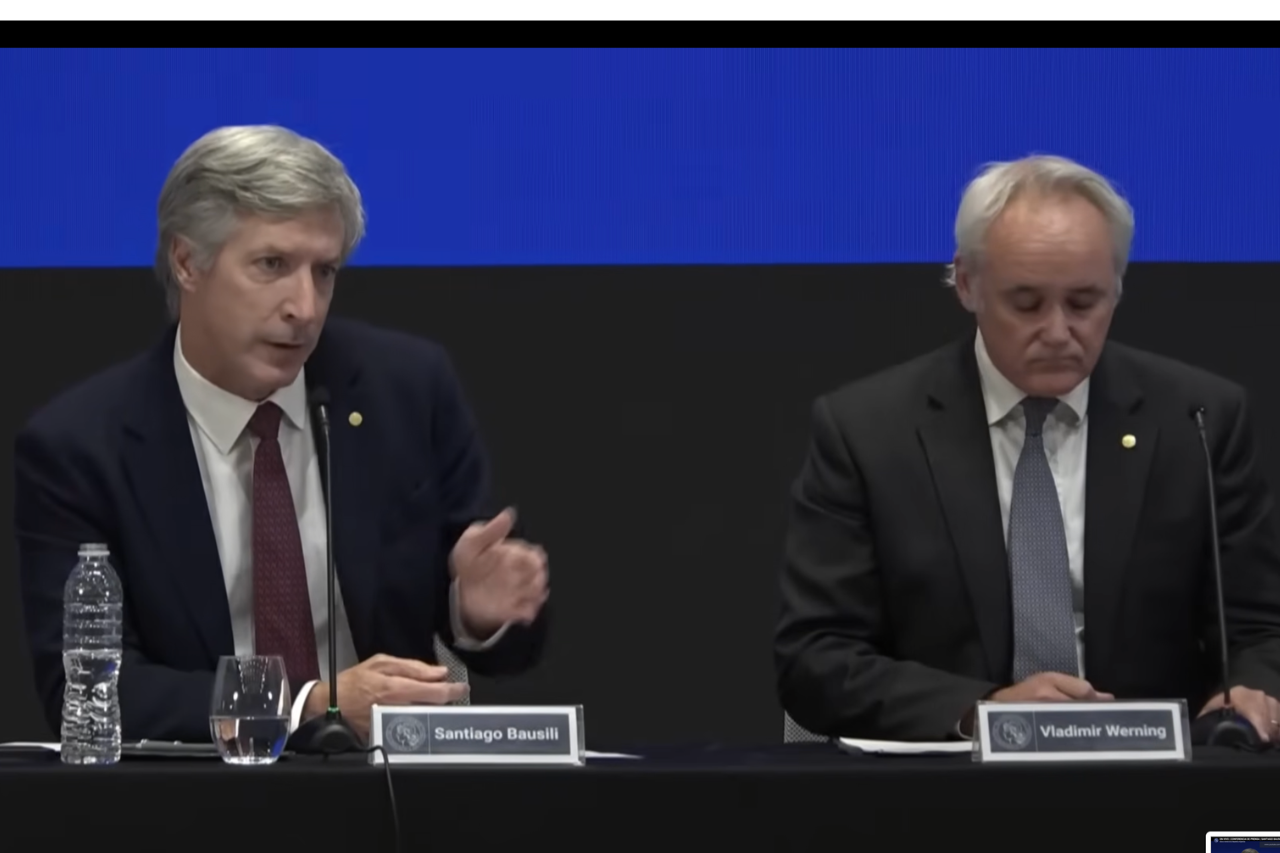

Officials at the Central Bank of the Argentine Republic (BCRA) provided key insights into economic activity, inflation and the challenges facing monetary policy as the country heads into next year.
The remarks came during the presentation of the Monetary Policy Report (IPOM) for the third quarter, which was attended on Thursday by BCRA President Santiago Bausili and Vice President Vladimir Werning.
The press conference was announced earlier that same day, catching both insiders and outside observers by surprise, as the IPOM is published quarterly and the previous edition was released on August 6.
No currency run expected, but tools are in place just in case One of the questions raised by journalists concerned the possibility of further episodes of foreign exchange volatility in 2027, a year marked by presidential elections in which Javier Milei will seek reelection.
“We have no projections of a currency run. We don’t make those kinds of projections,” Bausili replied.
Officials were also asked about the possibility of a repeat of last year’s portfolio dollarization episode, when election-related volatility drove demand for foreign currency to a record $35 billion, according to the BCRA’s own data.
However, Bausili declined to predict the scale of any potential episode of currency market turbulence or identify which policy instrument the Central Bank would deploy first. “It depends on the nature of the shock,” he said.
He added that the goal is to “maximize the number of available tools” so that the response can be tailored to each particular circumstance.
Officials explained that the $5 billion portion of the currency swap with China remains in effect, while the $20 billion agreement with the United States is in force, although it operates under a different arrangement and has not been activated.
Economic activity expected to improve in the final quarter In the IPOM, Central Bank officials also acknowledged that the economy contracted in the third quarter, putting Argentina into a technical recession, but attributed the decline largely to external “headwinds.”
The report forecast a rebound in economic activity in the final quarter of 2026.
“Once agricultural activity returns to normal and the temporary factors that affected the economy in July dissipate, GDP is expected to post a significant increase in the fourth quarter,” the report stated.
However, it also warned that economic growth could be constrained by the reduced number of working days in November due to public holidays surrounding Pope Leo XIV’s visit.
“Despite short-term volatility in monthly economic activity indicators, which could be affected by the exceptional reduction in the number of working days expected in November, GDP would grow for the second consecutive year in 2026,” the document noted.
Controversy continues over Argentina’s gold reserves At another point during the press conference, Bausili confirmed that, under his administration, part of Argentina’s gold reserves had been transferred to London, the world’s busiest market for trading the precious metal.
However, he said the gold had not been sent to the Bank of England.
“The Central Bank has nothing in England, and there is no account at the Bank of England,” he confirmed.
He explained that the gold had been sent there for the Bank for International Settlements (BIS) in Basel to receive it.
“What we have is an electronic certificate issued by the BIS confirming that holding,” he said.
He also declined to disclose how much gold had been transferred, citing prudential considerations. Bausili said he did not know where the gold was currently held, explaining that it had been transferred precisely to “monetize it” and generate a better return on those holdings.
In 2024, Economy Minister Luis Caputo confirmed that Argentina had sent part of its gold reserves abroad but provided no details about the transaction or the assets’ destination, fueling criticism from opposition lawmakers over the lack of transparency surrounding the operation.
Last month, during a presentation before the Senate, Bausili confirmed that “part of the international gold reserves is deposited at the BIS in Switzerland.”










Argentina’s mining sector is booming. There’s room to grow
This piece is part of the Argentine-Chinese Chamber of Commerces monthly column...
 Juan Fermin Salvatierra2 Mins read