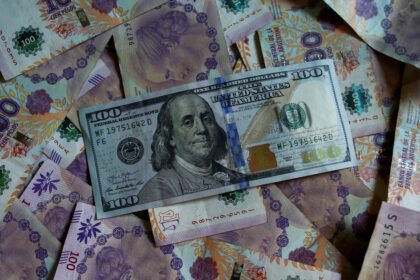
Since taking office in late 2023, Javier Milei has tried, in more ways than one, to get Argentines to pull their dollars out from “under the mattress” — that is, to bring them into the formal economy.
The first initiative was the Asset Regularization Regime, a tax amnesty that allowed Argentines to declare previously hidden assets. It launched on July 18, 2024, and its final phase closed on May 8, 2025, with more than US$32 billion brought into the open.
Although experts considered it a major success, it wasn’t enough for the Milei administration. In 2025, Congress passed the Fiscal Innocence Law, allowing Argentines to use their undeclared dollars under a presumption of innocence before the tax authority.
That wasn’t enough either. Earlier this month, Economy Minister Luis Caputo sent Congress a revamped and expanded version of the law, making it even easier for taxpayers to regularize undeclared dollars.
One of the bill’s most notable changes is that it scraps the wealth and income ceilings for joining the regime — meaning that, from now on, “large taxpayers” will also be able to benefit.
Milei’s is hardly the first government to try to get savers to declare their dollars. If anything, it’s the norm: the administrations of Alberto Fernández, Mauricio Macri, and Cristina Fernández de Kirchner all did the same, with varying degrees of success.
That’s because the amount of dollars Argentines hold outside the system is enormous. According to official INDEC data, the estimated total at the end of 2025 was US$254.9 billion, up 4.5% from a year earlier.
For comparison, the loan the International Monetary Fund (IMF) extended to Argentina in 2018 — the largest in the institution’s history — was US$45 billion.
Dollar demand isn’t letting up
Despite the stability of the exchange rate, Argentines’ appetite for buying dollars hasn’t eased. According to Central Bank data, between January and April of this year, foreign-currency purchases by individuals with no specific purpose reached US$8.5 billion.
Christian Naud, senior economist at the research firm ACM, told the Herald that this early-year demand for dollars comes down to several factors.
On one hand, “there’s precautionary demand and a rebuilding of dollar portfolios, made easier by the normalization of access to the foreign-exchange market since April of last year.”
But there are also transactional uses: “Card payments, tourism, services abroad and, in general, greater household demand for imported goods and services,” he said.
Naud said the real value of the exchange rate “helps explain part of this dynamic.”
When the dollar is “lagging” in real terms, it becomes cheaper for the middle and upper classes — it loses value against the peso, which fuels demand.
Naud noted that in May, the dollar’s real value sat just below its May 2017 levels and 11% below the January-April 2018 average.
That reference is no accident: April 2018 marked the start of the currency crisis that would end with Argentina’s return to the IMF, triggered by a heavy outflow of foreign capital that had been in the country doing carry trade — cashing in on high peso yields.
Looking ahead to next year, Naud said “precautionary demand can be expected to gain weight as the 2027 election starts to come onto the market’s radar.”
For years, pre-election periods in Argentina have come with a surge in dollar demand — a time-honored defensive strategy by savers against inflation volatility.
In September 2025, for instance — the month of the Buenos Aires Province election, in which Milei was defeated — Argentines bought US$5 billion, the most since 2018.
Naud expects similar pressure on the dollar in the run-up to the October 2027 presidential election.
“Uncertainty over the continuity or reversal of the current economic program will probably increase dollar hedging,” he added.
A brief history of Argentina’s dollar ‘obsession’
Horacio Augusto Pereira, senior researcher at the Center for International Strategies of Governments and Organizations (CIG) at Universidad Austral, told the Herald that the Argentine economy suffers from “a chronic disaster: high inflation, devaluations every other minute, distrust of the peso.”
“What do people do in the face of that? Rationally, they take refuge in dollars to survive,” he said. “Every time inflation takes off, demand for dollars to hoard goes up. That drains reserves, pressures the exchange rate and ends up creating the very scarcity we then try to manage with currency controls.”
Economic historian Julián Zicari told the Herald that until the 1930s, the U.S. dollar “was just another currency” — the pound sterling and even gold mattered far more.
That would change after World War II, as the United States cemented its position as the dominant Western superpower.
Locally, the shift took hold because “Argentina’s economic crises, from the second half of the 20th century onward, would be tied to a shortage of dollars.”
Economic sociologist Ariel Wilkis told the Herald that “over the past eight decades, Argentines’ relationship with the dollar has changed over time,” and pointed to a handful of moments that steadily pushed the dollar to the center of economic life.
He singled out “the great devaluation of the 20th century — the 1958 one, under Arturo Frondizi’s government,” adding that “throughout the 1960s, devaluations were constant.”
Frondizi devalued the peso by 68.2% in late 1958, sending inflation past triple digits — 113% — for the first time in Argentine history.
Another moment Wilkis highlighted was the last military dictatorship, a period that combined “a policy of economic opening” with “a huge availability of dollars in the financial system.”
A new turning point came with the hyperinflation under Raúl Alfonsín’s government in 1989. Wilkis said that crisis “spread the use of the dollar to extreme levels — in everyday payments, for example” and “created the conditions for the convertibility policy of the following decade,” which pegged the peso one-to-one to the dollar.
Under Carlos Menem’s presidency, through the 1990s and until January 2002, Argentina lived under that convertibility regime, in which one peso was worth exactly one dollar.
“The paradox of that decade is that, on one hand, the dollar disappears from public life — the currency peg means we stop paying attention to it — and at the same time it becomes a formalized currency in financial life: opening dollar bank accounts, taking out dollar loans, paying debts in dollars, and so on,” Wilkis said.
The sociologist noted that while other countries have gone through crises similar to Argentina’s, they didn’t necessarily turn the dollar into a “popular currency.”
The Argentine difference, he argued, rests on two complementary dynamics: one sociopolitical, the other sociocultural.
The first is “a systematic accumulation of failures by governments, decade after decade, to build a strong national currency.”
The second is “the social learning around the importance of the dollar — how to use it, how to read it, and how to gain a financial edge from it,” the product of one economic crisis after another.