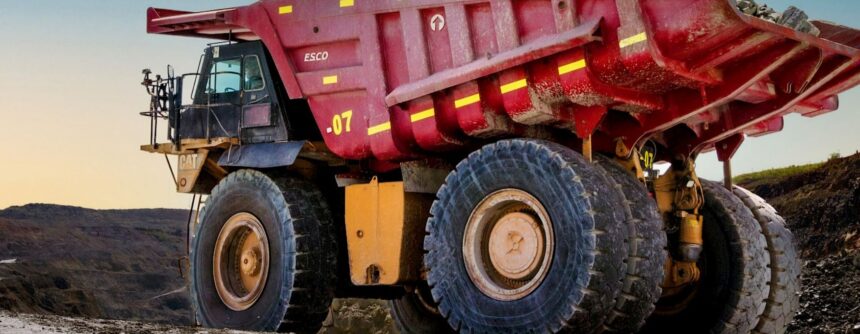
Argentine business leaders estimate the country could attract US$55 billion in mining investment over the next decade, creating an opportunity to build a network of local suppliers that creates jobs and drives industrial growth.
The figures were laid out in a report released Wednesday by the Argentine Industrial Union (UIA, for its Spanish acronym), in partnership with the Argentine Chamber of Mining Companies (CAEM, for its Spanish acronym), the Inter-American Development Bank and the European Union.
The lithium boom and copper’s promise
One of the biggest investment magnets is lithium. The report estimated that production will continue to grow on the back of projects already underway, with another US$15 billion in investment expected.
Argentina already has eight lithium projects in production, according to the Mining Secretariat. Another four are under construction, five are at the feasibility stage, and 30 are in advanced exploration, while the remaining 15 are at initial exploration and prospecting.
Lithium production in Argentina is concentrated in the provinces of Catamarca, Jujuy and Salta, which form part of the so-called “lithium triangle” — a region the country shares with Chile and Bolivia that holds the largest identified reserves of the mineral in the world.
Beyond lithium, the biggest upside is in copper, especially from 2028 onward, when several projects are due to break ground at once. Among the projects already in advanced stages, investment is expected to come in at close to US$40 billion.
Argentina currently has one copper project in production in Jujuy province, run by MOM Mining, and another under construction in San Juan, run by Lundin Mining.
A window for industry and construction
The report also tried to project how much Argentina’s mining sector will demand in goods, services and infrastructure in the years ahead. It surveyed the country’s existing industrial capacity and found local suppliers in 73 of the 91 categories analyzed.
Those include companies in metalworking, construction, industrial chemicals, engineering, maintenance services, geosynthetics, valves, pumps, metal structures and logistics.
The findings land at a tough moment for both industry and construction. The industry has been hit by weak domestic demand and stiff competition from imported goods. Construction has taken a blow from the freeze on public works under Javier Milei’s government, part of its broader push to cut public spending.
“The infrastructure that mining companies are building, along with what the provinces and the federal government build, adds up to very significant investment,” Gustavo Weiss, president of the Argentine Chamber of Construction (Camarco), told the Herald.
He added that “for the construction sector, it’s really important, and for the country too,” though he acknowledged that they don’t yet have an estimate of how much it will benefit construction firms.
Luis Macario, head of the Industrial Union of Córdoba, told the Herald that “the challenge is making sure this development doesn’t stay limited to the natural resource itself, or to public works in the mountains, but instead turns into something that boosts Argentina’s industrial base.”
He noted that Córdoba province, for example, has industries in metallurgy, auto parts, construction, logistics and food processing that “can plug into the value chain of mining projects,” on top of an oil, gas and mining cluster.
Daniel Rosato, president of Industriales Pymes Argentina (IPA), warned the Herald that the process “isn’t that simple.” He himself is in the process of relocating from Buenos Aires to San Juan to set up his metalworking firm there and become a supplier to the mining companies.
“It’s a process that takes a couple of years. You don’t just move there [to San Juan] and have demand waiting for you. It comes in stages: roads have to be built, the towers carrying electricity to the mine have to be manufactured.”
He warned: “You have to be ready, because the mining industry doesn’t wait.”
Gabriel Leitter, a textile businessman and member of the Industrial Union of Buenos Aires Province (UIPBA), said his province is the best “equipped to supply the mining industry, because it has every kind of industry.”
He also noted that Buenos Aires “has the experience of being the number-one province in non-metallic mining.”
While he said the local industry “has no problem” matching imports on quality and output, he pointed to the tax burden as a real obstacle, especially in his sector.
“I have to sell to a mining company with 51% in taxes built into the price of the product, and meanwhile someone else can import the same thing and pay nothing,” said Leitter, who has been a supplier to mining companies for 25 years.