Argentina received the least foreign direct investment among six of the largest Latin American economies in 2025, according to a regional study.
Last year, the country attracted US$3.1 billion in direct foreign investment. Brazil was at the top of the list with US$76.8 billion, followed by Mexico (US$40B), Chile (US$13B), Colombia (US$11B) and Costa Rica (US$6B).
The ranking was released by think-tank Misión Productiva (Productive Mission) based on data from the Organization for Economic Co-operation and Development (OECD).
“The contrast reflects the difficulties that persist in Argentina to consolidate itself as a destination for productive capital in the long term, even in sectors where the country has competitive advantages and strong regulation incentives,” Misión Productiva said in their report.
In addition, the think-tank stated that foreign investment “will hardly be able to expand in a sustained manner in a context of a depressed domestic market, idle use of installed capacity, and absence of long-term financing.”
Super RIGI
The report comes as the Argentine government is pushing to attract more investments via its 2024 Large Investment Incentive Regime (RIGI, by its Spanish initials), which offers tax breaks and currency exchange perks.
This week, the national authorities filed a new bill in Congress aimed at creating the so-called “Super RIGI,” which would offer more incentives and benefits for both local and foreign companies investing in new industries.
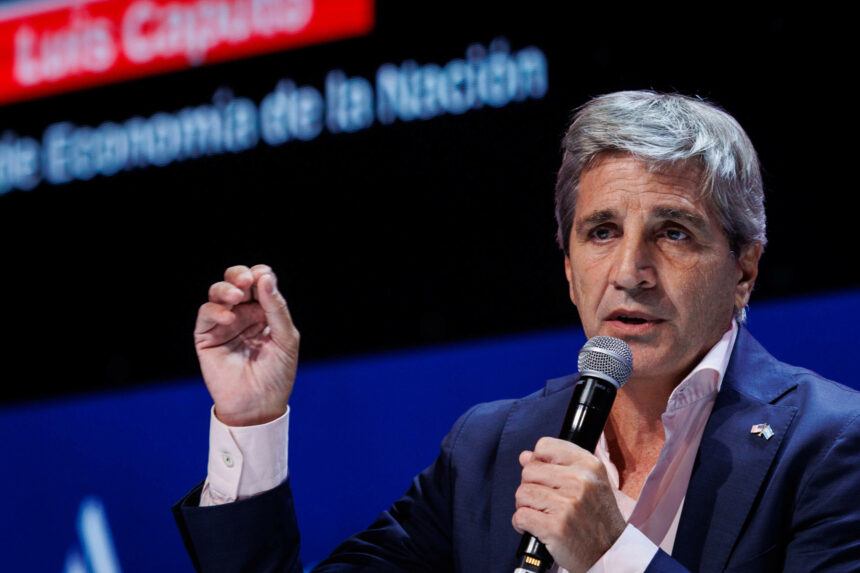
Economy Minister Luis Caputo said the fact that Argentina came last in the investments ranking “does not create any awkwardness” for the government — after an article in Clarín newspaper assured it did — and that “it is logical, after so many years of populism.”
“Attracting direct foreign investment usually takes many years of economic and political stability,” he said in an X post. “The miracle is that in only two and a half years there are US$140 billion in diverse projects that will be invested in upcoming years.”
Those projects, he said, “will change the Argentine productive matrix forever.”
RIGI investments
According to Caputo, 38 RIGI projects have been submitted since the launch of the regime, representing US$124 billion in investments and the potential to generate US$41 billion in exports.
Of those, 16 projects have been approved, totaling nearly US$30 billion in investment.
During his speech at an event called Latam Economic Forum on Thursday, he said that there is “a brutal interest in investing in the [Argentine] real economy, which will create growth, jobs and better salaries.”
He added that the juridical security and competitive tax conditions created by the RIGI, in addition to President Javier Milei “comfortably winning” the 2027 elections, will help more large-scale investments be implemented in Argentina.