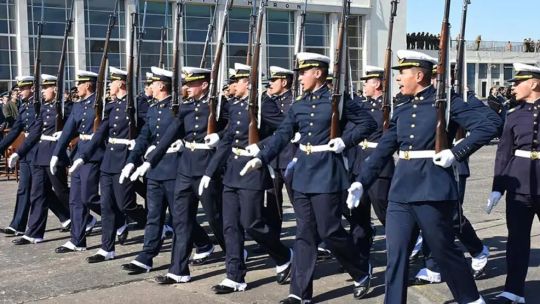
The defence policies of President Javier Milei’s government veer between the pomp of military manoeuvres with the United States and the glitter of new F-16 jets and the harsh reality marked by the administration’s fiscal chainsaw. Argentina’s Armed Forces are stretched to the limit in operational terms, with an underfunded healthcare scheme destroyed in barely two years and salaries so pulverised by inflation that many soldiers depend on the food served at barracks to get by.
That critical scenario suffered a new blow with the fresh cutbacks announced earlier this month which slashed almost 49 billion pesos (around US$35 million at the official exchange rate) off the budgets of the Defence Ministry, Army, Navy, Air Force and Joint Chiefs of Staff.
The public spending cutbacks topped 2.4 trillion pesos (US$1.72 billion) throughout the entire state administration and were decided, according to the government, by the need to keep the budget balanced. Argentina’s Defence Ministry will lose 6.055 billion pesos, the Army 12.622 billion pesos, the Navy 11.82 billion pesos and the Air Force a further 16.5 billion pesos.
Specialised publication Zona Militar says the austerity is affecting recruitment programmes, logistics, operational maintenance and equipment across the three forces, while cancelling the external credit for one of the acquisition projects that most raised the Navy’s hopes: the incorporation of four light naval helicopters at the Puerto Belgrano naval base.
“The cuts hit the Fondo Nacional de la Defensa (FONDEF), which loses 3.3 billion pesos in military and safety equipment; the Defence Logistics Programme, which relinquishes one billion earmarked for the maintenance and repair of vehicles; and the Hydrography Service with a reduction of 1.7 billion for machinery and equipment,” reported Zona Militar.
Another online military magazine, Red Castrense, was more categorical:, adding that Defence Minister Lieutenant-General Carlos Presti “has shown a worrying combination of being functionally useless and politically complacent.”
“Far from being the minister who was going to ‘upgrade’ the Armed Forces, he has become the civilian executor of a systematic austerity which is degrading the operational capacity of the Army, Navy and Air Force.” it added.
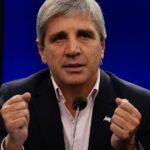
From his new seat in Congress, government lawmaker Luis Petri defended his stint heading the Defence Ministry, which ended in December last year.
“We took the Armed Forces out of the ideological basement in which Kirchnerism had left them,” he said, attacking the opposition. He then added: “The effort we are requesting from the military family is the same which is being asked of all Argentines to reach zero deficit.”
The remark ignited a clash with Vice-President Victoria Villarruel, who responded to Petri on the X social network.
“Impossible to think of sovereignty if the Defence Ministry cannot comply with its basic functions. The ex-minister must justify his disasters committed in the last two years. The Ks [Kirchnerites] destroyed our national defence and Petri continued along the same path with a narrative of vindication which also turned out to be fake in reality,” said Villarruel, the Senate head.
Villarruel has an axe to grind. She has never forgotten how Petri and Patricia Bullrich pushed her aside in December 2023, blocking her control over the Security Ministry and Defence Ministry portfolios which Milei had promised her during the presidential campaign would come under her wing.
“The deputy must answer for his fraudulent transit in the Defence Ministry which occasioned falling pay for those in uniform, as well as the almost total paralysis of the healthcare scheme covering the military and their families. He should stop worrying on Twitter about a ‘ media muzzle’ which I did not request and assume responsibility for his horrendous management,” hammered away Villarruel.
Health scheme woes
The IOSFA healthcare scheme, rebranded OSFA (Obra Social de las Fuerzas Armadas) since February, has passed from a surplus of 25 billion pesos to being over 248 billion pesos in the red. That has had its repercussions in the suspension of basic services, the lack of inputs and delays in the supply of oncological medicine and insulin to soldiers and veterans.
After contributing for almost 60 years to OSFA and its predecessor, Sergeant-Major Carlos Héctor Velázquez, 77, earlier this month decided to take his life for lack of medical coverage. He could not continue with his treatment of an advanced cancer, as he wrote in a letter that was found following his suicide attempt.
“I never saw a president and his minister abandoning their soldiers,” wrote the San Juan native, saying in his letter to Milei and Presti: “I am sacrificed to the lack of medical attention.”
The head of OSFA, Brigadier-General Sergio Maldonado, resigned upon hearing the news and was replaced by Brigadier-General Pablo Guillermo Plaza.
The crisis of the healthcare scheme continues without finding stability at any point – dragged down by changes of leadership, overhauls and an incomplete transition since the government decided to divide the old system between OSFA and the Obra Social de las Fuerzas Federales de Seguridad (covering forces under the Security Ministry).
The information from the Defence Ministry places the healthcare scheme’s debt at 248 billion pesos although opposition calculations are even higher.
Worst moment?
“Our worst moment arrived with the Kirchners,” the ex-dictator Jorge Rafael Videla declared in 2012, in reference to the whirlwind of the trials of crimes against humanity against former officers that began nationwide as from 2005.
Many of those in uniform are now rephrasing him – they believe that the worst moment has arrived with the Milei government.
The recent cuts have even affected “consumer goods,” which means less food for the regiments, less fuel for the tanks and trucks to move – even for basic training – and even difficulties paying utilities such as electricity or gas. The sustained drop in salaries losing out against inflation has led to a scenario inconceivable a few years ago: today, most soldiers depend on the barracks for a daily meal.
Petri’s exit from the Ministry in late 2025 marked a turning-point. The Mendoza politician, more worried about his media profile and political projection, left behind a portfolio on the boil with defence spending stuck below 0.6 percent of Gross Domestic Product.
‘Model of destruction’
Deputy Agustín Rossi (Unión por la Patria-Santa Fe), a former Defence minister, has also aimed his fire at Presti.
“The military minister is responsible. Not only does he not halt Milei’s drastic cuts, he is their executioner,” he accused, lamenting the destruction of FONDEF, a fund investing in re-equipment, “to pay current expenses or simply to cut.”
Rossi enumerated the government’s austerity policies draining the Armed Forces: the insolvency of IOSFA, not complying with pay differentials and defence spending cuts for three years running.
Taking an even harsher line of criticism, former Army chief-of-staff César Milani warned of the “brutal” cuts carried out by Petri and Presti: “The only difference is one letter in their surnames; the model of destruction is the same.”
Highlighting the acquisition of the F16 jets, Milani maintains that major investment is being financed by real-term cuts to salaries and the state of the military.
From his X account, the ex-general wrote: “They exhibit the F-16s as trophies of political marketing. Combat aircraft flown by impoverished pilots and maintained by practically destitute mechanics while hangars, bases and units are decaying without proper maintenance. A perfect postcard for the libertarian inconsistency, which has the shameful record of the lowest budget in history.”
related news
by Guillermo Peralta