US ambassador to Chile revives Strait of Magellan sovereignty controversy
 Martina JaureguyUpdated 1 hour Ago2 Mins read
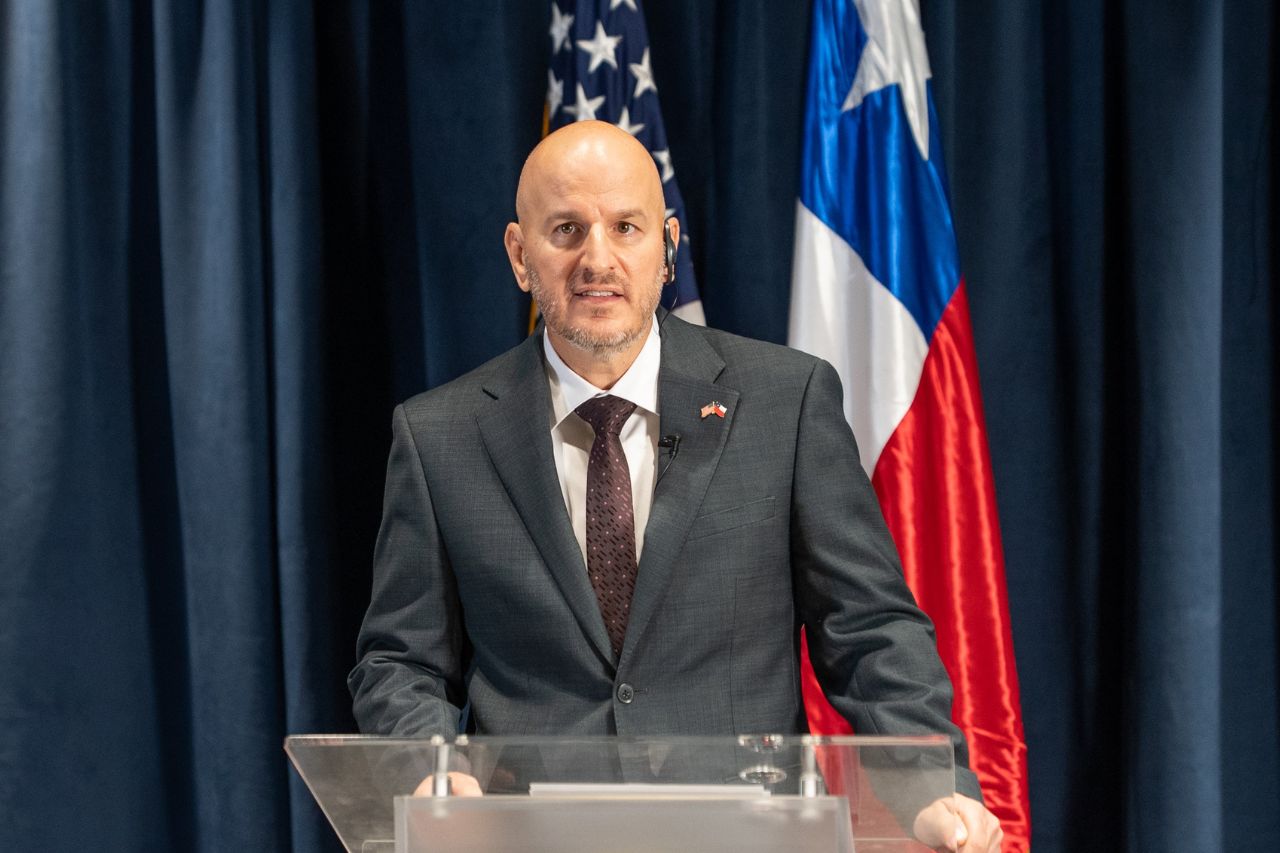

Chilean authorities questioned United States Ambassador Brandon Judd after he said that U.S. support for Chile’s sovereignty over the Strait of Magellan was tied to cooperation on issues important to Washington.
His comments on Wednesday revived tensions regarding the Strait of Magellan, a maritime passage under Chilean jurisdiction that connects the Pacific and Atlantic oceans at the southern tip of the American continent.
Amid a public outcry, Judd said on Wednesday night that his words had been “misrepresented.”
Earlier in the day, during a speech he gave at a Global Trade Day event in Santiago de Chile, the ambassador had said: “If they want that relationship to continue, if they want the resources we have to combat organized crime, if they want a country that will help them protect their rights over the Strait of Magellan… if they want all those things, then they’ll also have to work with us on the issues that are important to us.”
“We will always be very concerned about sovereignty because we have a relationship with Chile that goes beyond trade,” he added.
Controversy regarding Chile’s sovereignty over the Strait of Magellan had already caused tension between Chile and Argentina in August, after the head of the Argentine Air Force suggested that his country had to maintain a presence along the sea route to protect its “sovereignty.”
The matter was settled after authorities from both countries spoke and Argentine officials assured their counterparts that Chile’s sovereignty over the strait was undisputed.
Harsh reaction Judd’s statement was met with strong rejection in Chile. Foreign Minister Francisco Pérez Mackenna stressed that the Strait of Magellan “is and always will be Chilean.”
“We can defend our sovereignty on our own; we do not need anyone’s support to defend our sovereignty — we have been doing so for 200 years,” Pérez Mackenna told the press on Wednesday.
The foreign minister also said that his office would analyze the comments and assess whether to issue a protest note to the U.S. government or take other measures.
“I am not ruling anything out until the evaluation is complete. We will decide on our formal response based on the substance of what has been said,” the minister announced.
However, he stated that Chile’s relationship with the U.S. “has always been good” and Judd’s comments “will not change that.”
The top authorities of the Chilean Senate also issued a communiqué rejecting Judd’s statements, saying that the country’s sovereignty “is not under debate and does not depend on the support, backing or acknowledgment of any foreign nation.”
Socialist deputy Nelson Venegas even said that “it is time” for President José Antonio Kast to ask his U.S. counterpart Donald Trump to “request the recall of Ambassador Brandon Judd” as “his remarks have already crossed every line.”
“Chile does not take orders from any foreign ambassador,” the deputy said.
This is not Judd’s first controversy since becoming ambassador to Chile last November. On previous occasions he commented on internal affairs and even questioned former President Gabriel Boric, who was in office at the time.
More recently, he suggested the U.S. had intelligence reports about the massive 2019 protests in Chile, although he later clarified that his country had not conducted an investigation in the South American country.
Judd’s response Following the criticism, Judd said that his words had been “clearly taken out of context” and that he did not “question Chile’s sovereignty.”
“I enjoy a good TV series just like anyone else, but this drama is being misrepresented,” he said in a statement, emphasizing his “longstanding support for Chile’s sovereignty.”
“My remarks today were a firm and positive endorsement of our bilateral relationship and of everything the United States and Chile are doing — and can do — together to make our countries and the hemisphere we share safer, stronger, and more prosperous.”