Trump’s loss raises questions for Milei. Will the US come to the rescue again?
 Nazarena LomagnoUpdated 2 hours Ago7 Mins read
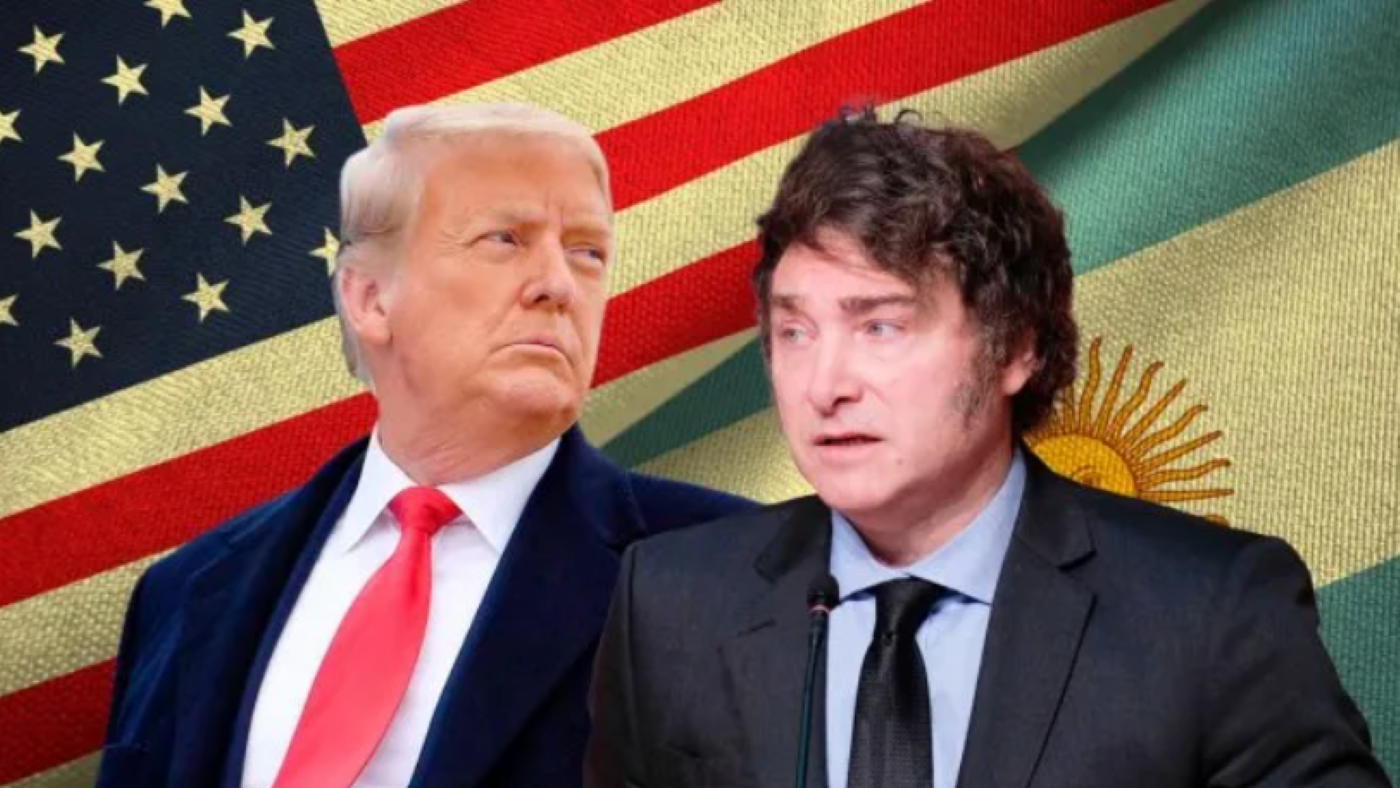

U.S. President Donald Trump’s defeat in the 2026 midterms opened the doors to a question that the market is already thinking about looking ahead to Argentina’s 2027 presidential election.
If President Milei, one of Trump’s closest allies in the region, finds himself facing economic turbulence, will the U.S. Treasury come to the rescue like it did in October 2025?
The uncertainty comes at a delicate time. The country risk index surpassed 850 points — reaching its highest level since last year’s legislative elections and more than double the low of 402 points it had hit on July 10.
In this context, issuing debt on the international market at a reasonable rate appears out of the question, according to economists and banking sources consulted by this publication, while questions about why the government did not issue debt sooner are emerging in the analysis.
Furthermore, analysts’ projections regarding the global outlook for emerging markets in 2027 also differ.
Market is still closed for Argentina The debate over Washington’s potential role is gaining traction because the alternative of returning to the international market is not currently available.
“I think there was a misreading of the situation at the beginning of the year, when it was decided to wait for conditions to improve,” said analyst Cristian Buteler.
According to his view, the reasons behind that decision were an economy that had “stopped growing” and an international context in which Trump’s tariff policy was expected to put pressure on prices and push the Federal Reserve to raise rates.
For Buteler, the chances of issuing debt at a reasonable rate as “dwindling,” unless the government agrees to “pay a much higher rate than it would have paid in January of this year.”
Research for Traders head Gustavo Neffa, on the other hand, offers a slightly different view.
While at one point the country risk exceeded 450 points, the figure was “short-lived.” This was followed by the international interest rate storm, “unforced errors” by the government, and a recessionary third quarter.
For Neffa, issuing a single bond in isolation does not change the bigger picture, since the country needs to roll over its January and July maturities every six months.
“Argentina needs a sustained rollover, just as all other countries in the region do,” he stated.
In mid-October, with country risk news 700 basis points, some voices in Washington argued that the government should have issued the bond anyway, even at a higher cost.
Opening up every possible market channel, given the uncertain global context, seemed an unlikely option but was not ruled out at the time.
The argument was based on the fact that the United States, with debt at 128 points of GDP and a deficit of more than six points, will continue to absorb global financing, while Argentina — without access to credit and with low reserves — is not in a position to choose its interest rate.
A little over two weeks later, with the country risk at 852 points, that possibility seems even more remote.
Nonetheless, the Argentine government is confident in its financial plan for 2027, driven by a strong inflow of capital.
Because of this, it prefers not to endorse a high interest rate, especially since it also has a $6 billion repo facility and the backing of the U.S. Treasury — although this resource is in doubt.
The Exchange Stabilization Fund (ESF), the instrument the U.S Treasury used in 2025, however, does not require legislative approval.
On that basis, the consulting firm 1816 argued that “Trump retains his ability to help Argentina” unless Congress amends the regulations governing that fund and the president is unable to veto the change.
The problem, however, is the political cost.
Democrats had already introduced a bill in both chambers to suspend the swap with Argentina. With their new majority, they could push for investigations into the 2025 operation through the committees that oversee the Treasury.
This uncertainty is coupled with doubts regarding the future of Scott Bessent, the architect of the 2025 bailout.
A month ago, the Treasury Secretary replied “of course” when asked if he would assist Argentina again. Following the electoral defeat, some analysts do not rule out the possibility that Trump will reshuffle his cabinet.
Economist Alberto Ades recently brought up this issue via a two-prong question. The first is whether Bessent will stay and, if so, how much leeway he will have to repeat measures as politically risky as those of last year.
The needs for 2027 are no less significant.
A report by the Center for Argentine Political Economy (CEPA) estimates that, if the government fails to place debt on the market, the Treasury could need to purchase approximately US$12.5 billion from the Central Bank next year.
This is in addition to net payments to international organizations totaling another US$4 billion, of which US$2.7 billion is owed to the IMF.
Caution or missed opportunity? Local entities are taking a more cautious view.
“It would certainly have been preferable for them to issue debt on global markets at 400, 500, or at most 600 basis points. Anything over 600 seems too expensive to me,” a bank analyst told Herald sister publication Ámbito.
The same source ruled out issuing debt now “simply because things will be worse tomorrow” and set a threshold: he would take advantage of a window with rates of “9 and a bit percent” in dollars, something he does not see as likely before the elections.
Some are even more categorical. “The government has no chance of issuing bonds with this level of country risk,” another banking source. In their view, the economic team will seek one-off transactions, as in recent years, but without issuing a bond carrying a double-digit rate
On the external front, projections differ.
One of the banks estimates that there will at least two more rate hikes in the United States — one before the end of the year and another in the first quarter of 2027. They went on to caution that the Fed has “very limited room to maneuver” due to the weight of U.S. debt.
Buteler, on the other hand, believes that an end to the war in the Gulf could drive down oil prices and ease interest rates.
Although a Republican defeat could create a favorable environment for emerging markets — caps on the fiscal deficit, a weaker dollar, lower long-term rates, and an end to the Middle East conflict sooner rather than later — that would not necessarily have a direct impact on Argentina due to its local context.
“As the country’s elections draw nearer, uncertainty will continue to grow,” Buteler warned, and that could translate into falling bond prices and a higher country risk rating.
Neffa, meanwhile, agrees that the current level is primarily driven by political circumstances.
“If you present me with a scenario where there’s a high probability that these economic policies will continue, you won’t have a country risk of around 700 points — you’ll have a country risk of 500,” he stated.
For his part, Ignacio Abuchdid, president of the IEB group, posted on X that a country risk rating above 800 points “is utter nonsense.”
“It’s completely disconnected from Argentina’s macroeconomic fundamentals […]In my view, the explanation is fundamentally political. The market is extraordinarily overestimating the electoral risk. Argentine assets seem to be trading as if a victory from [Buenos Aires Province Governor] Kicillof were already a foregone conclusion — a scenario I consider completely unjustified.”
With the market closed and Washington’s support under scrutiny by the new Congress, the focus returns to reserve accumulation. “The best thing the government can do is accelerate reserve purchasing,” said one of the banking sources.
Along the same lines, another economist consulted off the record questioned the government’s failure to maintain a steady pace in dollar purchases and warned that devaluation “won’t save you” if tax cuts, deregulation, and infrastructure investment are delayed.
Days before the election, the CEO of the American Chamber of Commerce in Argentina (AmCham), Alejandro Díaz, expressed confidence in continued U.S. support for Argentina.
“The U.S. government will do what is necessary. It already did so in 2025,” he told a group of journalists.
In his view, the relationship between the two countries will not change significantly, at least under the Trump administration, if there is continuity in 2027, either “with Milei or with an Argentine president of a similar profile.”
Díaz also highlighted the shift in Washington’s financing tools. As he explained, the Development Finance Corporation (DFC) is evaluating allocating up to US$20 billion to projects in Argentina and is currently reviewing about 25 such projects.
That amount, he clarified, is separate from the US$7 billion committed by Eximbank, of which US$6 billion is allocated to an LNG project and US$1 billion to infrastructure for the corridor designed to transport minerals to the Atlantic.
Even though these are not direct disbursements to the government — but rather guarantees, insurance, loans, and capital contributions — and do not finance 100% of the projects, Díaz viewed this as a change from the time when Eximbank’s lending capacity for Argentina “was zero.”
The weak point lies with the U.S. Congress. Eximbank’s current authorization expires on December 31, and its ten-year renewal has not yet been approved.
The AmCham CEO estimated that the election results should not be a deciding factor, since the agency has operated under administrations from both parties. However, he cautioned that current Democrats are “not the same as those of the Clinton and Obama eras” and that the White House, facing a hostile Congress, will maintain an agenda with multiple fronts open simultaneously.
‘Business is business’ In Washington, officials hope that Democrats will adopt a stance that safeguards the deepening of ties with Argentina, as reflected in various initiatives: the Agreement on Reciprocal Trade and Investment (ARTI), the initiative to strengthen and process critical minerals, the Andes-Atlantic Corridor, Eximbank financing, the expansion of the quota for imported beef, and the Visa Waiver Program, among other points agreed upon during the Trump administration.
U.S. political leadership maintains that Argentina now operates under a free-market system and, therefore, there is an ecosystem favorable to long-term investments that the “blue wave” should be able to sustain.
“Business is business” was the saying heard weeks ago in the United States, even though Democratic leaders like Gregory Meeks and Elizabeth Warren — as well as figures like Abdul El-Sayed — have publicly questioned financial assistance directed toward Argentina as well Milei’s public expressions of support for Republican Congresswoman María Elvira Salazar during the Florida campaign for these midterm elections.
Others, however, do not even know where Argentina is on the map.
The next steps taken by the new U.S. Congress will reveal whether the bilateral relationship will deepen in strategic terms or whether it gains momentum primarily due to the political affinity between the two leaders.
Originally published in Ámbito