The existential B-side of 1980s neon windbreakers
 Paige NicholsUpdated 1 hour Ago3 Mins read
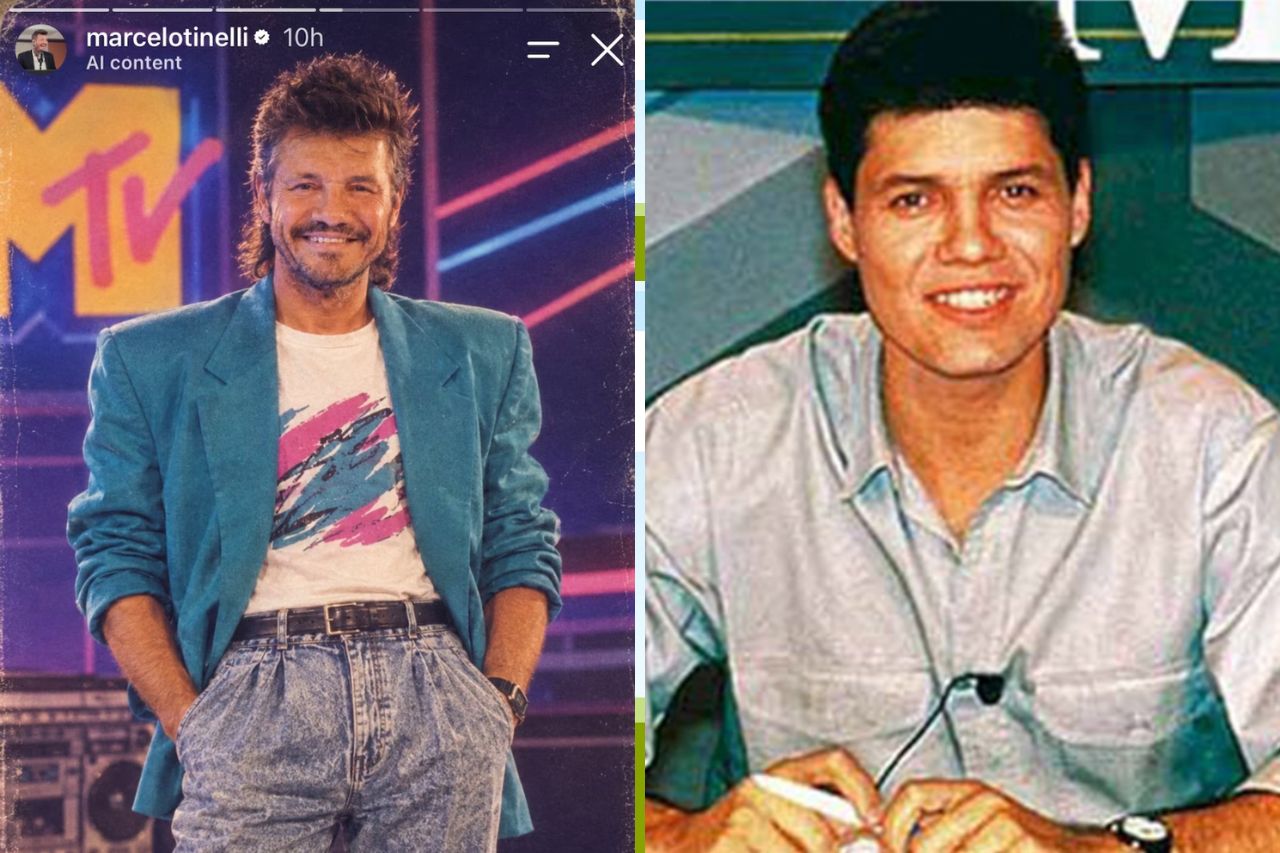

In the latest local installment of ‘mankind’s descent into monoculture,’ Instagram and Facebook feeds across Argentina have been inundated with the latest social media trend: what you’d have looked like in the 80s, according to AI.
Of course, scores of the people that participated in this trend actually did know what they looked like in the 80s, but that didn’t stop them from wasting precious natural resources — and brain cells — in pursuit of a fleeting sense of belonging anyway.
If you ask me, the irony of using the same technology that threatens to destroy us to tap into the well of nostalgia for a time when said technology didn’t exist shouldn’t be lost on anyone. Using AI to remind ourselves how happy and carefree we were without it? The call is coming from inside the house, everyone!
Before we return to that, let’s get real for a second. What’s up with Argentina and the 80s? Some of my earliest impressions upon my arrival in 2007 revolved around the collective love for unironic mullets, rollerblading, and a food pyramid with diet soda and industrial cigarettes at the base. Not to mention every radio in every taxi playing music from that decade exclusively (hey, I’m not complaining. Aspen 102.3 is my ride or die).
And those are just cultural observations. To say the 1980s were transformative at the political and economic level would be a complete understatement. It was an era where Argentines lost their innocence, regained their freedom, and looked ahead at an uncertain future all within a relatively short period.
As the brutal military dictatorship came to an end, the Malvinas war was employed as a last-ditch attempt to stoke the flames of national pride, a cruel distraction that scarred a generation. The return to democracy in 1983 brought renewed hope and optimism, which surged through a second World Cup win in Mexico in 1986 (those Maradona glory days really were something).
Rock nacional and the Buenos Aires’ underground scene ushered in a new wave teeming with music, art, and cultural exploration. How can we forget the epic opening of New York City nightclub featuring a show by The Police?! This would all shift dramatically with the onset of hyperinflation in 1989, the abrupt end to Alfonsín’s presidency, and the preamble to an age of excess that would come to be defined by pizza con champagne.
All this yearning for the past, then, makes a bit more sense when understood in context. However, I can’t help but wonder if this sanitized, airbrushed approach banalizes the depth of it all. Why are we allowing AI to rewrite both history and our recollection of it?
The Gen Z kids who feel a mix of incredulity and envy at the concept of life before smartphones, before WiFi, and before constant surveillance became the norm get a pass . But the rest — the Gen Xers, the boomers who were fully-fledged adults during the 80s and have plenty of real photographic evidence to prove it — absolutely befuddle me.
In a contradictory twist of fate, our future-saturated society remains fixated on a more analog past. Have we been stripped of such agency that we can’t even connect with our own sense of creativity and imagination? Is this a collective cry for help, sent out into the universe the only way we know how?
On the surface, the “80s by AI” trend is fun, frivolous, and harmless. After all, acid-washed jeans do much less damage when they’re confined within an iPhone screen. But I propose that the rush to embrace aesthetic slop — a favorite medium of the current administration — is a symptom of a deeper malaise.
We’ve found ourselves adrift, seeking connection through the most superficial of means, destined to miss the mark. It’s the online equivalent of feeling alone in a crowded room, I suppose. It feels like we’re nearing our upper quota of Internetmaxxing (did I use that term right? Don’t answer that) and all it makes me want to do is find a grassy clearing in Patagonia and roll around among the raspberries.
In a few weeks’ time, there will likely be another trend, another digital bandwagon upon which we can all jump aboard. We’ll continue to inhabit the tension between the timeless and the ephemeral, wondering if an aggressively feathered mullet would in fact make a difference among all the interference and noise.