Poverty in Argentina rises to 32%, while destitution hits 7.5%
 Juan Marcos PollioUpdated 2 hours Ago2 Mins read
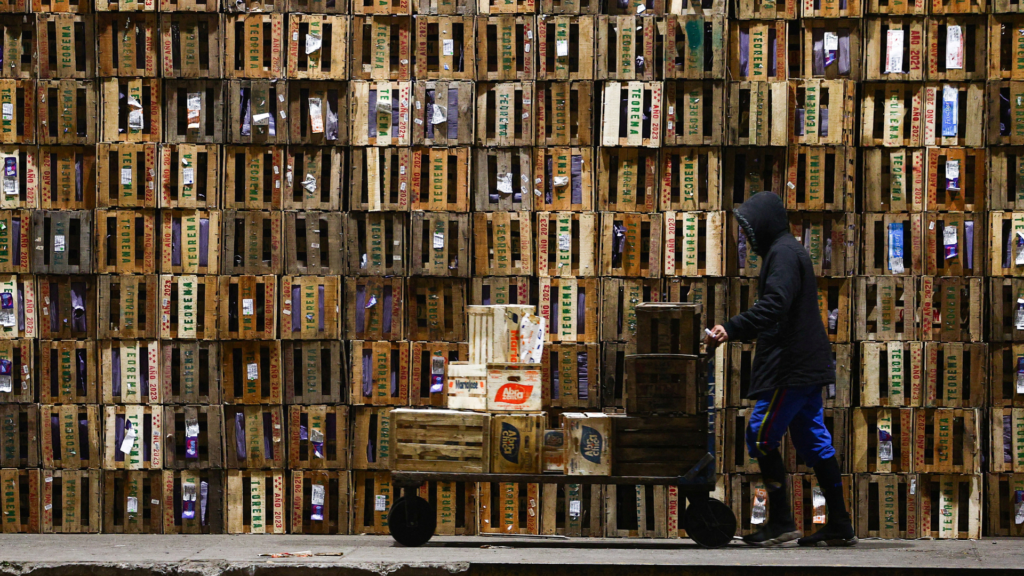

Poverty rose to 32% during the first half of 2026, according to official data published Thursday by the INDEC statistics bureau based on a survey of Argentina’s main urban centers.
The percentage equals nearly 10 million people. Extrapolated to the entire country, nearly 15.5 million people are poor.
Poverty has jumped compared to the end of 2025, when the index stood at 24.4% (the increase in number of poor people exceeds 2 million). Current poverty is also higher than the first half of 2025 (31%).
Around 7.5% of the population are destitute (2.2 million people in the main cities and 3.6 million nationwide).
Economy Minister Luis Caputo said that, “although poverty and indigence rates increased” compared to the previous semester, “both rates recorded a sharp drop” compared to the first half of 2024.
LAS TASAS DE POBREZA Y DE INDIGENCIA SE UBICARON EN 32,3% Y 7,5% EN EL PRIMER SEMESTRE
✅ Si bien las tasas de pobreza y de indigencia se incrementaron 4,1 p.p. y 1,2 p.p. en relación al semestre previo, ambas tasas registraron una fuerte baja en relación al primer semestre de…
— totocaputo (@LuisCaputoAR) September 24, 2026 At that time, the poverty rate was 53% and destitution 18%. This was mainly due to the sharp devaluation of the Argentine peso President Milei implemented upon entering office in December 2023, which sent inflation soaring during the first months of his term.
Poverty under the microscope The 32% poverty rate refers to the general population. Measured by household, 24.4% of families are poor, while 5.6% are destitute.
In terms of age, the youngest are the hardest hit, as 44.5% of children and teenagers up to 14 are poor. The figure was 37% for 15-to-29-year-olds and nearly 29% for those between 30 and 64. The population 65 or older recorded the lowest number, just under 15%.
Regionally, the northeast has the highest poverty rate (41%), followed by Cuyo (36%).
Destitution followed a similar pattern, with the northeast in first place (10%), followed by the Buenos Aires Metropolitan Area (8%) and the Pampas region (7%).
Recession on the way? The economic activity figure for July was also released on Thursday: it showed a monthly collapse of 2.9% and a 1.4% year-on-year contraction.
Economist and director of the T+1 consultancy, Juan Manuel Telechea, explained on his X account that both indicators show that the social outlook is “quite a bit worse than estimated.”
“The drop in activity in July was one of the largest in recent history without a devaluation involved,” he said, adding that a recession is “just around the corner.”
Asked to explain the reasons behind the sharp drop in activity in the monthly measurement, Minister Caputo cited various “transitory shocks” that supposedly explain the poor figure.
One of them, curiously, was the recent 2026 FIFA World Cup in which Argentina reached the final.
EL NIVEL DE ACTIVIDAD CRECIÓ 1,7% EN LOS PRIMEROS 7 MESES DEL AÑO
✅ El Estimador Mensual de Actividad Económica (EMAE) registró un crecimiento de 1,7% en los primeros 7 meses de 2026 en relación a igual período del año anterior
✅ En el mes, la serie desestacionalizada mostró…
— totocaputo (@LuisCaputoAR) September 24, 2026 “One could mention the lower availability of gas in the case of the manufacturing industry, the heavier rains and snowfall in relation to historical averages for construction, mining, and some services, and fewer hours worked in some sectors in relation to the football World Cup,” he said.