Pope Leo’s Argentina trip. What’s changed (and what’s not) since John Paul II
 Veronica SminkUpdated 1 hour Ago5 Mins read
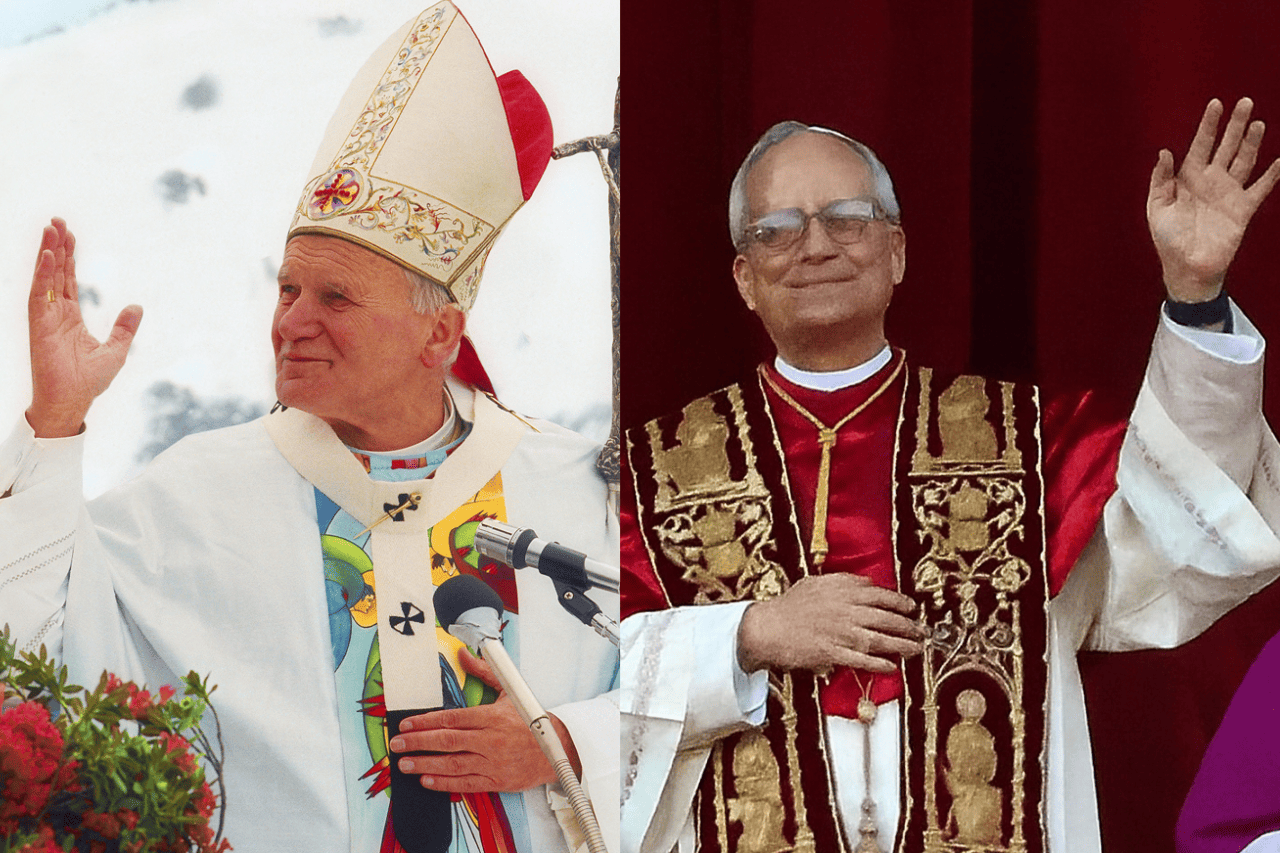

When Pope Leo XIV arrives in Argentina on November 8, he will be only the second pontiff in history to visit the country.
The only pope who had made the trip until now was John Paul II, who visited twice in the 1980s against very different political backdrops.
While the first was a hastily arranged “peace pilgrimage” of barely 30 hours in the midst of the 1982 Malvinas War, the second was a seven-day visit in 1987 that drew enormous crowds across a country that was just under four years removed from the most vicious dictatorship in its history.
Pope Leo XIV will, of course, encounter a much different Argentina.
For once, the country has not been involved in armed conflicts since the war in the South Atlantic and celebrated 40 years of uninterrupted democratic rule in 2023. Data also shows that Catholicism, while still a central feature of Argentine identity, is no longer the driving force it once was.
Other issues, however, like the country’s economic woes, remain an ever-present problem.
War and a nascent democracy under pressure On June 11, 1982, Karol Wojtyla arrived in Buenos Aires as a self-described “messenger of peace,” seeking to bring an end to the war over the South Atlantic islands. He had already scheduled a visit to Britain and wanted to avoid any perception that the trip reflected political favoritism toward either side.
He met privately with dictator Leopoldo Galtieri and celebrated an outdoor mass attended by an estimated 2 million people. He also celebrated mass at the Basilica of Our Lady of Luján, Argentina’s principal Marian shrine, in Buenos Aires province.
Two days later, Argentina surrendered.
John Paul II’s second visit, from April 6 to 12, 1987, is part of Argentina’s collective memory. He traveled to ten cities across the country, from Buenos Aires to Salta, Mendoza, and Viedma, drawing enormous crowds wherever he went.
President Raúl Alfonsín had been in office for just over three years following the end of the dictatorship. For many Argentines, the return of democracy carried enormous moral weight after years of repression, disappearances, and censorship.
Argentine President Raúl Alfonsín and Pope John Paul II in Argentina in 1985.
Optimism, however, was beginning to fade by the time the pope visited.
On April 15, 1987, just three days after the pope’s departure, a military uprising at the Campo de Mayo base exposed the fragility of civilian control over the armed forces. The rebellion, led by military officers known as the carapintadas (painted faces), became one of the defining crises of Alfonsín’s presidency.
Leo’s planned visit from November 8 to 11, which includes stops in Buenos Aires City, Córdoba, and Luján, Buenos Aires province, will take place in a country where democracy is firmly instilled.
Inflation, mounting economic difficulties, and labor unrest, which were already eroding Alfonsín’s support in 1987, continue to be a major concern.
When President Milei was elected in 2023 with a platform that promised to radically reduce the state’s role in the economy, annual inflation was over 200%. And while his sweeping austerity program has helped bring inflation down, it also imposed significant social costs that have brought on criticism from the Catholic Church.
Economic measures and social costs Although Milei had promised that the “political caste” would bear the brunt of the cuts, pensioners, public-sector workers, public universities, and people with disabilities have been among those most affected.
Meanwhile, falling purchasing power, compounded by sharp increases in utility, transportation, and gasoline prices, has weakened mass-market consumption.
Buenos Aires City Archbishop Jorge García Cuerva has repeatedly highlighted the impact of the government’s austerity measures on vulnerable groups. Without naming the president, he has also criticized his confrontational rhetoric.
Buenos Aires Archbishop Jorge García Cuerva.
With Leo’s visit approaching — and a meeting with Milei on the agenda — the Herald asked Father Máximo Jurcinovic, spokesperson for the Argentine Episcopal Conference, if the Church can maintain a relationship with the government while defending those affected by its economic austerity policies.
“Naturally, the Church can maintain a constructive relationship with the government at this time, as we are working toward a shared goal: the pope’s visit. At the same time, the Church remains free to continue its own mission and preaching,” Jurcinovic said.
“The fundamental role of the Church is always to shed light on reality through the lens of the Gospel, not to engage in partisan politics. Consequently, with this administration, just as with many others, we have sought to foster a relationship characterized by both complementarity and autonomy, in keeping with the Church’s principles.”
Are Argentines still Catholic? Although no national surveys tracked religious affiliation in Argentina at the time of Pope John Paul II’s visits, available evidence suggests that Catholicism occupied a far more dominant place in the country’s public identity than it does today.
The last national census to include a question on religion was conducted in 1960, when 90% of the population identified as Catholic.
While the Church retains considerable cultural authority, religious identification has changed significantly.
According to the National Survey of Religious Beliefs and Attitudes conducted by researchers at the National Scientific and Technical Research Council (CONICET) in 2008 and 2019, the share of Argentines identifying as Catholic fell from 76.5% to 62.9%.
Over the same period, the proportion reporting no religious affiliation rose from 11.3% to 18.9%, while the share identifying as evangelical increased from 9% to 15.3%.
A 2024 Pew Research Center survey found that 58% of Argentine adults identified as Catholic, down from 71% in 2013–14.
Those who describe themselves as religiously unaffiliated had more than doubled, reaching 24%.
The Herald asked the Episcopal Conference spokesperson whether the Argentine Church expects Leo XIV’s visit to bring people back to religious practice.
“We firmly believe that the visit of Pope Leo — in his capacity as the Supreme Pontiff — will renew our faith. Anyone who observes Pope Leo’s preaching and considers the impact of his latest encyclical can see that his message is not intended solely for those who actively practice their religion but for everyone,” Jurcinovic said.
The spokesperson, however, disputed the idea that the number of Argentines who consider themselves Catholic is falling.
“We do not see a declining percentage of individuals who identify as Catholic. In our communities, we continue to see young people and families who are still having their children baptized,” he said.
“While their relationship with the Church may be less institutional, our people are a people of faith, as we have just witnessed with the more than two and a half million people who took part in the pilgrimage to Luján,” he added.
“Pilgrimages to shrines all across the country are becoming increasingly massive, drawing ever-larger crowds. It is highly likely that the pope will be met by a great multitude, as we frequently see such large gatherings at many of our faith-based events.”
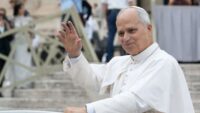
From a Polish pontiff to an Argentine pope’s successor In addition to welcoming a new pontiff, for many Argentines, the visit is an opportunity to make up for a long-standing disappointment: Leo’s predecessor, Francis, born in Argentina, never returned to his homeland during his 12-year papacy.
Francis, the first pontiff ever to hail from the Americas, gave Argentina an unprecedented place in the global Catholic imagination, even though he never returned to his homeland as pope. His absence became a recurring source of public discussion and disappointment.
Source: Vatican News
Nazism and communism. Leo XIV, on the other hand, elected in May 2025, arrives as Francis’ successor and the second pontiff from the Americas (Leo was born Robert Prevost in the United States).
Many expect Leo to continue Francis’s priorities.
That continuity may be reflected not only in his meetings with political leaders and civil society but also in his choice of destinations, including the Cottolengo Don Orione, a facility providing care and permanent housing for people with severe physical and intellectual disabilities, a prison, and encounters with young people and workers.
These stops could offer clues to how Leo intends to address inequality, social cohesion, the environment, and the responsibilities of government — issues that were central to Francis’s papacy and that remain pressing in Argentina today.
Editorial disclaimer: Although the UK refers to the Malvinas territory as the “Falklands Islands,” Argentina strongly contests this name. The Buenos Aires Herald refers to the islands as the Malvinas Islands.
Cover photo: Gregorini Demetrio and Edgar Beltrán/The Pillar published under a Creative Commons license.