Monotributo, from labor ‘patch’ to pension system threat
 Juan Marcos PollioUpdated 59 minutes Ago2 Mins read
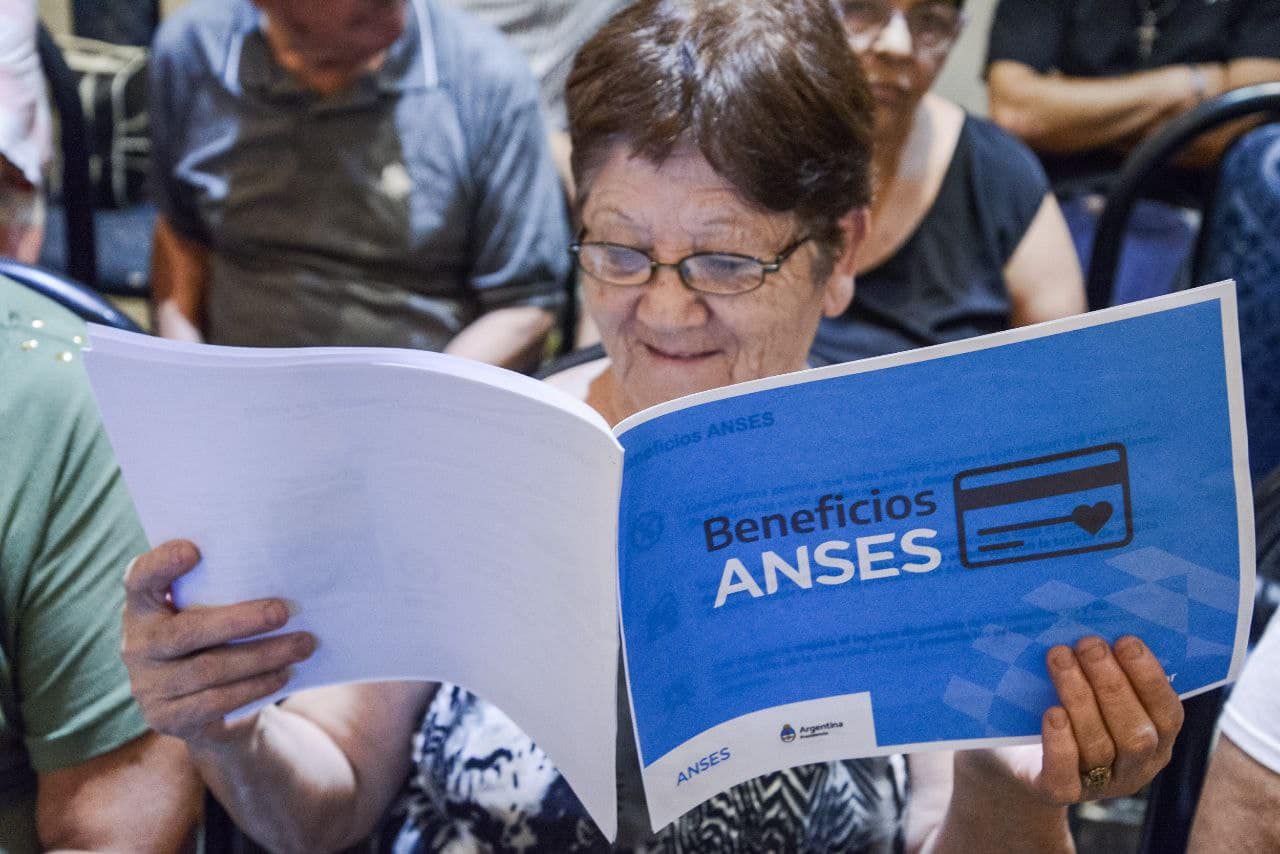

The monotributo, a tax regime that was once intended as a temporary solution for small businesses and self-employed workers, has become the elephant in the room in discussions about the sustainability of Argentina’s pension system.
The regime’s main problem is its lower tax burden compared with that of a system that covers employees in dependent employment. This means lower state revenue and poses a significant challenge for the future of the pension system.
According to a study by conservative think tank Fundación Mediterránea, workers in the lowest monotributo categories barely cover a fraction of the pensions they would be entitled to.
In fact, even the highest-earning monotributo workers fail to contribute enough to cover the lowest pensions.
This is a problem that will only grow over time due to Argentina’s rapidly aging population, which will put its pension system under increasing pressure unless changes are made.
The birth and expansion of the monotributo The Simplified Regime for Small Taxpayers (Monotributo) was created in the late 1990s. Its goal was to facilitate the formalization of economic activity and tax compliance among lower-income self-employed workers.
Its implementation responded to a specific need: many small business owners, producers, freelancers, service providers and professionals were operating outside the formal system because the general regime was costly and complex relative to their income.
This encouraged them to remain in the informal economy rather than properly registering under the corresponding category for self-employed workers.
The monotributo was intended as a tax simplification scheme that would facilitate economic formalization through an easy-to-comply-with system based on a fixed monthly payment.
Over the years, the monotributo acquired additional functions. It evolved from a regime designed primarily to simplify tax compliance into a hybrid institution.
Although it was created as a gateway to the formal economy — later incorporating pension and healthcare coverage — it also became a long-term arrangement for activities that were expected to transition to the general regime.
For example, it became a common way of disguising salaried employment as self-employment.
Nor did it solve the problem of the informal economy. In fact, informality remains one of the major challenges facing Argentina’s labor market, affecting 44% of workers, according to official data.
The fiscal gap Fundación Mediterránea calculated that the average contribution made by an employee to the pension system amounts to 11% of their income, while monotributo workers contribute just 1.1%.
“Given the relatively low level of pension and tax payments under the monotributo regime, its contribution to government revenue has generally been negligible,” the report explained.
The 2.2 million monotributo workers who contribute to Argentina’s pension system generate annual revenue equivalent to just 0.04% of GDP. By comparison, income tax raises 1.8% of GDP.
As a result, the regime not only generates little revenue, but also fails to accumulate enough funds to sustain future pension payments.
According to the study, if a male monotributo worker in the lower category, who earn US$653 a month, do not accumulate enough contributions over their working lives to finance a lifetime annuity comparable to their current minimum pension (US$280).
In the case of a female monotributo worker in the same category, who becomes eligible for retirement earlier than men and has a longer life expectancy, that figure would be just 7%.
The study warned that even the highest earning monotributo workers, which involves earning US$6,900 a month, workers do not accumulate enough contributions over their working lives to justify a lifetime annuity comparable to the current minimum pension.
After working for four decades under current regulations, a man would have contributed the equivalent of 75% of what would be needed, while a woman would reach just 50%.
“Argentina will need a pension reform. Not only because of the many problems facing the current system, but also because of the pressure that the progressive aging of the population will impose,” the report warned.
As an example, it noted that people aged 0 to 14, who accounted for 31% of the population in 1991, will represent 17% by 2030.












![[video]-la-peli-paraguaya-‘la-sombra’-presento-su-trailer](https://nuevoatlantis.com/wp-content/uploads/2026/09/26022-video-la-peli-paraguaya-la-sombra-presento-su-trailer-200x112.jpg)