Milei and the IMF say debt delinquency is no threat to the economy. Experts disagree
 Juan Marcos PollioUpdated 2 hours Ago3 Mins read
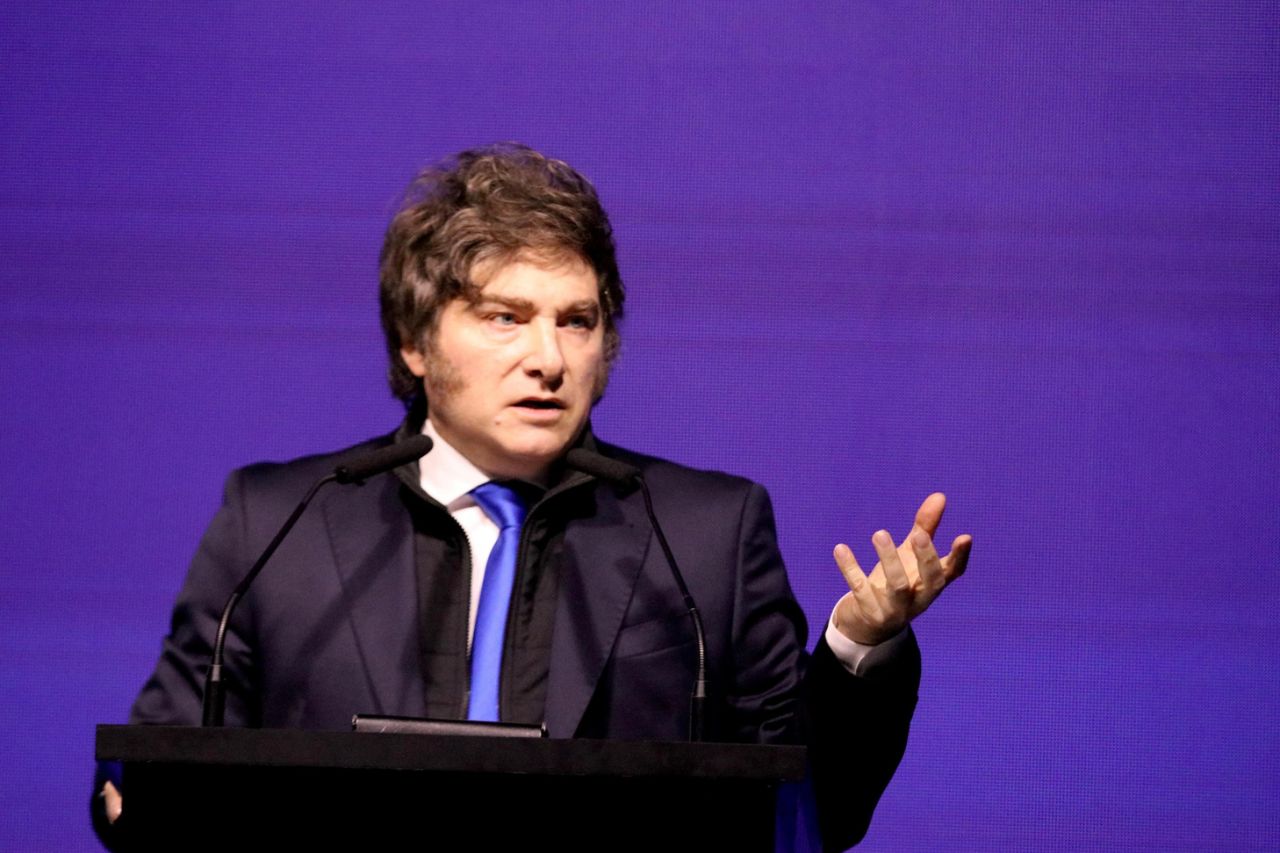

While it clearly became a problem by mid-2025, it was not until a few months ago that President Javier Milei’s administration began offering explanations for an issue that had already become a topic of widespread debate: record-high delinquency levels.
According to the latest official data, total delinquency on private-sector credit stood at 7.6% in June. By comparison, it was 2.9% in June 2025 and just 1.8% in the same month of 2024.
Delinquency is not only high compared with previous years; it is also high by regional standards.
A report published in August by the Latin American Federation of Banks (Felaban) found that the average delinquency rate in Latin America is just 2.7%, roughly one-third of Argentina’s level.
What do the government and IMF say? Central Bank Vice President Vladimir Werning said in early September that while credit delinquency had peaked over the previous three months, an improvement should be expected from the second half of the year onward.
He attributed the increase to interest rates, arguing that they had become excessively high in real terms for borrowers who had expected higher inflation or a devaluation following the elections.
Werning said the solution should come exclusively through sustainable refinancing by the private sector, without intervention or a bailout from the Central Bank.
He said banks have sufficient capital to absorb the losses and should avoid continuing to raise interest rates for households to offset the increase in delinquency.
The International Monetary Fund (IMF) also addressed the issue a week ago.
Asked about the matter at the organization’s monthly press conference, IMF spokesperson Julie Kozack said the IMF was “closely monitoring” the situation.
But she questioned whether it “represents a significant risk to the country’s financial stability.”
The IMF official said household debt remains relatively low, at around 8% of gross domestic product (GDP). She also noted that banks have adequate levels of capital and liquidity, while provisions cover more than 85% of non-performing loans.
You may also be interested in: IMF to visit Argentina for third review of economic program
The sharpest increase in delinquency has occurred precisely in household lending. In June, the delinquency rate in that segment reached 12.8%, up from 5.2% in the same month last year.
A month ago, President Milei offered a blunt explanation for the phenomenon: “People bought TVs to watch the World Cup and then decided whether to pay or not.”
However, that argument sidesteps a central problem. High delinquency rates restrict access to new credit, a key driver of domestic consumption and, consequently, economic activity as a whole.
The economic impact of delinquency Juan Manuel Telechea, director of consulting firm T+1, told the Herald that nearly 7 million people are currently delinquent on their debts, representing roughly 30% of all people in the traditional financial system.
“That means these people are shut out of the traditional financial system’s credit market, except for refinancing,” he said.
Telechea stressed that the situation has a clear impact on the economy.
“Credit, along with the recovery in purchasing power, had been the two main drivers of economic growth during 2024 and part of 2025,” he said.
He added that both credit and improvements in purchasing power stalled in the latter part of last year and throughout 2026.
According to data from Argentina’s statistics institute INDEC, private-sector registered wages have fallen 3.6% in inflation-adjusted terms since Milei took office.
Claudio Caprarulo, director of consulting firm Analytica, told the Herald that credit could have helped “smooth out” a situation in which purchasing power “has failed to recover and labor figures continue to deteriorate.”
With that tool no longer available, he warned that “what happens not only with household delinquency but also with corporate delinquency is becoming increasingly relevant.”
Although the corporate delinquency rate is much lower than the household rate at 3.5% in June, up from 1.1% in the same month last year Caprarulo said construction companies linked to the construction supply chain and textile companies “are showing the highest delinquency rates.”
Both sectors have been among the hardest hit by Milei’s economic policies. Construction has been affected by the halt in public works, while the textile sector has been hit by the rapid opening of imports and the decline in purchasing power.
Searching for solutions Telechea said the first step for the government to address the situation is to “acknowledge the problem,” something the economic team has yet to do explicitly, despite the issue becoming increasingly visible in official data.
On Thursday, the government released GDP figures for the second quarter of 2026. They showed that while the economy grew 2% year-on-year, it fell 0.6% on a seasonally adjusted quarterly basis, with private consumption declining 2.4%.
The T+1 director said the government could “play a much more active role in refinancing, for example, by opening credit lines specifically for that purpose,” something it has already begun doing through Banco Nacin.
Similarly, Caprarulo proposed that state pension agency ANSES’s Sustainability Guarantee Fund (FGS) purchase banks’ portfolios of delinquent borrowers in the same way that banks sell such portfolios to collection agencies but with the aim of “implementing recovery policies with interest rates and repayment terms that do not make families’ day-to-day lives more difficult.”
He added: “It is important to keep expanding credit in order to try to sustain the growth of Argentina’s financial system.”
In fact, Argentina has the lowest credit-to-GDP ratio in Latin America, at 14.3%, according to data from the Latin American Federation of Banks. The regional average is 47.3%.