Maradona death trial: Defense delivers closing arguments
 Fernando Romero NunezUpdated 2 hours Ago3 Mins read
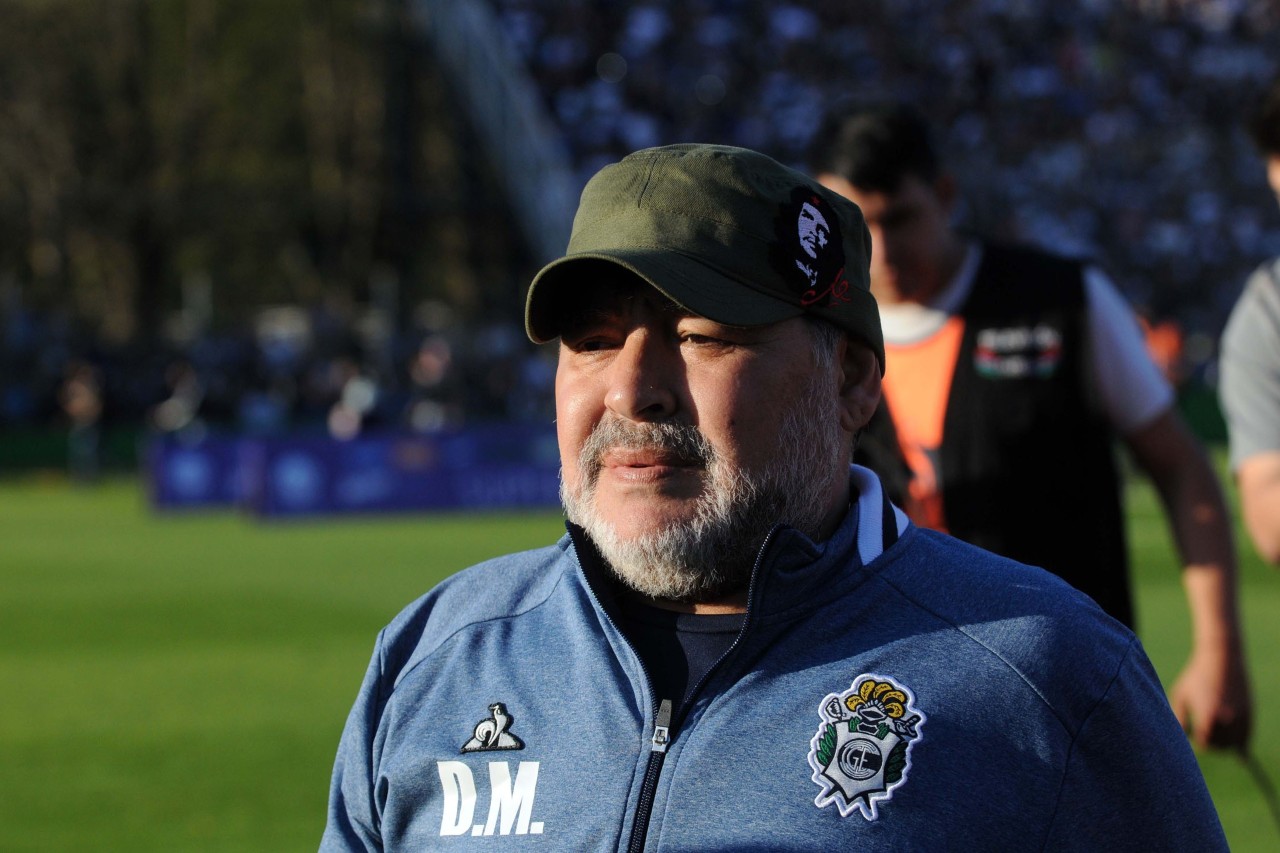

The trial over the death of Argentine football star Diego Maradona is set to conclude today, as the last defense attorneys for the seven healthcare professionals accused of negligence in connection with his death in 2020 deliver their closing arguments. Maradona was 60.
The court will then recess to deliberate on the verdict, which has not yet been scheduled.
In earlier hearings this week, lawyers for the two main defendants, the former star’s lead medical advisor, Leopoldo Luque, and psychiatrist Agustina Cosachov, challenged the central premises of the prosecution’s case.
On Wednesday, Francisco Oneto, who represents Luque, questioned the prosecution’s smoking gun: the Medical Board’s report, which concluded that the star had died due to negligent medical care.
The board’s findings were a key piece of evidence for the prosecution but were later found to contain several errors, including the incorporation of test results from Maradona’s father, who was also named Diego, into its conclusions.
“If that’s evidence of anything, it’s that you should acquit [Luque],” he said, adding that Maradona was “cardiologically healthy” and that the prosecution’s version of events “was never proven.”
He also said that the decision to place Maradona in home care — in a house that was not properly prepared, according to the report — was made by the former star’s psychiatrist, Agustina Cosachov, and that Luque was not the footballer’s lead medical advisor but “just a neurosurgeon.”
“I’m not asking you to forget who Maradona was, but to remember what justice is. Convicting an innocent person to honor an idol isn’t justice — it’s turning an innocent person into a scapegoat,” Oneto said in his closing argument.
Cosachov’s defense challenges proof of intent Vadim Mischanchuk, Cosachov’s lawyer, delivered his closing argument during Tuesday’s hearing, challenging the prosecution’s evidence of intent.
He insisted that, contrary to what the prosecution and the family claim, his client was “not unprepared, but rather obsessive.”
Mischanchuk argued that the prosecution and the plaintiffs were making claims that “contradict what is stated in the documentation, which they did not question during the investigation,” and that they had failed to prove Cosachov acted with intent.
“Even if they had been able to prove it, that intent would’ve been tainted because the medical services provider went out of its way to withhold information from my client. My client had a completely different understanding of the situation,” he said.
Pointing fingers Defense attorneys for the other healthcare professionals being prosecuted over Maradona’s death sought to shift responsibility to Luque and Cosachov.
Nicolás D’Albora, who represents medical services provider coordinator Nancy Forlini, argued that the cause of death remained “unproven” and called for his client’s acquittal.
According to D’Albora, Forlini is among the accused because of her alleged role in verifying home care conditions, something that, he said, “not a single piece of evidence proves was her responsibility.”
He pointed to Luque and Cosachov as the ones who “convinced [Maradona’s] daughters of rejecting the medical services provider offer” to continue treatment at a rehabilitation center, and insisted that Forlini had nothing to do with the decision to move the football star, who was recovering from brain surgery, to the house in a gated community where he perished a few days later.
He also alleged a “double standard,” noting that the prosecution and plaintiffs had called for doctor Pedro Di Spagna’s acquittal on the grounds that he had seen Maradona only twice before his death.
“It is absolutely contradictory to seek [Di Spagna’s] acquittal while pursuing a charge of manslaughter with eventual intent against [Forlini], when both received the same information,” D’Albora said.
Psychologists’ lawyers point to inconsistencies Earlier on Tuesday, Luciano Zorrilla, a lawyer for psychologist Carlos Díaz, questioned the differences between the accusations brought by the prosecution and the plaintiffs. He said that “faced with the same person, the same death, and the same evidence, the six prosecutions failed to reach a common conclusion.”
His colleague Diego Olmedo added that judges should ask themselves “what risky behavior did Díaz engage in, as a psychologist, prior to Maradona’s death” and whether the former star’s demise was “related to the risks Díaz exposed him to.”
“Given his specialty and the role he played in that home, Carlos Díaz had no opportunity to prevent Maradona’s death,” he said.
What’s next for the trial over Maradona’s death? After the remaining defense attorneys, representing nurse Ricardo Omar Almirón and nursing coordinator Mariano Perroni, present their closing arguments on Thursday, the court will begin deliberations and move toward a ruling.
The verdict is expected in December at the earliest, although no specific date has been set.
Maradona died from acute pulmonary edema in 2020. The trial centers on the circumstances of his death and the medical care he received from his doctors and nurses, after the Medical Board concluded that those responsible for his care had failed to provide proper medical treatment.