Malvinas: Argentina asks Law of the Sea tribunal to halt UK oil exploration
 Buenos Aires HeraldUpdated 6 hours Ago3 Mins read

*Updated on Nov. 10, 2:44 p.m.
Argentina on Tuesday brought its case before the International Tribunal for the Law of the Sea (ITLOS) in Hamburg, Germany, seeking to halt British oil exploration in the Malvinas.
On the first day of hearings, Argentina’s delegation — which includes government officials and international law specialists — focused on two central arguments: the United Kingdom cannot unilaterally exploit the natural resources of a territory whose sovereignty is disputed, and oil extraction would cause damage that no subsequent court ruling could undo.
“What is at stake cannot be restored. Hydrocarbons are non-renewable resources, and their extraction is irreversible,” Ambassador Mario Oyarzábal, the Foreign Ministry’s legal adviser and Argentina’s agent before the Tribunal, said while explaining why the country considers provisional measures urgent.
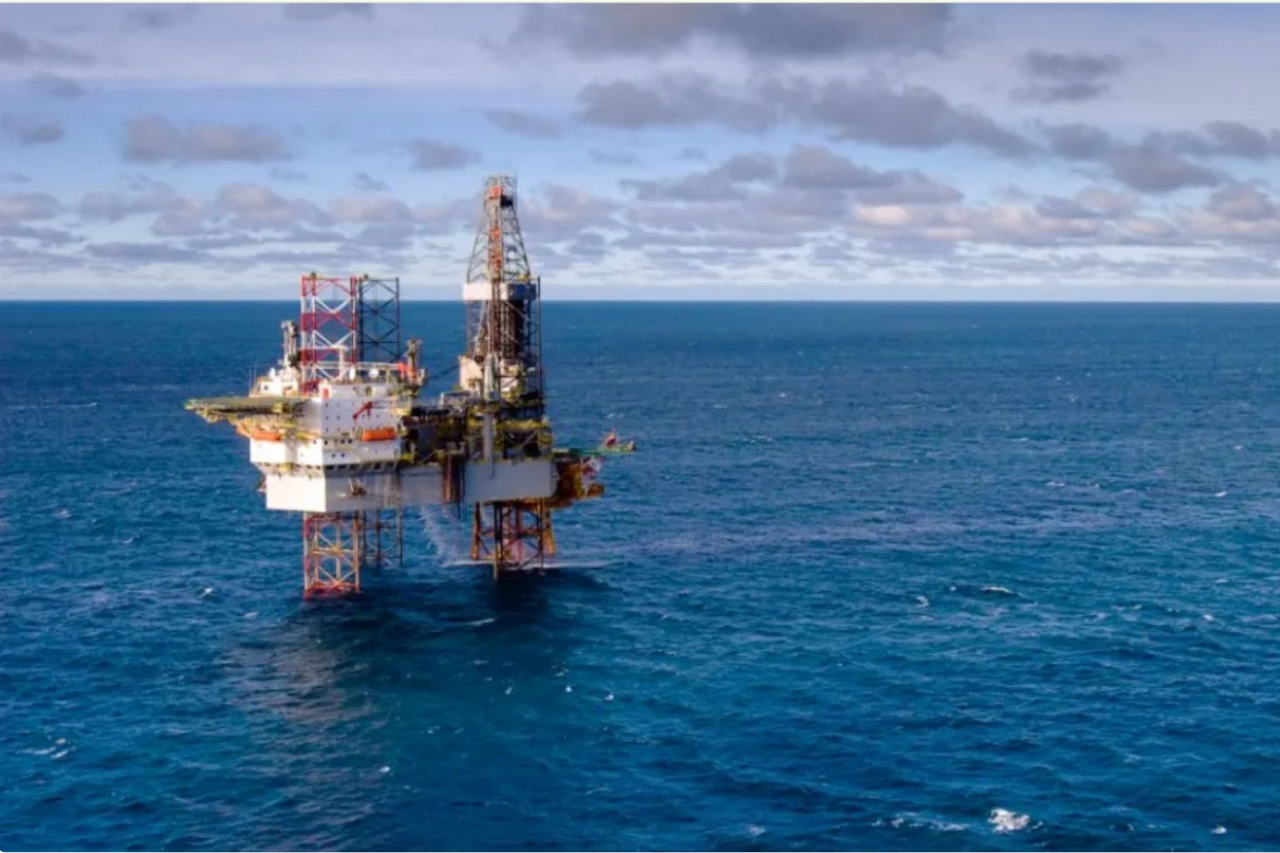
Oyarzábal’s statement encapsulates one of the main thrusts of Argentina’s case: preventing the Sea Lion project from creating a fait accompli before international arbitration can address the underlying dispute. The development, led by Navitas Petroleum and Rockhopper Exploration in the North Malvinas Basin, involves a long-term oil production plan with 23 production wells and further phases under consideration.
Argentina’s case goes beyond the sovereignty dispute. It also seeks to safeguard its rights over continental shelf resources and prevent potential damage to the marine environment. “The islanders cannot appropriate the resources of the disputed continental shelf,” the Argentine delegation stressed in its submission.
The delegation warned that one of the companies’ own contingency plans envisages the possibility of an oil spill reaching undisputed Argentine waters within 30 days. In such a scenario, Argentina could be forced to coordinate a response and bear the environmental consequences of an activity it has not authorized.
The first round of arguments concluded on Tuesday morning, with two sessions of presentations. The United Kingdom was due to take the floor in the afternoon, seeking the outright dismissal of Argentina’s request.
On Monday, Princess Anne, sister of King Charles III, arrived in the Malvinas Islands to begin an 11-day visit, accompanied by her husband, Vice Admiral Sir Timothy Laurence.
Argentina’s arguments: sovereignty, non-renewable resources and environmental risks One of the key points was the connection between oil exploration and the sovereignty dispute that remains unresolved before the United Nations. Argentina argued that the United Kingdom is seeking to unilaterally exploit natural resources belonging to a territory whose sovereignty is contested and whose decolonization process remains unfinished.
In this regard, the delegation recalled that the United Nations has recognized the existence of the dispute since 1965, when the General Assembly adopted Resolution 2065, urging both countries to find a peaceful solution through negotiations. It also cited Resolution 31/49, adopted in 1976, which calls on both parties to refrain from taking unilateral decisions that would introduce changes to the situation while the process recommended by the international body is ongoing.
The second main argument concerned the irreversible nature of extraction. For Argentina’s delegation, oil is a non-renewable resource: once extracted, no subsequent ruling can return it to the ground or restore the previous situation. Argentina therefore maintains that waiting for an arbitration ruling without imposing interim measures could render any eventual protection of the rights it seeks to safeguard ineffective.
Environmental concerns provided a further argument. The delegation warned of the risks of a potential oil spill, noting that, according to a contingency plan submitted by one of the companies, hydrocarbons could reach undisputed Argentine waters within 30 days.
What the United Kingdom argues The UK’s position is to reject the request for provisional measures in its entirety and ask the Tribunal to dismiss Argentina’s filing. In an official note dated November 2, 2026, obtained by Energy Report, London argued that Argentina had failed to meet the requirements for such an order.
The United Kingdom raised four objections. First, it challenged whether the arbitral tribunal provided for under Annex VII of the Law of the Sea Convention has prima facie jurisdiction to hear the dispute. Second, it argued that the rights claimed by Argentina are not sufficiently plausible. It also maintained that there is no risk of irreparable harm and that the situation does not meet the urgency threshold required to justify provisional intervention by the Tribunal.
The proceedings before ITLOS have a specific scope: the Tribunal is not being asked at this stage to rule on sovereignty over the Malvinas or issue a final judgment on the validity of the oil licenses. Its task is to determine whether provisional measures should be ordered to protect the rights of both parties while the arbitral tribunal that will examine the main dispute is established.
The second and final day of hearings will take place on Wednesday, November 11. Argentina’s delegation will present its arguments again in the morning, with the United Kingdom delivering the final presentation. The Tribunal will then assess both sides’ arguments and decide whether to grant the provisional measures requested by Buenos Aires.
*With information from Ámbito
Editorial disclaimer: Although the UK refers to the Malvinas territory as the “Falklands Islands,” Argentina strongly contests this name. The Buenos Aires Herald refers to the islands as the Malvinas Islands.