Lula vs. Flávio Bolsonaro: What to know about Brazil’s election
 Martina JaureguyUpdated 41 minutes Ago5 Mins read
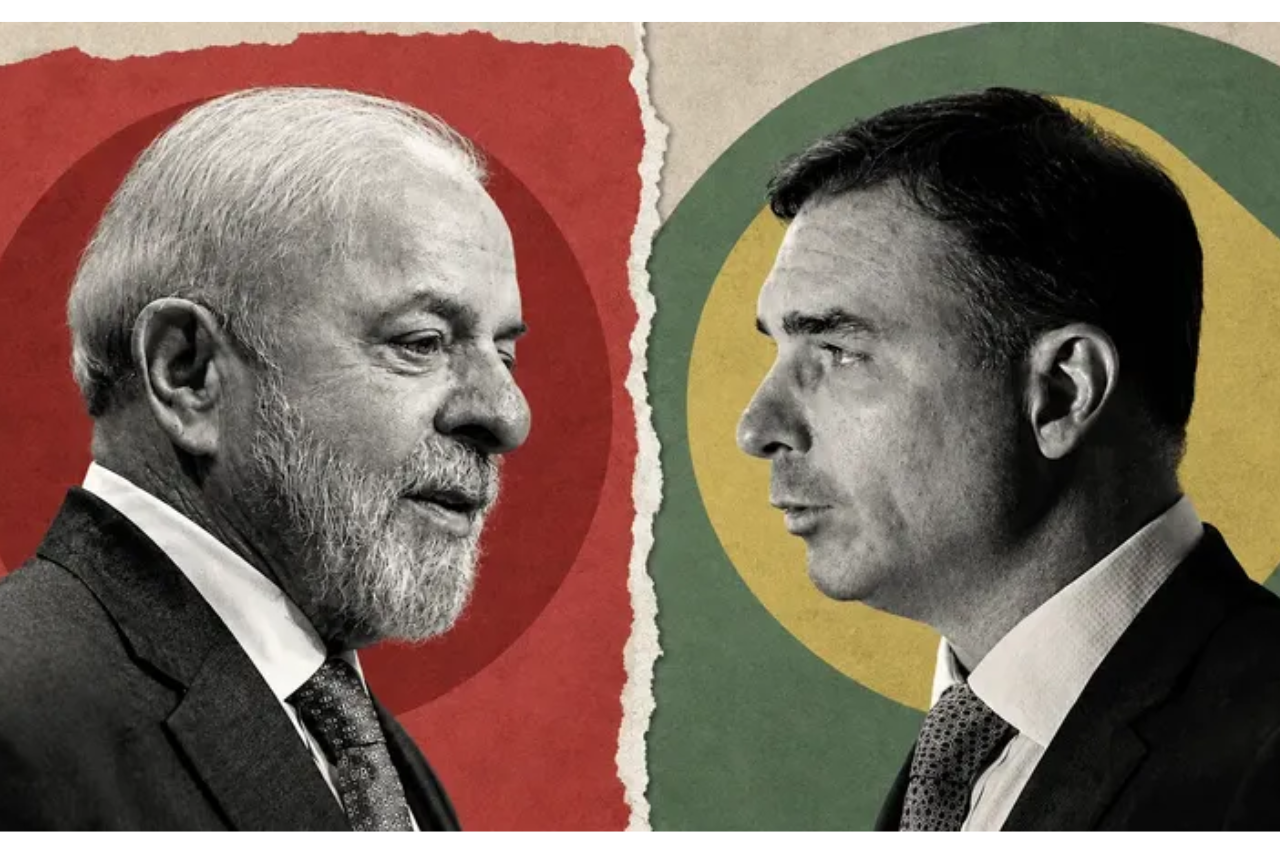

Brazil will hold presidential elections on October 4 in a polarized race that — according to polls — will come down to a choice between the continuation of center-left President Luiz Inácio “Lula” da Silva’s model or a return to the far-right under Flávio Bolsonaro, son of former president Jair Bolsonaro.
Lula (80) has been governing Brazil since he took over from Bolsonaro in January 2023. A member of the progressive, labor-focused Workers’ Party, he also ruled the country between 2003 and 2010 and is now seeking a fourth term in office.
Senator Flávio Bolsonaro (45) is the current leader of the country’s conservative Liberal Party, under which his father ruled between 2018 and 2022.
Former President Bolsonaro is serving a 27-year prison sentence for his role in a plot to overturn the 2022 election results and assassinate Lula.
What’s at stake Almost 159 million people will be eligible to vote in this election through an electronic system. In addition to electing a new president and vice president, Brazilians will also renew the lower house in its entirety and two-thirds of the Senate.
They will also elect new governors for the country’s 26 states plus Brasília, the capital city.
Brazil’s next president and vice president will begin their term on January 1, 2027, and rule until December 2030.
Polls, however, are predicting that it is unlikely that winners will be decided on October 4. In Brazil, candidates running for executive office need at least 50% of the vote to win outright.
If none of them reach or surpass this limit, there will be a runoff on October 25.
Oliver Stuenkel, professor of international relations at Fundação Getulio Vargas (FGV) in São Paulo, told the Herald that the election is taking place against a backdrop of a slowing economy and a growing sense of insecurity.
“The market projects growth of around 1.9%, inflation near 5%, and a Selic rate [the benchmark interest rate for the Brazilian economy] of 13.75%, meaning activity is being dampened by the cost of money, even though unemployment remains quite low,” he said.
“On the social front, public security has displaced the economy as the primary concern, and a corruption scandal has eroded trust across the board, without clearly benefiting any single side.”
“Politically, the country is contending with a Congress that is further to the right than the government and a Supreme Court that — a year after the ruling against Bolsonaro — is facing its own crisis of legitimacy,” Stuenkel concluded.
What polls say Surveys carried out by various agencies in Brazil position Lula da Silva and Flávio Bolsonaro as the two main contenders.
Most polls suggest that Lula is leading in terms of voter intention, with between 36% and 40% of support. Bolsonaro is the projected runner-up with between 30% and 37% of votes, according to the latest surveys.
The other 11 candidates competing in the election trail far behind. Psychiatrist Augusto Cury, from the centrist Avante party, appears in third place with around 6% of voter intention.
Stuenkel says that being relatively new to politics could actually be playing in Bolsonaro’s favor.
Lula’s extensive experience as president “cuts both ways,” he explained. “Three terms in office means political wear and tear, and his disapproval rating hovers around 48–50%, compared to an approval rating of 43–48%.”
The expert also points out that Bolsonaro “is not running as an individual in his own right, but rather as the recipient of an existing voting bloc transferred to him by his father.”
“Inexperience matters little when the candidate acts as a surrogate. Added to this is the fact that the campaign’s dominant issue is security — precisely the area where the government is most vulnerable.”
The candidates: Lula da Silva
The current president has a background as a union leader and was a metalworker in his youth. A co-founder of the Workers’ Party, he is the first person to have been elected three times as leader of Brazil.
During his first two terms (2003-2010), he carried out substantial social and economic reforms that led the country to triple its Gross Domestic Product (GDP) and become the sixth-largest economy in the world, mainly thanks to a commodity boom.
Poverty was halved during that time, with 30 million Brazilians lifted out of poverty through income redistribution programs that transferred funds directly to vulnerable families and helped reduce child malnutrition.
He reinstated some of those programs during his third term, focusing also on institutional reconstruction, macroeconomic stability, and the climate agenda. He also decelerated inflation and drove unemployment down to its lowest levels in nearly a decade.
Lula has promised to carry on these programs in a potential fourth term, with the addition of combating organized crime.
Da Silva was barred from running in the 2018 presidential election, which was won by Jair Bolsonaro, due to charges related to the Lava Jato investigation, Brazil’s largest corruption probe.
He spent nine months in jail in 2019 after being condemned for passive corruption and money laundering. However, the conviction was annulled in 2021 by the Federal Supreme Court.
One year later, Da Silva defeated Bolsonaro in the 2022 presidential election. The right-wing leader was eventually sentenced to prison in September 2025 for his role in a plot to assassinate Lula and overturn his win.
“Lula upholds the model of public investment, social programs, and active diplomacy in the Global South and in multilateral forums,” Oliver Stuenkel sums up, regarding his main platform.
The candidates: Flávio Bolsonaro On the opposite end of the ideological spectrum is Flávio Bolsonaro. According to Stuenkel, his presidential platform “proposes eliminating ten ministries, resuming privatization, lowering taxes on energy and fuel, classifying factions as narco-terrorist organizations, reducing the age of criminal responsibility to 14 years, and expanding oil and gas exploration with simplified licensing.”
Bolsonaro junior took over the leadership of the Liberal Party after his father was barred from running for office.
While he has experience as a lawmaker and ran for mayor of Rio de Janeiro in 2016, he is a relatively new major figure in Brazil’s national politics.
Much like his father, Flávio Bolsonaro has hard-line, far-right positions on security and social issues. He has promised to build new jails and reform existing ones to allow 500,000 new inmates to be imprisoned.
This includes building five new maximum-security prisons and hardening detention conditions, in line with the model led by El Salvador’s President Nayib Bukele.
Brazil and Argentina Flávio Bolsonaro has a good relationship with Argentina’s right-wing President Javier Milei and shares very similar ideological views.
His economic team has said Milei’s policies serve as an example of the economic reforms they want to implement.
The libertarian leader was present when Flávio Bolsonaro’s candidacy was announced at an event organized by the Liberal Party in São Paulo in July.
The visit led to a diplomatic crisis with the current government of Brazil, as Milei referred to Lula, without naming him directly, as a “thief,” a “former convict,” and a “totalitarian” leader. He had already used similar terms to describe Da Silva in the past, but never on Brazilian soil.
In response, the Brazilian government recalled the country’s ambassador to Buenos Aires and downgraded diplomatic relations with Argentina, which meant the Argentine ambassador in Brasília returned.
Brazil is Argentina’s main trading partner and has remained so despite the poor relationship between the two countries’ leaders.
The question remains as to how that relationship could evolve depending on who wins the electoral contest in Brazil.
“If Lula triumphs, a cool, strictly technical approach is most likely: trade continues, but without political coordination. If Flávio wins, there will be an ideological honeymoon, yet bilateral challenges will persist — as has always been the case during periods of ideological alignment, whether on the left or the right,” predicts Stuenkel.


Tras vencer a Martinica, El Salvador llega a Guatemala para su duelo de Liga de Naciones
 Agencia EFE1 Mins read