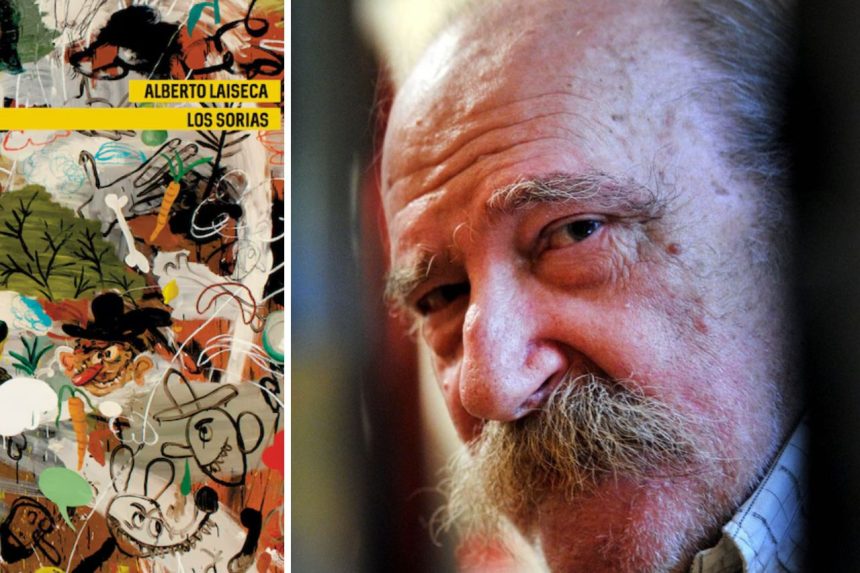
The longest Argentine novel ever written, Los Sorias survived as a single manuscript for a decade before it was finally published — and became one of the most legendary books in local literature.
Now, the 1300-page work by cult author Alberto Laiseca will have an English translation. Dallas-based Deep Vellum publisher announced the acquisition of Los Sorias, to be translated by Max Lawton and scheduled for publication in the spring of 2029.
Written over ten years while its author worked as a janitor, Los Sorias takes readers into an alternate universe in which a new world war is playing out among three superpowers: Soria, Technocracy, and the U.S.S.R.
While describing in excruciating detail the near-constant atrocities committed on all sides, Laiseca deploys a sharp satire about the officials and intellectuals who work to disguise the crimes committed by the powerful.
Characters marooning in these three states include philosophizing vagabonds, magicians, zombies, robots, and a host of demonic creatures spawned by a force of absolute evil dubbed Anti-Being.
“My work is delirious realism,” Laiseca once stated in an interview. “I’m very much a realist, too, but not in the way Émile Zola or the Soviets might have been. What I want to do with the distortions of delirium is precisely to highlight parts of reality that are rarely seen. That’s what realism is for.”
For 30 years, until its first edition in the late 1990s, Los Sorias was a lost manuscript that was rediscovered, partially destroyed and rewritten several times.
The only existing version, a leather-wrapped bundle of papers, passed from hand to hand between writers who already had a profound influence on Argentine literature, such as Ricardo Piglia and César Aira. Los Sorias even escaped a random theft attempt at a train station, where Laiseca had to struggle to prevent a sneak thief from snatching it right out of his hands.
The first edition of 350 numbered copies by independent publishing house Simurg were printed on bible paper, signed by the author himself, and included the original drawings, maps, posters, a cover by Argentine artist Guillermo Kuitca, and a prologue by Piglia, who called it “the best Argentine novel since Roberto Arlt’s Los siete locos.”
Six years later, another independent publisher, Gárgola, reissued it in a print run of 1,500 copies. The latest edition is by Spanish publisher Barrett.


“Los Sorias must be one of the strangest novels in Argentine literature,” Booker Prize finalist Selva Almada, a disciple of Laiseca who still refers to him as her mentor, told the Herald.
“It is certainly one of the longest and most extravagant — like all of Laiseca’s work.”
Just as his work was unusual and unique, so was Laiseca himself. “It’s impossible to separate his life from his work; I think he never knew where one ended and the other began,” Almada remembers.
The rise of Laiseca
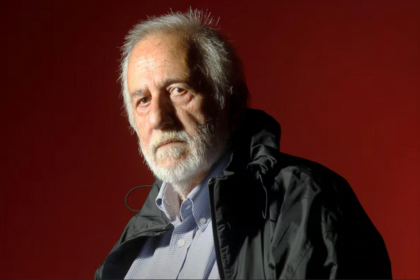
Born in Rosario, Argentina, in 1941, Laiseca abandoned his college studies to dedicate himself to writing. He worked as a laborer, garbage collector, and, later in Buenos Aires, as an employee of Argentina’s state-owned telephone company.
After writing short stories for newspapers and anthologies, he published his first novel, Su turno para morir (Your Turn to Die), in 1976.
His book of short stories, Matando enanos a garrotazos (Killing Dwarfs with Clubs), and the novel Aventuras de un novelista atonal (Adventures of an Atonal Novelist), both published in 1982, cemented his status as a cult figure.

As he became a well-known writer within Buenos Aires’ literary scene, Laiseca’s peak of popularity actually came from television. Between 2002 and 2005, he narrated horror stories on independent cable network I-Sat, a performance that even won him a Martín Fierro — Argentina’s main TV awards —for best cultural/educational show.
In 2008, Laiseca also played a part in Andrés Duprat and Mariano Cohn’s film El artista, in the role of a patient at a senior citizens home, alongside other celebrated figures like artist León Ferrari, writer Rodolfo Fogwill and sociologist Horacio González.
Laiseca died in 2016 at the age of 75. His funeral was held at the National Library in Buenos Aires.
“Laiseca turned his back on academia and the literary circles of his time. Although he was friends with several renowned writers, those relationships always ended badly,” says Almada. His mentor, she explains, was burdened by the lack of acknowledgement — except from a few but faithful readers.
The fact that none of his books were ever translated into other languages, especially English, also troubled him.
“Los Sorias being his first novel to be translated into English is another extraordinary adventure,” Almada believes.
Translator Max Lawton wrote that “nothing could be less normal than Los Sorias”.
“I have no idea how The Sorias will read once I’m done with it, but I do know that it will blow minds, attracting mad plaudits and criticism alike, befuddling and enticing — confounding, estranging,” he added.
For Almada, future readers of the novel will enter “a journey into his hallucinatory universe, which at the same time is so close to our current world, plagued by disastrous dictators (as he would call them), dehumanization, and arbitrariness.”
According to publisher Will Evans, American readers are currently “hungry for the adventurous, the mind-altering, the world-expanding.”
“We hope to keep taking on enormously ambitious, borderline quixotic projects for a long time to come. The Sorias may very well be the wildest ride of them all,” he wrote.