Inflation, growth, and exchange rate. How does the 2027 budget compare to last year?
 Juan Marcos PollioUpdated 11 hours Ago2 Mins read
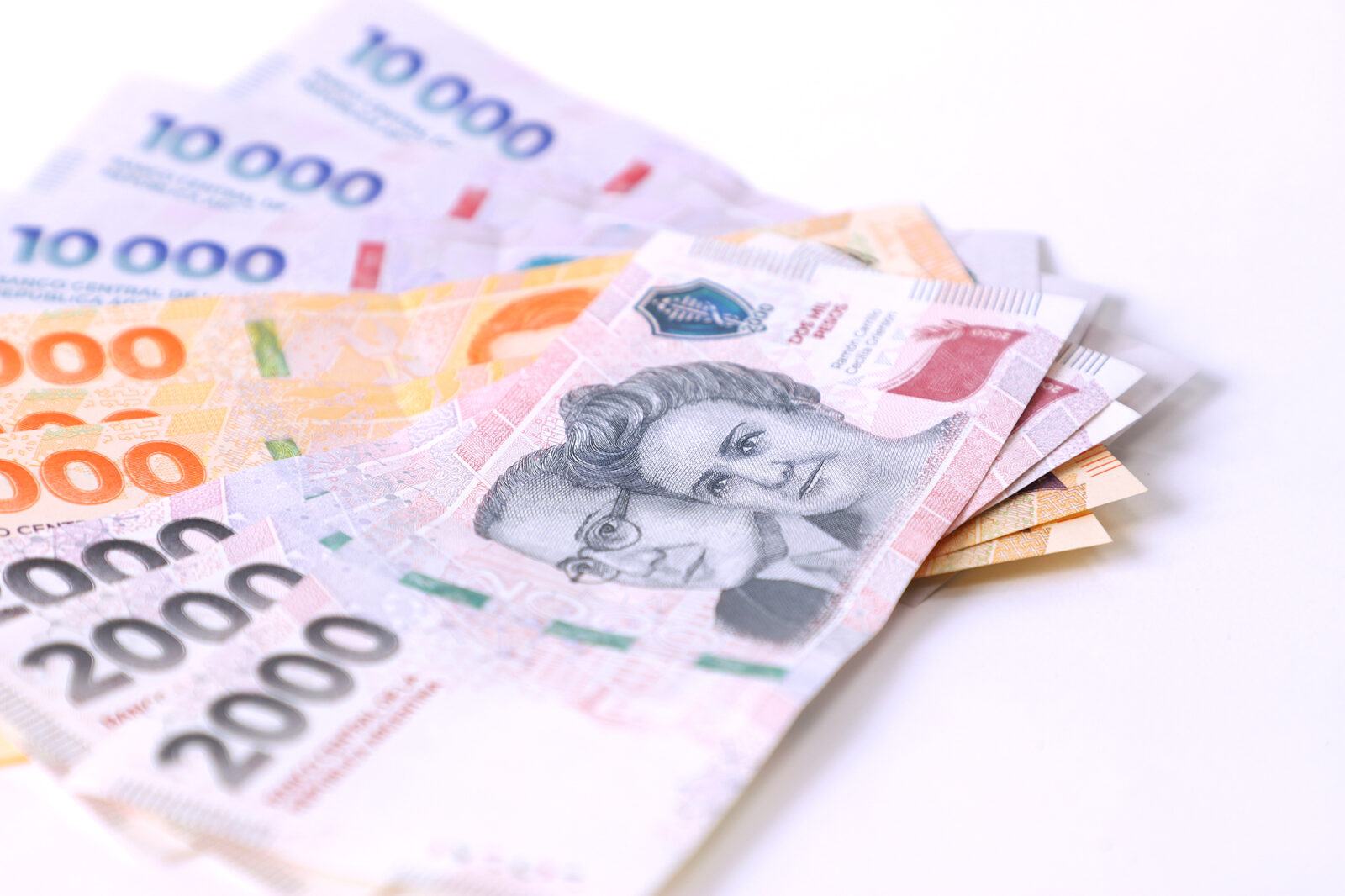

The most eagerly awaited economic projections in the 2027 budget were those the government outlined for key variables: inflation, the dollar-peso exchange rate, and economic activity.
The first point to note is that the economy ministry’s estimates are more optimistic than those of market analysts, a gap that is particularly evident in the economic growth (close to a 1% difference between the two).
The 2027 budget also provides corrected projections for how economic variables will finish this year, showing a significant gap in what the government estimated would happen and the current state of these indicators.
This is evident in inflation — which is currently close to three times what was projected last year — and growth, which has been slashed to a third of what was estimated for 2026.
Corrections for exchange rate and inflation In the budget submitted at the end of 2025 for this year, the government estimated that annual inflation in 2026 would reach 10.1%. However, from January through August, inflation has already accumulated to 21.3%.
As a result, in the 2027 budget, the full-year inflation estimate for this year was raised to an annual rate of 29%.
The figure is slightly below the 30% estimated by experts surveyed in the Market Expectations Survey (in Spanish, REM), conducted monthly by the Central Bank.
For 2027, the economy ministry projects inflation to end the year at 18% year-on-year.
A similar pattern can be seen in exchange-rate projections. Last year, the Milei administration expected the U.S. dollar to end the year at AR$1,423 per dollar.
It now expects the currency to end the year at around AR$1,600, compared with its current level of AR$1,513. The REM, meanwhile, expects it to reach AR$1,630 by December.
According to the 2027 budget, the official exchange rate would reach AR$1,847.6 in December of next year.
Challenging growth and fiscal strength The toughest challenge, however, lies in economic activity. Last year, the economic team led by Luis Caputo expected the economy to grow 5% in 2026.
INDEC’s preliminary estimate for the first half of this year puts y-on-y growth at 1.9%.
Looking ahead to 2027, the government has moderated its expectations, projecting 3% growth for the year. Even so, it remains considerably more optimistic than the 2.1% growth estimated by the REM.
The official figure for economic activity in the second quarter of this year, which INDEC will release this Thursday, will incorporate more precise estimates of GDP.
This will provide a clearer picture of the direction of the economy during the first half of the year. Projected GDP growth for next year is 4%.
However, some other projections appear more solid. The most significant is the estimate for this year’s fiscal result.
In 2025, the government estimated that this year would end with a primary fiscal surplus — that is, before accounting for debt payments — equivalent to 1.5% of GDP. In its new budget proposal, it estimates a surplus of 1.3%.
Although this is broadly in line with the government’s previous estimate, it is also one-tenth of a percentage point below the 1.4% target agreed with the International Monetary Fund (IMF) in its latest review.
The divergence in most variables between projections made a year apart raises questions about the accuracy of the assumptions used by the libertarian administration in calculating its projections for next year.
This is particularly relevant because presidential elections will be held in November 2027, potentially increasing the risk of economic volatility.