Andrea feels deep shame when she thinks about the loan she took out a year ago in Buenos Aires that she is now unable to repay. She’s not alone.
Debt delinquency among Argentine families has tripled in a year, reaching its highest level in two decades under President Javier Milei, a radical free-market champion whose draconian austerity measures have curbed inflation but left many struggling to make ends meet.
Some 5.8 million people are more than 90 days behind on their debt payments, according to the Central Bank of Argentina. About half of them are considered uncollectable.
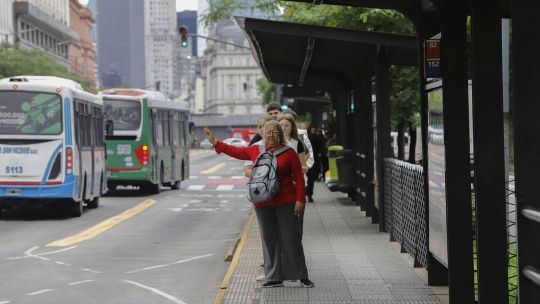
Stagnant incomes, coupled with a cost of living crisis – due in part to Milei slashing subsidies for transportation, gas, medicine and other essentials – have nudged household finances to the brink.
Utility tariffs, in particular, have risen far faster than inflation since Milei took office in December 2023.
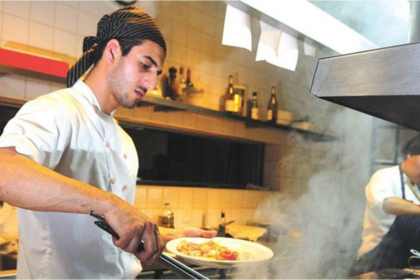
Andrea, a 32-year-old mother who declined to give her surname because she felt ashamed of her predicament, tried to reinvent herself by starting a catering business after the stationary shop where she worked shut down.
But the purchase of a new oven landed her in hot water.
“I fell behind on payments, and in a couple of months the debt became too big to repay. It went from one million pesos [about US$670] to five million [about US$3,360],” she said.
She said she did not want the situation to become known at her daughter’s school, where she is struggling to pay the fees.
No ‘gun to their head’
In total, some 21 million people, out of Argentina’s population of 46 million, have some type of debt, according to the Central Bank.
The proportion of household bank debt in arrears rose from 4.5 percent to 12.8 percent between May 2025 and May 2026, before edging down to 12.7 percent in June.
Milei has rejected any responsibility for the situation.
“Did they have a gun to their head to make them do it [take out a loan]?” he asked curtly in a recent interview.
Juan Cuattromo, the president of Banco Provincia de Buenos Aires, rejects the notion that Argentines are themselves to blame for getting in over their heads.
He told AFP debt delinquency was “not a consequence of individual decisions” but the result of “a macroeconomic context that has worsened incomes, employment and economic activity.”
Interest rates of 1,000 percent
Personal loans and credit cards account for more than 70 percent of unpaid loans, according to a report by the Centro de Economía Política Argentina (Center for Argentine Political Economy, CEPA) think tank.
“I go to bed and wake up thinking about how I’m going to pay,” Claudia Debaste told AFP, referring to her credit card bill.
Debaste, a 40-year-old single mother who works a low-pay office job, ran up a large bill on utilities, transportation, groceries and medicine.
She fell behind on her payments four months ago and is now seeking to reschedule her debt.
Milei has been hailed for his success in fighting high inflation, Argentina’s perennial bugbear, but slower price increases are a double-edged sword for people living on credit, as it means their loans retain their value over time.
Longer repayments – coupled with higher bills and stagnant wages – have created the perfect storm for many families.
The debt crisis coincides with the rise of easy access to credit from digital wallets such as Mercado Pago, the digital payment arm of e-commerce giant Mercado Libre.
One digital wallet advertises loans to users from the age of 13, promising “quick, fully online loans” with few requirements and instant access to cash.
But eye-watering interest rates soon land them in a debt spiral.
According to Banco Provincia statistics, almost four in 10 borrowers aged 18 to 21 fail to repay their loans, and nine in 10 of those borrowers took on debt before obtaining their first formal job.
Left-wing lawmaker Gabriel Solano, leader of the Partido Obrero workers’ party, filed a criminal complaint last week against Marcos Galperin, CEO of Mercado Libre, alleging usury through Mercado Pago, Argentina’s most widely used digital wallet.
“The total effective financial cost [of a loan from Mercado Pago] stands at 1,375 percent,” Solano wrote on X.
Teenage debtors
The offer of credit, with few conditions attached, has also sucked in workers from the gig economy, with the platforms for which they work sometimes acting as their lenders.
Their rates start at 260 percent annually, quadruple those of banks, with the payments deducted from the workers’ earnings.
Those who don’t pay risk having their account on the platform blocked, effectively putting them out of business.
Young people aged up to 30 are among those worst affected.
“It’s like being fired,” Leandro Hidalgo, a delivery driver and union representative, told AFP, accusing the platforms of “financial slavery.”
AFP approached two companies for comment – food delivery app Pedidos Ya and Gurpi, a vehicle leasing platform that helps delivery drivers acquire a vehicle in return for a share of their earnings – but neither responded.
State-owned and private banks have launched debt-relief schemes offering lower rates linked to inflation, although the eligibility requirements can be difficult to meet.
related news
by Sonia Avalos, AFP