Former chief of staff Adorni maintains US dollar funds came from Bitcoin in judicial filing
 Vanesa PetrilloUpdated 3 hours Ago3 Mins read
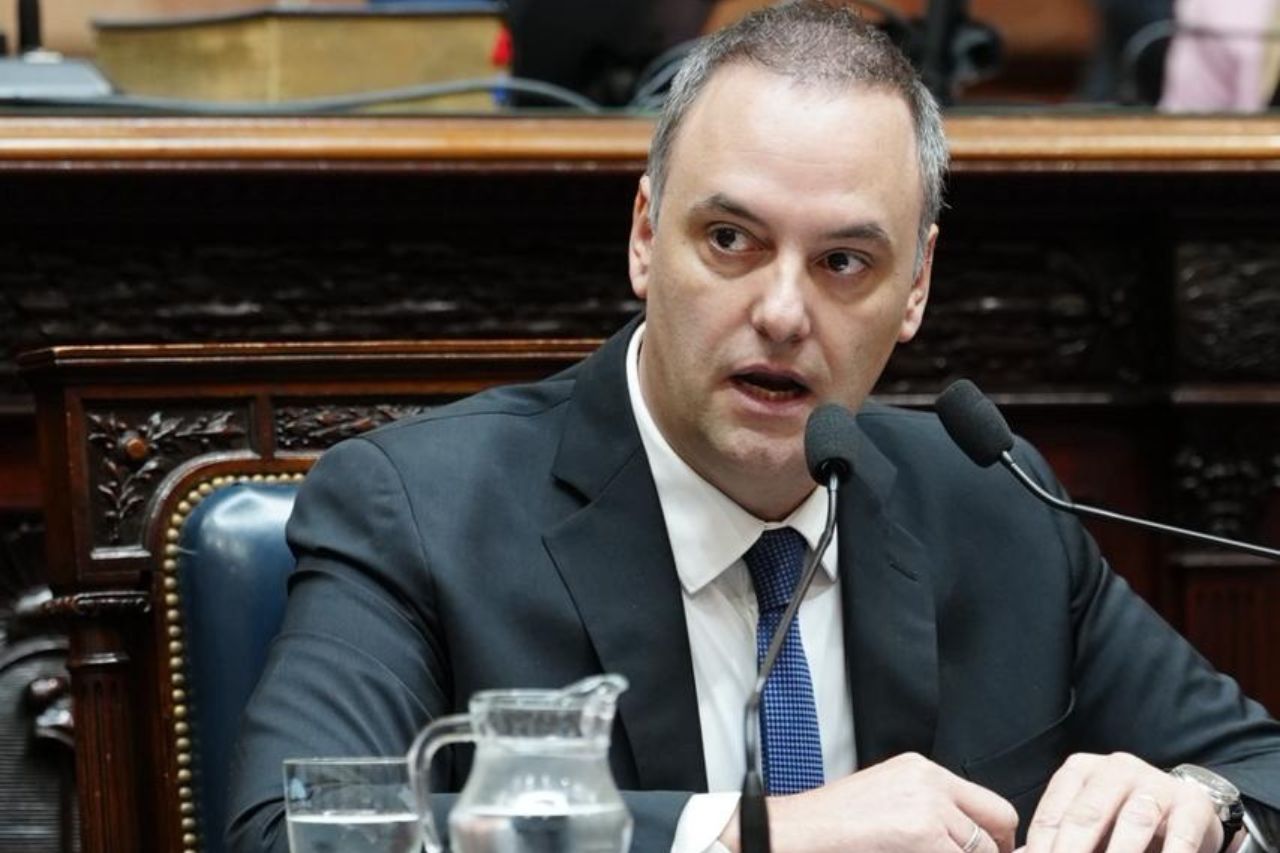

Former Chief of Staff Manuel Adorni filed a 78-page written submission on Monday in response to 20 questions posed by the prosecutor in the case against him over alleged illicit enrichment.
The defense argues, as its central point, that “there is no appreciable enrichment that cannot be explained” and that the transactions under scrutiny are supported by documentary evidence.
Among the key points, the document maintains Adorni’s previous assertions that most of the funds in question came from Bitcoin acquired between 2014 and 2018, before he entered public service.
It also challenged the cost of remodeling his house in the Indio Cuá gated community.
The dollars and Bitcoin One of the main issues under scrutiny was the cash in U.S. dollars declared by Adorni.
According to the court filing, President Javier Milei’s former spokesperson declared US$565,000 at the beginning of 2023, US$513,000 at the end of that year, and US$388,961.52 at the end of 2024, all under the category of “asset sales.”
The defense now explains that these funds did not come from the sale of real estate or another physical asset, but from the liquidation of eight Bitcoin accounts. The report submitted by his lawyers calculates that these transactions amounted to US$591,544.61.
The filing states that the eight wallets were used between October 21, 2014, and September 10, 2018. Their use, therefore, predates Adorni’s entry into public service by several years. They currently have no remaining balance.
According to the filing, the money originally used to purchase the Bitcoin came from savings accumulated during the years when Adorni and his wife, Bettina Angeletti, were engaged in private professional activities.
The defense details that the first purchases were made in 2014 and that most of the investment — US$199,883.20 — was made in 2017. The sales, according to the filing, were carried out through personal transactions and in cash.
To establish ownership of the wallets, the lawyers say that Adorni signed messages using the private keys of the eight addresses before a notary public. They further maintain that he handed over the private keys in a wax-sealed envelope so that they could be used if requested during the investigation.
“An error” in the sworn asset declarations Another central point of the defense concerns amended financial disclosure statements. The lawyers acknowledge that changes were made to the original declaration, but maintain that there was no intention to conceal information.
According to their argument, Adorni — who is a certified public accountant — corrected the information before receiving the prosecutor’s request and before ARCA notified him that it would conduct an audit.
The defense cites a public statement previously made by Adorni, in which he described the situation as “an error” and said that “although it was completely unintentional, I believe I have to pay everything that is due.”
The former official had added that he was willing to pay “every last peso in taxes,” as well as any applicable fines and interest.
The Indio Cuá house Another significant section of the filing addresses the purchase and renovation of his home located on Lot 380 in the Indio Cuá Country Club.
The prosecutor had requested an explanation of the source of the funds used to purchase the lot and, in particular, the US$245,000 that, according to the investigation, had been paid to contractor Matías Tabar for the renovation.
The defense responded that the lot was purchased for US$120,000: US$100,000 through a loan secured by a mortgage on a property on Asamblea Street, and the remaining US$20,000 in cash.
The most controversial point concerns the construction work. The defense maintains that the amount actually handed over to Tabar was US$175,000 and says that the US$245,000 attributed to the work does not match the documentation reviewed.
According to the filing, Tabar’s own spreadsheet, when properly totaled, comes to US$285,929, rather than US$245,929.
The defense thus points to a US$40,000 discrepancy which, it says, “has no explanation or documentary support whatsoever.”
The filing also lists other inconsistencies that, according to the defense, appear in the contractor’s documentation: discrepancies between two spreadsheets, expenses without supporting receipts, delivery notes dated before the work began, materials sent to different addresses, invoices issued to the contractor himself, and a lack of comparative quotations.
Originally published in Ambito