Caputo rules out devaluation to boost competitiveness
 Buenos Aires HeraldUpdated 1 hour Ago2 Mins read
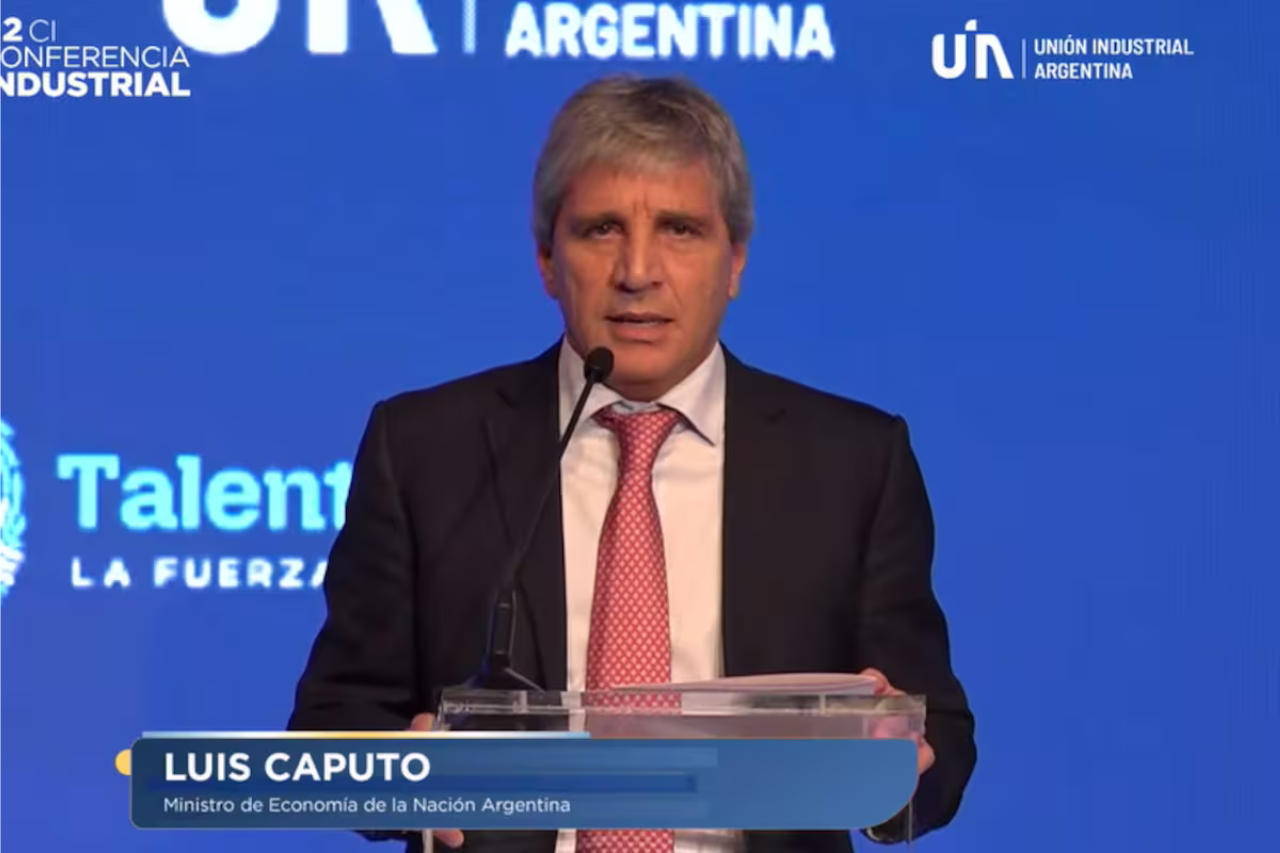

Economy Minister Luis Caputo defended the governments economic program on Tuesday at the opening of the annual Conference of the Argentine Industrial Union (UIA, in Spanish), amid a historic fall in the countrys manufacturing sector.
At a meeting with business leaders at the Golden Center in Parque Norte, Buenos Aires City, Caputo said that improving Argentinas competitiveness requires cutting taxes, reducing regulations, and lowering financial costs.
Argentina recorded the worlds second-worst industrial decline between 2023 when Javier Milei took office – and 2025, according to a report by consultancy firm Audemus, based on United Nations data. The manufacturing sector fell by 7.9%, surpassed only by Hungary.
Last July, Argentine industrial activity reached pandemic levels, with a year-on-year decline of 4,9%.
Notwithstanding, the economy minister defended the governments economic course and ruled out the possibility of resorting to a devaluation to improve the competitiveness of Argentine industry.
“That is not lowering the ‘Argentine cost,’” he said, referring to what is known in Spanish as the costo argentino (Argentinas high cost of doing business). It is impoverishing wage earners. When I hear some colleagues talk about this, I see a concerning economic myopia,” he argued.
Caputo went on to list the reforms he considers necessary to improve competitiveness sustainably: cutting taxes, reducing regulations, lowering financial costs, and improving infrastructure.
The minister also announced a series of measures aimed at easing the financial and tax burden on businesses, particularly small and medium-sized enterprises, including extending tax deadlines and suspending tax-related asset seizures by the Revenue and Customs Collection Agency (ARCA, in Spanish).
The right path The economy ministry head stressed the need to consolidate the change in the economic model introduced by his government, saying macroeconomic stability and predictability are essential conditions for restoring investment and growth.
“I think it is important to emphasize where we are coming from, and I believe the vast majority do not want to go back. We are coming from a model that clearly was not the right path. The data confirms this,” he said.
According to his assessment, the country had experienced more than 14 years of stagnation in employment and economic activity before President Milei took office.
Caputo attributed this to under a system characterized by fiscal deficits, monetary issuance, debt, foreign exchange restrictions, and a lack of productive credit.
He added that this model created financial distortions and forced the economy to remain closed, with negative consequences for production and incomes.
To support his argument, he cited the period between July 2022 and December 2023, during which industrial activity fell by 11%, according to the figures he presented.
RIGI The minister explained that the governments economic program rests on three pillars: macroeconomic stability, a structural reduction in Argentina’s high costs, and the gradual extension of the conditions established under the Large Investment Incentive Regime (RIGI).
Caputo said the aim is to move toward a system in which the investment conditions established under the RIGI can gradually be extended to all productive activities.
The official said the government’s goal is to create the conditions for all sectors to benefit from a similar framework of incentives and predictability.
“The idea is not for it to remain a special regime forever, but for the entire economy to converge toward the RIGI,” he said.
With information from mbito