Buenos Aires’ eateries face the tests of time
 Sorrel Moseley-WilliamsUpdated 14 hours Ago4 Mins read

It’s been an unfortunate couple of months for closures in the restaurant world. BASA, the Retiro stalwart and sister establishment to Gran Bar Danzón, has shuttered. And, after seven years as one of the earlier Chacarita pioneers, Apu Nena led by American-Filipina chef Christina Sunae, closed last week.
Wine bars have also taken a hit: Palermo Soho’s hipster spot Diviiino departed just this past week, as have Pablo Colina’s CAVA in Chacarita and Lucky Sosto’s Vini in Palermo Botánico in August. It’s hard to stand the test of time in a competitive environment continually hindered by Argentina’s eternal financial woes.
Then there are the day-to-day tribulations. Recently, Lardito wine bar was forced to close its doors for four days because the cleaning lady, helping out the team, unknowingly placed empty cardboard wine cases stuffed into a plastic bag in the wrong bin. Two City Hall sticklers caught the error in the middle of service – a first-time mistake, apparently, but still a mistake – and without a signal, negotiation or a warning fine that would have sent the message home (because there’s no pain like a financial one), closed the restaurant down that very night at 10:30pm, according to co-owner Pipe Collaca.
Pipe says, “Obviously we realize we made a mistake, but the powers that be shut the place down immediately because of that bag of cardboard boxes. Told we could go to the traffic violations center the next day to pay the fine, it turned out that was a lie because it was Saturday and the office was closed. Basically, we were out of action until Monday.”
The matter was resolved at the start of the week, the fine applied but, surely, the attitude could have been a bit more flexible, or perhaps it can function on an escalating scale: first-time offender, a fine and a warning so the message gets through. Second timer, a larger fine and forced to open a bit later one night the following week, because rearranging logistics for both staff and diners is a headache.
It hurts any restaurant or wine bar to lose four days’ work when you have to keep on paying the bills, then there’s the indignation of ejecting diners in the throes of eating and drinking who won’t be very forgiving.
Weathering the storm How do restaurants weather the many storms that confront them? In a month that the Buenos Aires Herald has commemorated its own 150-year legacy, the timing seems apt to talk up three long-standing warriors.
Gran Bar Danzón is Buenos Aires’ original wine bar and restaurant, now in its 29th year. Founded by Patricia Scheuer and Luis Morandi, their good taste, vision with respect to serving excellent cocktails and — when it opened — spotlighting Argentine wine, was second to none.
“The great thing about Danzón is that you can’t tell whether it was created 20 years ago or last month,” says Patricia Scheuer of her Recoleta establishment.
“And it’s accessible. There’s something for everyone: the atmosphere, the food, the cocktails, the wines. You can spend a lot of money or just go for a beer and have just as good a time.”
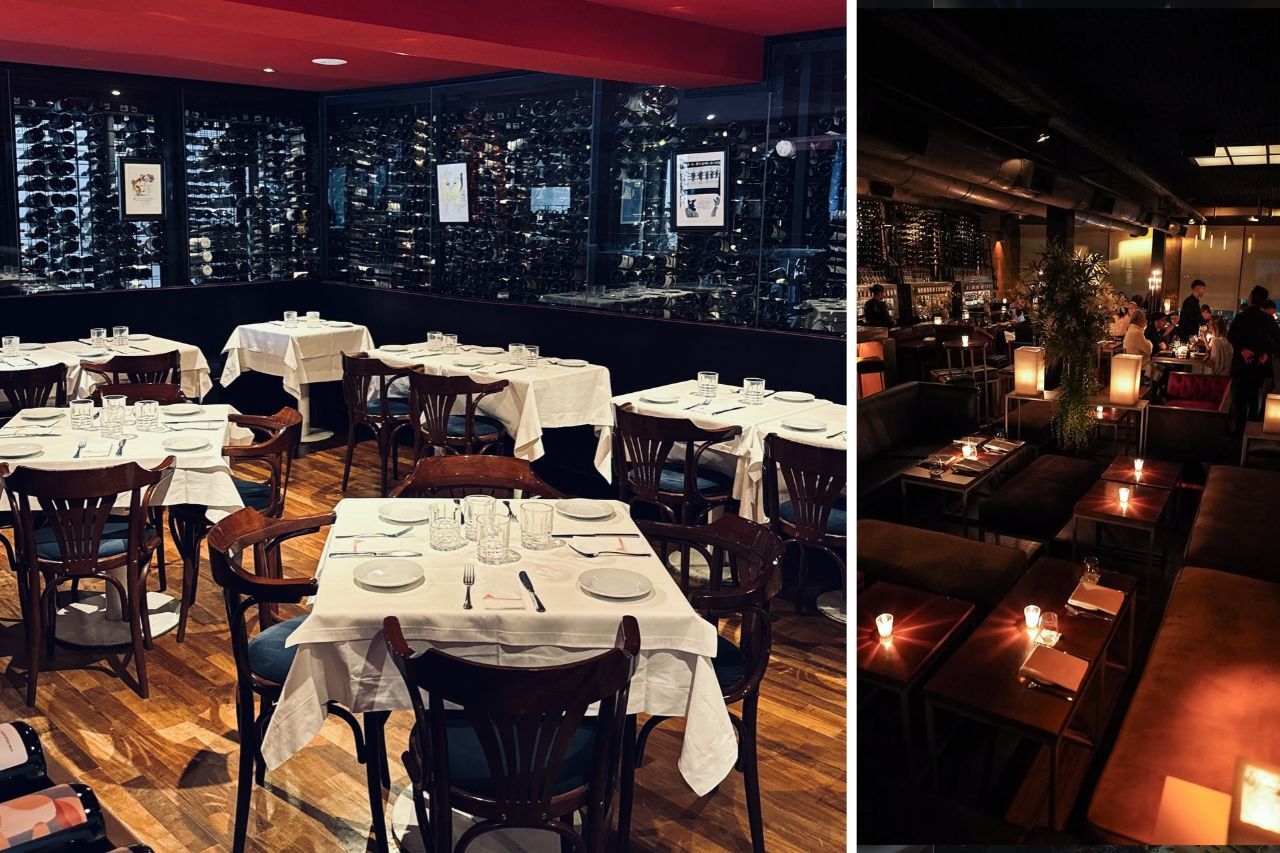
Some of Argentina’s most iconic bartenders and sommeliers — such as Tato Giovannoni, Inés De Los Santos and Aldo Graziani — have worked at Danzón; Scheuer and Morandi also have an eye for talent. Take the stairs to the first floor; the ambience is sexy-romantic and alluring, the low lighting conducive for stealing a kiss, and comfy sofas that merit falling back into. Danzón has still got it.
Over at Dashi, chef Roberto Nishida has led the group’s kitchens for 21 years. The flagship Alcorta location in Palermo is a hub of activity at both lunch and dinner, testament to understanding its sushi-loving public.
The nisei chef says there’s no single recipe to Dashi’s longevity, but rather an ability to adapt to each crisis. “Over 25 years, we’ve understood that a crisis isn’t an extraordinary event, but the norm,” says Roberto. “Many restaurants open out of passion and close because of the cash flow,” he adds. Their formula is based on two pillars: extreme flexibility in their cost structure and unwavering loyalty to local customers.
“Surviving in Argentina isn’t a matter of luck; it’s a matter of mastering menu engineering and daily cash flow,” says Roberto. “We standardized recipes, negotiated with suppliers face-to-face, adjusted portion sizes before prices and understood that cash flow is fundamental.”
Sommelier and restaurateur Aldo Graziani, meanwhile, is now on version 3.0 of his 15-year-old restaurant, which recently moved for a third time to open in May as Aldo’s Brasserie. This time, however, it’s as the partner restaurant associated with a property in the Meliá hotel group.
After many years in service at the likes of Casa Cruz and the aforementioned Danzón, Aldo opened his first eponymous storefront in Monserrat, later adding Bebop Club, a jazz bar fashioned for his own musical passion, in the basement. Version 2.0 then spent several years at a prestigious Palermo Hollywood location on Arevalo, but recently Aldo reverted south to his original stomping ground to open with the hospitality dynamics that a hotel requires.
“In order to evolve, we’re always open to exploring new opportunities and possibilities,” says Aldo. The partnership with Almarena also delivered a complete space, including an event hall, allowing them to also serve breakfast while guests keep coming down for lunch or dinner.
In Aldo’s view, new places are almost always successful at first, and the real goal is maintaining quality and service over time.
“That’s the big challenge ahead: being somewhere we feel comfortable and can see ourselves staying there for the next 15 years.”