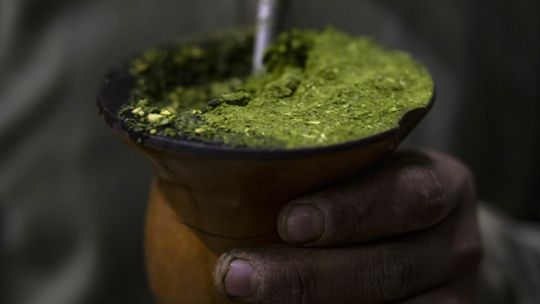
Forget coffee and high-octane energy drinks. Yerba mate tea is fast becoming the caffeine vehicle of choice for wellness-minded consumers far from its South American roots. Sold canned, carbonated and sweetened from New York to Berlin, brands like Yerba Madre, CLEAN Cause and Drink Weird capture the Gen-Z zeitgeist. Even US President Donald Trump’s son Barron is on board with a Florida start-up.
The big city buzz for a brew that Argentines typically sip all day helped drive up their country’s yerba mate exports by nearly 35 percent in 2025 from the year before. But for many small farmers who harvest the crop, times are tough after President Javier Milei deregulated prices amid a production glut, delivering a harsh dose of his economic “shock therapy.” The aggressive strategy has cut inflation but wiped out jobs, slashed wages and sapped government assistance. A growing number of the beleaguered farmers are seeking greener pastures in neighbouring Brazil.
“In Argentina, things are ugly and they’ve only gotten uglier since I left,” said Isaías Mendoza as he sawed limbs from yerba mate trees in the misty hills of southern Brazil. “Even the bad days are good days here.”
Milei’s deregulation drive has battered industries once cradled by the state, from steel-makers to construction firms. The strain on many producers behind Argentina’s iconic beverage – cherished by the likes of football star Lionel Messi and late Pope Francis – has struck a particularly sensitive nerve, prompting a congressional inquiry as farmers block roads to protest low prices in Misiones, the thumb-shaped province wedged between Brazil and Paraguay that’s considered the yerba mate heartland.
After taking office in 2023, Milei stripped the price-setting powers of Argentina’s yerba mate regulator, INYM, as part of a wider offensive against inflation. He also cut subsidies and state funding that had sustained communities outside Buenos Aires and other cities. Small farmers reeled from falling yerba mate prices and rising costs for basic services – in contrast to Argentina’s big farmers and agribusiness that benefitted from a devalued peso and cuts in red tape for key exports like beef, soybeans and wheat.
Argentina’s annual inflation is no longer in the triple digits, but it still exceeds 30 percent, the second-highest rate in Latin America.
“Instead of doing what he promised, he’s sinking us,” said Luis Benítez, 32, who moved to Brazil from Misiones in January. “He’s cut everything, even medicines for the elderly. What type of president is that?”
After years of bumper harvests, the more than 10,000 yerba mate farmers in Misiones lost guaranteed prices yet struggled to throttle back production. That’s because yerba mate isn’t a commodity that responds to market signals, explains Raúl Karaben, a veteran grower.
Yerba mate trees take years to mature and produce for decades to meet steady, culturally embedded local demand. “The decision to plant yerba mate is almost a lifetime decision,” Karaben said. “It’s very difficult for small producers to get out of the business because they dedicate all their capital to it.”
A steady climb in exports since 2022 barely dented the oversupply of green and processed leaf, pinching day labourers and small-scale producers the hardest.
Respite
Thousands moved to the Brazilian state of Rio Grande do Sul, where a greying population and the flight of young workers to cities are draining farm country of productive labor. The dynamic is evident in Ilópolis, billed as Brazil’s yerba mate capital.
Many Argentines “arrive with just the clothes on their back,” said Nelson Trentin, 62, who runs a local bar where elder patrons shoot pool. “But if it weren’t for them, things would grind to a halt. There are no young people here.”
Argentine yerba mate farmers, mostly day labourers known as tareferos, and small-scale producers often pick up work outside Misiones during the off season, but labour leaders say the latest exodus is extraordinary.
“Almost all of Misiones is in Brazil right now,” Ana Cubilla, head of the Sindicato Único de Obreros Rurales, a provincial farm workers’ union, said in April.
The opportunity can be risky. In recent years, Brazilian authorities have rescued dozens working off the books in precarious conditions in Rio Grande do Sul.
Mixer boost
In Argentina, Uruguay, Paraguay and southern Chile and Brazil, yerba mate is traditionally imbibed through a metal straw. Historically, the vessel was an ornate dried gourd. Fans abroad are now embracing it in a tin can. One estimate from Data Bridge Market Research valued the global market at about US$1.6 billion in 2024, heading toward a projected US$2.4 billion by 2032.
One of the ready-to-drink yerba mate concoctions popping up on US store shelves is SOLLOS. The South Florida company sources the raw ingredient from Brazil and sells each 12-pack of its pineapple and coconut-flavoured drink for around US$39.
Among the SOLLOS founders is Spencer Bernstein, 22, along with his high school pal, Barron Trump. Their beverage “mixes really well with vodka, tequila and rum,” said Bernstein, a Palm Beach native partial to tennis and surfing. It’s a “much healthier better-tasting mixer alternative than what’s out there and gives you that boost you need on a night out.”
That’s not the kind of boost Misiones farmers are longing for. The region embodies the “breakdown of provinces that were unviable or had structural problems that are now surfacing all at once,” said economist Ramiro Albrieu at the Universidad de Buenos Aires.
Even as Milei’s policies earn Argentina a third upgrade in its sovereign credit rating in three months, fatigue is mounting. Some 58 percent of Argentines disapproved of him in June, according to LatAm Pulse, a survey by AtlasIntel for Bloomberg News, while 62 percent described the country’s economic situation as “bad.”
That sentiment is captured in the plight of the farmers, many of whom are now putting down roots in Brazil.
Registrations by Argentines for Brazilian tax IDs – required for formal employment – soared from an average of roughly 8,000 a year before 2022 to more than 39,000 last year, according to Brazil’s federal tax authority.
In Rio Grande do Sul, the newcomers are filling gaps around small towns like Ilópolis where family farms often lack successors.
“Our daughter wants nothing to do with this,” said Nade Benvenutti, 60, who produces yerba mate with her husband outside Ilópolis.
Another grower, Cláudir Franzon, employs six Argentines at his nearby farm. “Without the Argentines I’d have to abandon much of this,” he said.
Cesar Benítez, 29, moved to Brazil in 2024 and has since found a full-time job at a yerba mate mill in Ilópolis. He and his wife are now Brazilian residents.
While Milei’s reforms were necessary, the president has created a system where “if you don’t work you don’t eat,” Benítez said. “It’s going to take a while for things to get better.”
related news
by Andrew Rosati, Bloomberg